
Best Chevy 4.3L V6 Performance Parts Compared

The High-Performance HEI Distributor is the clearest performance-focused upgrade for most Chevy 4.3L V6 owners because it targets ignition and is described for multiple Chevy and GMC vehicles; confirm the specific vehicle and engine fit before ordering. Choose a radiator for cooling needs or an intake for a compatible S-10 or Blazer instead.
We earn a commission if you buy through links on this page. As an Amazon Associate I earn from qualifying purchases. Products are compared on manufacturer specifications, not hands-on testing.
- Best overall: High-Performance HEI Distributor – A performance-oriented HEI distributor with a 65K high-voltage coil and stated fit for several 4.3L V6 vehicles.
- Best for intake response: Cold Air Intake Kit for S-10/Blazer – The kit is specifically for 1996–2005 Chevy S-10 and Blazer 4.3L V6 applications.
- Best for four-row cooling: Cubauto Four-Row Radiator – Its four-row design is built for 1996–2005 Astro and Safari 4.3L models.
| Product | Best for | Upgrade type | Fits | Key specification | Shop |
|---|---|---|---|---|---|
| High-Performance HEI Distributor | Ignition upgrade | HEI distributor | Several 4.3L V6 models | 65K coil | Check Price on Amazon |
| Cold Air Intake Kit for S-10/Blazer | Intake upgrade | Cold air intake | 1996–2005 S-10/Blazer 4.3L | T-306 aluminum | Check Price on Amazon |
| Cubauto Four-Row Radiator | Four-row cooling | Four-row radiator | 1996–2005 Astro/Safari 4.3L | AA5052 aluminum | Check Price on Amazon |
| Cekupni Three-Row Radiator | Three-row cooling | Three-row radiator | 1996–2005 Astro/Safari 4.3L | 38.8 × 21.6 in overall | Check Price on Amazon |
| ALLOYWORKS Four-Row Radiator | Oil-cooler fit | Four-row radiator | 1996–2005 Astro/Safari 4.3L | Oil cooler: yes | Check Price on Amazon |
Chevy 4.3L V6 performance parts
Compare each upgrade by its function and stated application before choosing parts for your vehicle.
High-Performance HEI Distributor
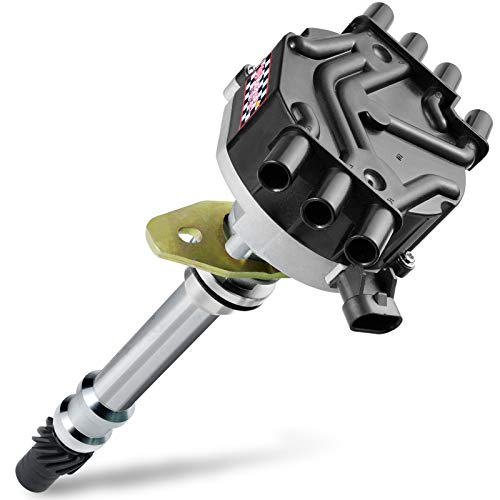
Unlike the cooling and intake upgrades here, this HEI distributor addresses ignition and is the most broadly applicable performance-oriented part in this group. It includes a cap, rotor, ignition module, coil, and sensors; the maker cites a 65K high-voltage coil and consistent ignition over 9,000 RPM. Stated fit includes Chevy Express 1500 and 2500, Astro, Blazer, C1500, K1500, and S10 with a 4.3L V6.
It suits an owner seeking a complete distributor replacement. Its vehicle list does not establish fit for every 4.3L V6 configuration, so verify the exact vehicle and engine before ordering.
Bottom line: Choose this for an ignition-focused upgrade when its vehicle fit matches.
Cold Air Intake Kit for S-10/Blazer

This is the only intake system in the group, aimed specifically at 1996–2005 Chevy S-10 and Blazer 4.3L V6 models. The kit pairs brushed T-306 aluminum components with stainless-steel clamps and a washable, reusable filter. The maker claims a 6 to 10 percent horsepower and torque increase and improved throttle response; those are performance claims, not guaranteed results.
It suits owners of the named truck or SUV who want an intake change rather than ignition or cooling parts. The application is narrower than the distributor’s vehicle list, so owners of other 4.3L vehicles should not assume compatibility.
Bottom line: Pick this for a S-10 or Blazer fit and an intake-focused change.
Cubauto Four-Row Radiator

This radiator stands out with a four-row core and direct-fit positioning for 1996–2005 Chevy Astro and GMC Safari 4.3L V6 models. It uses AA5052 aluminum with TIG-welded construction, and the maker claims a 35 to 45 percent cooling improvement. This is a cooling-system component, not an engine power add-on like an intake or ignition part.
It suits an Astro or Safari owner prioritizing radiator capacity. The application is limited to those vans, and the product name’s shroud-and-fan wording does not give enough component specifics to assume what is included; confirm package contents and vehicle fit.
Bottom line: Choose this when the Astro or Safari application and four-row design suit your cooling plan.
Cekupni Three-Row Radiator
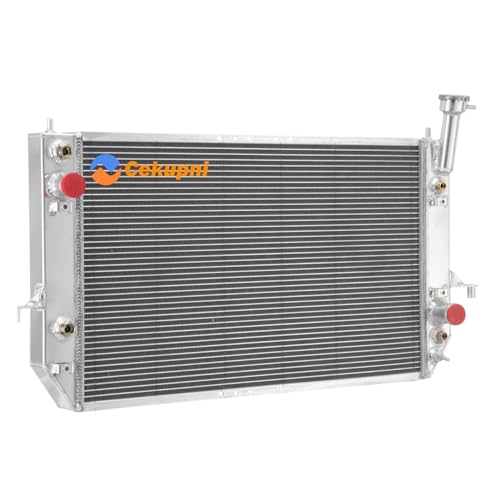
The Cekupni is the three-row alternative to the two four-row radiators, with fit for 1996–2005 Chevy Astro and GMC Safari 4.3L models without an oil cooler. Its overall dimensions are 38.8 by 21.6 inches, with a 28.25-by-17.5-inch core, a 1.3125-inch inlet, and a 1.5625-inch outlet. The maker claims at least 40 percent greater efficiency than stock.
Those measurements help check physical fit, but radiator connections and oil-cooler configuration matter too. It suits a van matching the application; owners whose setup includes an oil cooler should select a compatible unit instead.
Bottom line: Pick this for a matching Astro or Safari without an oil cooler that needs a three-row radiator.
ALLOYWORKS Four-Row Radiator

Among the four-row radiators, this ALLOYWORKS unit explicitly specifies a transmission oil cooler, a useful distinction for Astro and Safari owners whose setup requires one. It fits stated 1996–2005 4.3L applications and lists 38.8-by-21.6-inch overall dimensions, a 28.25-by-17.5-inch core, and 1.3125-inch inlet and 1.5625-inch outlet. Its construction is AA5052 aluminum with brazed core technology.
It suits a matching van needing a four-row radiator with an oil cooler. Its dimensions and cooler feature still need to match the existing radiator and transmission configuration.
Bottom line: Choose this for the van fit when a transmission oil cooler is needed.
How to choose 4.3L V6 performance parts
Choose by the system you want to change: ignition, intake airflow, or engine cooling. The distributor is an ignition replacement, the intake kit is stated for S-10 and Blazer applications, and the radiator options target Astro and Safari vans. An intake or distributor does not replace a radiator when the issue is overheating, and a larger radiator is not a direct horsepower modification.
Vehicle fit comes before a performance claim. The maker’s claimed gains are not comparable measurements: the intake claims 6 to 10 percent horsepower and torque, while radiator claims describe cooling efficiency or temperature improvement. For a radiator, check model year, hose locations, overall size, and transmission oil-cooler need; for ignition and intake parts, verify the exact engine and vehicle configuration.
Radiator fit and measurements for Astro and Safari
Radiator fit depends on more than row count: dimensions, inlet and outlet placement, and transmission cooler connections must match. The Cekupni and ALLOYWORKS radiators give the same overall dimensions of 38.8 by 21.6 inches and core dimensions of 28.25 by 17.5 inches; the ALLOYWORKS specifies a transmission oil cooler, while the Cekupni specifies fit without an oil cooler. The Cekupni also gives a 1.3125-inch inlet and 1.5625-inch outlet.
Use the existing radiator or vehicle application data to confirm configuration before ordering. If the available space or hose routing differs from those measurements, do not assume a direct fit based on the 4.3L engine alone. A radiator replacement also involves hot coolant: let the engine cool fully before opening the cooling system.
Radiator row count and cooling claims
Row count describes tube arrangement in the radiator core, but it alone cannot establish cooling performance or fit. This selection includes three-row and four-row designs, and the makers attach different cooling claims to their products; those percentages should not be treated as a controlled head-to-head comparison.
The table separates stated construction and application so a buyer can screen by configuration before considering a maker’s claim.
| Radiator | Rows | Notable fit or construction |
|---|---|---|
| Cubauto | 4 | AA5052 aluminum; Astro/Safari |
| Cekupni | 3 | Astro/Safari without oil cooler |
| ALLOYWORKS | 4 | Transmission oil cooler specified |
Do not choose by rows alone: verify mounting, thickness clearance, hose connections, and oil-cooler connections against the vehicle.
Installing intake and ignition upgrades safely
Intake and ignition work involve different checks. An intake system must seal properly and clear nearby components; a loose intake connection can allow unfiltered air past the filter. The kit includes an installation guide, aluminum parts, clamps, and a reusable filter, but its fit is limited to the named S-10 and Blazer years.
An HEI distributor must match the engine’s ignition arrangement and be installed with correct timing. Disconnect the battery before electrical work, keep hands and tools clear of moving belts and fans, and use the vehicle’s service procedure for timing. The distributor’s RPM capability is not a recommended operating target; engine limits and the rest of the ignition system still govern safe operation.
Frequently Asked Questions
What does an HEI distributor change on a 4.3L V6?
An HEI distributor replaces ignition components, including the cap, rotor, module, and coil in this complete assembly. Confirm the exact engine and vehicle application; the 9,000-RPM ignition capability is not an engine operating recommendation.
How do I know whether my radiator needs an oil cooler?
Check whether the existing radiator has transmission cooler connections and verify the vehicle’s transmission configuration. The Cekupni is specified without an oil cooler, while the ALLOYWORKS specifies one.
Can a four-row radiator fit any 4.3L Chevy?
No; these four-row units are specified for 1996–2005 Astro and Safari applications. Compare overall size, hose connections, mounting, and transmission oil-cooler configuration before installing one.
How often should a reusable intake filter be cleaned?
Service interval depends on filter design and driving conditions; dusty use generally requires more frequent inspection than clean-road driving. Inspect a washable filter about every 10,000 to 15,000 miles as a typical interval, and clean it when visibly dirty using its maker’s care procedure.
Does an intake kit guarantee a horsepower increase?
No; the 6 to 10 percent horsepower and torque increase is the maker’s claim, not a guaranteed result. Vehicle condition, calibration, and installation affect the outcome.