
Best Upholstery Staple Remover: 3 Tools Compared

The compact heavy-duty puller Heavy-Duty Upholstery Staple Remover suits most upholstery jobs because it is designed for staples in furniture, carpet and wood. Choose a different tool if you need several puller styles for different fasteners or prefer a named, single-purpose lifter.
We earn a commission if you buy through links on this page. As an Amazon Associate I earn from qualifying purchases. Products are compared on manufacturer specifications, not hands-on testing.
- Best overall: Heavy-Duty Upholstery Staple Remover – Its compact puller is intended for upholstery as well as carpet and wood.
- Best for a dedicated lifter: CS Osborne No. 120 1/2 Staple Lifter – It is a single CS Osborne No. 120 1/2 staple lifter.
- Best for varied fasteners: 4-Piece Staple and Tack Puller Set – The set includes four different removal tools, including U- and V-nail pullers.
| Product | Best for | Tool form | Size | Included tools | Shop |
|---|---|---|---|---|---|
| Heavy-Duty Upholstery Staple Remover | General furniture work | Single puller | Compact | — | Check Price on Amazon |
| CS Osborne No. 120 1/2 Staple Lifter | Dedicated staple lifting | Single staple lifter | 8.5 in long | 1 tool | Check Price on Amazon |
| 4-Piece Staple and Tack Puller Set | Mixed fastener removal | Four-tool set | 7.9 in long | 4 tools | Check Price on Amazon |
Upholstery Staple Removers
Compare each tool’s form and included pieces with the fasteners and access points in your furniture project.
Heavy-Duty Upholstery Staple Remover

The compact single puller Heavy-Duty Upholstery Staple Remover is the broad-use choice here, with intended use across upholstery, carpet, wood and hardwood floors. The maker says its design lifts staples while avoiding damage to the underlying material, and it describes the handle as ergonomic for grip during extended work. That makes it a fit for furniture repair where one tool is easier to handle than a multi-tool set. Its limitation is the compact size description: there is no stated measurement to compare against a narrow gap, so buyers working in tight seams should confirm the tool’s reach before ordering.
Bottom line: Pick this for general furniture and floor staple removal with one compact puller.
CS Osborne No. 120 1/2 Staple Lifter
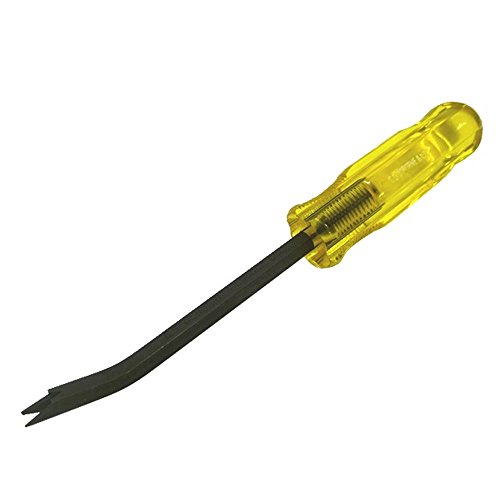
The CS Osborne No. 120 1/2 CS Osborne No. 120 1/2 Staple Lifter is the only named standalone staple lifter in this group, rather than a general four-tool kit. Its dimensions include an 8.5-inch length and a 1.7-inch width, useful reference points when planning storage or reaching around furniture framing. The product name identifies it for upholstery staples, nails and tacks. The specifications do not describe its handle material or tip geometry, so this is best for buyers who want a dedicated lifter and do not need those construction specifics to decide. Check its width against especially narrow seams.
Bottom line: Choose this for a dedicated upholstery staple lifter with a 8.5-inch length.
4-Piece Staple and Tack Puller Set

The four-piece set 4-Piece Staple and Tack Puller Set stands apart by including a nail remover, end-cutting pliers, a V-nail puller and a U-nail puller. Its 7.9-inch listed length and 4.3-inch width describe the set dimensions, while the thin steel lifting mechanism and rubberized handles are intended to help lift and grip staples. That range suits furniture or frames with different fastener shapes. The tradeoff is carrying several tools when a single lifter may be enough for one staple type; choose it when fastener variety matters more than a dedicated tool.
Bottom line: Pick this set when furniture work involves staples, tacks and other fastener shapes.
How to Choose an Upholstery Staple Remover
Choose by staple access and fastener shape: a narrow lifter tip can start under a crown, while end-cutting pliers can grip a fastener that protrudes enough to catch. Upholstery staples commonly have a crown around 3/8 inch wide, but leg length varies with fabric thickness and the wood beneath it. A single lifter suits a project with one accessible staple type; a multi-tool set helps when repairs include U-shaped or V-shaped fasteners. If the staple is buried under fabric or trim, peel back only what is necessary before selecting a tool. Avoid levering against visible finished wood, since a metal tool can dent the frame or split delicate trim.
Removing Staples Without Tearing Upholstery
Start by exposing the staple crown and lifting one leg at a time; pulling straight up on a tight staple can enlarge the fabric hole. Slide the remover under the crown at a shallow angle, then use controlled leverage against the staple rather than the fabric. Work from the staple’s edge and stop if the tool begins to drag upholstery fibers or lift a wood chip. Staples can spring free, so wear eye protection and keep fingers away from the tool’s travel path. For a staple with both legs embedded, loosen one side first, reposition the tip, then lift the other rather than twisting hard against the frame.
Staple Removers Compared by Project Need
Match the tool to the fastener mix: a dedicated lifter is straightforward for staple-focused work, while pliers and specialty pullers add options when fasteners differ. Upholstery staples, tacks and decorative nails do not all present the same surface for gripping; a tool that catches a staple crown may slip on a round tack head. A useful cutoff is the number of fastener types: choose a single lifter when one staple form dominates, and favor a set if the job includes at least two distinct forms. This comparison can help narrow the format before considering grip, reach and storage.
| Project condition | Tool format to consider | Reason |
|---|---|---|
| Mostly one staple type | Single lifter | Direct tool for staple-focused removal |
| Staples plus tacks or nails | Multi-tool set | Includes different gripping and lifting forms |
| Staple buried at an edge | Thin-tip lifter | Can start beneath an exposed crown |
Protecting Fabric and Wood During Removal
Protect the frame by placing a thin scrap of wood or a rigid plastic shim between the tool’s fulcrum and finished surfaces when there is room. Upholstery fabric is easiest to preserve when you work from the underside or an existing seam, rather than puncturing the visible face to reach a staple. Keep the tool aligned with the staple leg and avoid sideways twisting, which can widen holes or break wood around the fastener. For old or brittle fabric, test the removal approach on one hidden staple before continuing. Dispose of removed staples promptly in a container; loose metal fasteners can snag fabric or puncture hands.
Frequently Asked Questions
What size staple remover works for upholstery staples?
A tool with a thin lifting edge that can get beneath the crown is useful; upholstery staples commonly have crowns around 3/8 inch wide. Staple leg length varies with the fabric stack and frame, so access to the crown matters more than choosing by leg length alone.
How do I remove staples without damaging wood?
Lift gradually and keep the tool’s leverage on the staple, not the frame. A scrap of wood or rigid plastic shim beneath the tool can protect finished surfaces, especially when prying near a visible edge.
Should I use pliers or a staple lifter on furniture?
Use a staple lifter when a crown edge is accessible, and pliers when a fastener protrudes enough to grip securely. Do not twist hard with either tool; sideways force can tear fabric or chip wood.
Is eye protection needed when removing upholstery staples?
Yes, wear eye protection because staples can spring free during removal. Keep your fingers outside the direction the tool and staple may move, and collect loose fasteners as you work.
How can I remove staples from delicate upholstery fabric?
Work from an existing seam or the underside where possible, and lift one staple leg at a time with controlled pressure. Test the method on a hidden staple first when the fabric is brittle or prone to snagging.