
PURAFILTER 2000 Coil Cleaner: 5 Options Compared

PURAFILTER 2000 Foaming Spray is the direct match for PURAFILTER 2000 coil cleaner, with foaming spray intended for both condenser and evaporator coils. Choose another option if you specifically want a self-rinsing formula, a multi-can case, or a gallon of concentrate.
Coil cleaners loosen soil from the narrow fins that transfer heat; use a product compatible with the coil type and follow its label directions.
We earn a commission if you buy through links on this page. As an Amazon Associate I earn from qualifying purchases. Products are compared on manufacturer specifications, not hands-on testing.
- Best overall: PURAFILTER 2000 Foaming Spray – A 19-fluid-ounce foaming spray for condenser and evaporator coils with a 360-degree nozzle.
- Best for self-rinsing: Simple Green Foaming Coil Cleaner – A three-can pack of non-caustic, non-flammable foam that self-rinses on condensing coils.
- Best for concentrate: ComStar Coil Safe Concentrate – A 128-fluid-ounce water-soluble concentrate with neutral pH.
| Product | Best for | Format | Package size | Rinse style | Shop |
|---|---|---|---|---|---|
| PURAFILTER 2000 Foaming Spray | Direct replacement | Aerosol spray | 19 fl oz, 1 can | Rinse or wipe | Check Price on Amazon |
| Simple Green Foaming Coil Cleaner | Condensing coils | Aerosol spray | 20 fl oz, 3 cans | Self-rinsing on condensing coils | Check Price on Amazon |
| Quality Chemical Nu-Coil Aerosol | Bulk aerosol supply | Aerosol spray | 18 oz, 12 cans | Self-rinsing | Check Price on Amazon |
| ComStar Coil Safe Concentrate | Gallon concentrate | Water-soluble concentrate | 128 fl oz, 1 jug | Self-rinsing | Check Price on Amazon |
| Leak Saver Foam Blaster | Focused foam spray | Foam spray | 18 fl oz, 3 cans | No-rinse / light rinse | Check Price on Amazon |
PURAFILTER 2000 coil cleaner options
Compare these coil cleaners by intended coil use, container format, and rinse method.
PURAFILTER 2000 Foaming Spray
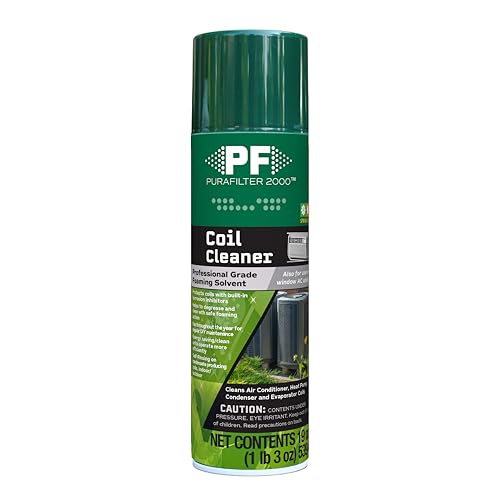
PURAFILTER 2000 Foaming Spray is the direct PURAFILTER 2000 match here: a 19-fluid-ounce foaming aerosol for HVAC condenser and evaporator coils. The brand says its foam helps penetrate and lift heavy soil, and the cleaner can be rinsed or wiped away. Its 360-degree nozzle can spray with the can upside down, which can help when access angle is awkward. The scope is broad, but this option is a single can rather than a multi-pack or concentrate; choose another format if you need those quantities.
Bottom line: Choose this if you want a foaming spray for both condenser and evaporator coils.
Simple Green Foaming Coil Cleaner

Simple Green Foaming Coil Cleaner differs from PURAFILTER 2000 with a three-can pack and a formula that self-rinses on condensate-producing coils. The brand describes it as low-VOC, non-caustic, and non-flammable, and identifies HVAC, refrigeration, and several air-handler components as intended uses. NSF registrations C1 and K5 are provided for use in and around food-processing areas. The self-rinsing claim is specifically tied to condensing coils, so this is a less straightforward choice when the job involves an evaporator coil without condensate production.
Bottom line: Choose this for condensate-producing coils when a three-can pack suits the job.
Quality Chemical Nu-Coil Aerosol

Quality Chemical Nu-Coil Aerosol stands apart as a 12-can case of 18-ounce aerosols for residential or commercial maintenance. Its high-foaming, clinging foam is described as non-acid and self-rinsing, and the uses include condenser and evaporator coils, fan blades, and HVAC units. A case is useful when stocking multiple service jobs, but it is a much larger quantity than a single PURAFILTER 2000 can. Its self-rinsing claim does not replace checking the can directions for the particular coil and installation.
Bottom line: Choose this when you need multiple cans of non-acid, self-rinsing cleaner.
ComStar Coil Safe Concentrate

ComStar Coil Safe Concentrate is a water-soluble gallon concentrate rather than a ready-to-use aerosol, giving it a different preparation format from PURAFILTER 2000. The maker describes it as self-rinsing, neutral-pH, and compatible with aluminum and copper, for evaporator coils and other equipment. Its range extends beyond HVAC to tools, machinery, and metal parts. The maker does not give a dilution ratio, so confirm the mix instructions on the container before preparing it; this matters more with concentrate than with a ready-to-use spray.
Bottom line: Choose this if you prefer a gallon of water-mix concentrate.
Leak Saver Foam Blaster
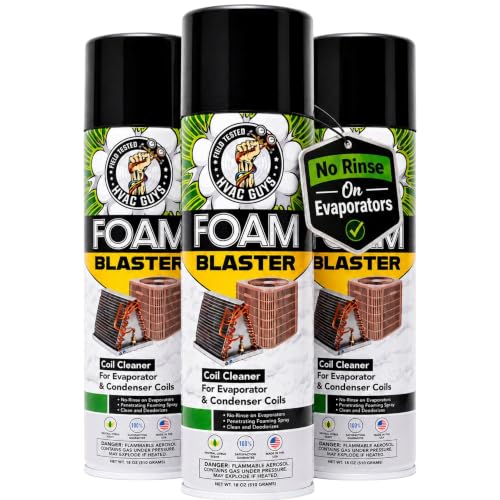
Leak Saver Foam Blaster uses a focused, higher-pressure spray pattern and delayed foaming, unlike a conventional foam-on-contact spray. The maker says the spray is designed to drive cleaner below the coil surface before expanding through buildup. Its rinse guidance distinguishes evaporator coils, labeled no-rinse, from condensers, labeled light-rinse.
Bottom line: Choose this for a focused spray with different rinse guidance by coil type.
How to choose a PURAFILTER 2000 coil cleaner
Choose a coil cleaner by coil location, rinse method, and whether the container is ready to use or must be diluted. Evaporator coils sit in the indoor air handler; condenser coils sit outdoors and release heat to the surrounding air. Dust, pollen, and grass clippings can collect on outdoor fins, while indoor coils may accumulate dust and biological film when filtration or drainage is poor. A practical rule: use a cleaner whose label names the coil type you are servicing, and do not treat a self-rinsing claim for a condensing outdoor coil as an automatic no-rinse direction for an indoor evaporator. Also compare spray cans with concentrates before choosing a quantity or application approach.
Coil cleaner formats and rinse methods
Aerosol cleaners are ready to apply, while concentrates require water and a correct dilution ratio before use. Foaming sprays can cling to vertical fin surfaces longer than a thin liquid, but foam alone does not show whether the coil needs rinsing. Condensate-producing coils may carry away residue as water forms, whereas a dry indoor coil may need a separate rinse or wipe if the label directs it. The table gives a quick format-based decision; use the container’s instructions for the actual dilution and rinse steps.
| Format | Preparation | Best-fit consideration |
|---|---|---|
| Aerosol foam | Ready to spray | Small or access-limited jobs |
| Self-rinsing aerosol | Ready to spray | Coils that produce condensate or can be rinsed as directed |
| Liquid concentrate | Mix with water | Repeated use when dilution directions are available |
Safe HVAC coil cleaning steps
Shut off power at the service disconnect before opening the air handler or condenser; a thermostat setting alone may not prevent an automatic restart. Keep cleaner and rinse water away from motors, wiring, and control boards, since liquid can damage electrical parts or create a shock hazard. Coil fins are thin metal and bend readily, so avoid hard brushing and high-pressure water that can flatten fins and reduce airflow. Apply only the amount and rinse method on the label, protect nearby surfaces from runoff, and never combine coil cleaner with bleach, acids, or other chemicals. Wear the protective gear specified on the container, and keep aerosol cans away from heat or flame.
Coil maintenance timing and common mistakes
Inspect HVAC coils at least once each year, often during seasonal maintenance, and clean when debris visibly blocks fin passages or airflow falls. Outdoor condensers exposed to cottonwood, lawn clippings, or dusty roads may need attention sooner than a sheltered unit. Replace or clean the system’s air filter on its own schedule; a dirty filter can contribute to indoor coil buildup, but coil cleaner is not a substitute for filter maintenance. Do not bend fins while removing surface debris, and do not assume a “self-rinsing” product needs no water on every coil: the moisture available on an indoor evaporator differs from an outdoor condenser that can be rinsed. Confirm coil compatibility and rinse instructions before application.
Frequently Asked Questions
How often should HVAC coils be cleaned?
Inspect coils at least once a year, often during seasonal HVAC maintenance. Clean sooner when visible buildup restricts airflow or the outdoor unit is exposed to heavy dust, cottonwood, or grass clippings.
Can I use coil cleaner on both coil types?
Some formulas name both evaporator and condenser coils, but rinse requirements can differ by location. For example, evaporator coils are indoors and usually need a controlled cleanup, while outdoor condensers may be designed for a water rinse.
Should I rinse an evaporator coil after cleaning?
Use the cleaner label’s direction for the specific evaporator coil and application. Indoor evaporators may not produce enough condensate to rinse away a self-rinsing product, so do not transfer outdoor-condenser instructions to an evaporator.
How do I protect coil fins during cleaning?
Use a gentle application and avoid hard brushing or a high-pressure spray; thin aluminum fins bend easily and blocked fins reduce airflow. Comb bent fins only with a fin comb sized to the coil, using light pressure.
Do I need to shut off the air conditioner first?
Yes, switch off HVAC power before accessing or spraying the coil. Confirm the unit cannot start during service, and keep liquid away from electrical controls and motors.