
Best Paint for Porcelain Sink: 4 Options Compared

For most porcelain sink owners, DWIL Tub and Tile Touch-Up Paint is the practical pick because its built-in brush is suited to small scratches, chips, and spots. Choose a spray refinishing paint instead when you need broader coverage; a touch-up brush is not meant to coat an entire sink evenly.
Porcelain is a hard, glazed surface, so the key distinction is spot repair versus a larger coating job—not simply the paint color.
We earn a commission if you buy through links on this page. As an Amazon Associate I earn from qualifying purchases. Products are compared on manufacturer specifications, not hands-on testing.
- Best overall: DWIL Tub and Tile Touch-Up Paint – The built-in brush is suited to small, localized porcelain sink blemishes.
- Best for broad coverage: SENVEN Tub and Tile Refinishing Spray Paint – The 16-ounce spray format is designed for refinishing larger sink and bathroom surfaces.
- Best for semi-gloss touch-ups: White Semi-Gloss Tub and Tile Touch-Up Paint – Its semi-gloss white brush-on finish is intended for small marks on sinks and other glossy surfaces.
- Best for high-gloss touch-ups: Tub and Tile High-Gloss Touch-Up Paint – The brush-on paint is described as having a high-gloss white finish for small surface repairs.
| Product | Best for | Application | Size | Finish | Shop |
|---|---|---|---|---|---|
| DWIL Tub and Tile Touch-Up Paint | Small sink blemishes | Brush-on | 1.5 fl oz | White | Check Price on Amazon |
| White Semi-Gloss Tub and Tile Touch-Up Paint | Semi-gloss touch-ups | Brush-on | 1.5 fl oz | Semi-gloss white | Check Price on Amazon |
| SENVEN Tub and Tile Refinishing Spray Paint | Larger refinishing areas | Spray | 16 oz | White | Check Price on Amazon |
| Tub and Tile High-Gloss Touch-Up Paint | High-gloss touch-ups | Brush-on | 1.5 fl oz | High-gloss white | Check Price on Amazon |
Best paint for porcelain sink repairs
Match the paint format to the area you need to repair: a brush-on touch-up for isolated blemishes or spray paint for broader refinishing.
DWIL Tub and Tile Touch-Up Paint

For a small scratch, chip, or spot, this brush-on repair paint offers a more targeted format than the larger spray option. DWIL says its acrylic-resin formula adheres to porcelain, enamel, sinks, and tile, and says the coating is waterproof and quick-drying. The built-in brush helps keep application localized, which suits an isolated blemish rather than a full-sink color change. Its 1.5 fl oz size is a touch-up format, so it is not the practical choice for coating an entire sink or a wide area.
Bottom line: Choose this for a localized white mark or chip on a porcelain sink.
White Semi-Gloss Tub and Tile Touch-Up Paint

This option distinguishes itself with a semi-gloss white finish, making it a candidate when the sink’s existing sheen is closer to semi-gloss than high gloss. The brush-on paint is intended for small scratches, chips, stains, and spots on porcelain, ceramic tile, enamel, and acrylic. At 1.5 fl oz, it is sized for touch-ups, not broad refinishing. Match the finish and white tone to the surrounding sink as closely as possible; a sheen mismatch can make a repair noticeable even when the blemish is covered.
Bottom line: Pick this when a small repair needs a semi-gloss white finish.
SENVEN Tub and Tile Refinishing Spray Paint
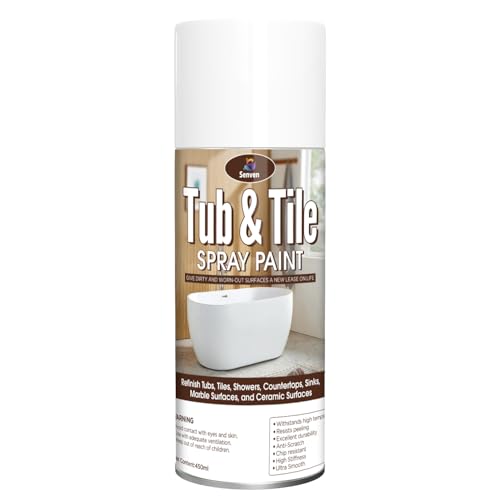
Unlike the three small brush-on products, this 16-ounce spray is intended for broader refinishing coverage on porcelain, ceramic, and fiberglass surfaces, including sinks. SENVEN says the coating is designed for humid environments and offers abrasion and scratch resistance. That larger-format approach suits a widespread worn area better than dabbing a touch-up product across the basin. Spray application is less suited to a tiny isolated chip, where overspray can reach surrounding surfaces; mask adjacent areas and use it only where the surface and application directions are compatible.
Bottom line: Choose this for a larger sink refinishing area rather than one small chip.
Tub and Tile High-Gloss Touch-Up Paint

This brush-on repair paint is the high-gloss counterpart to the semi-gloss touch-up option, so finish matching is its main point of distinction. The maker says its acrylic-resin formula has low odor and dries quickly, and describes the white finish as high gloss. Its 1.5 fl oz quantity suits isolated scratches and spots on sinks, ceramic, and enamel; it is not a full-basin coating format. Because a glossy patch can reflect light differently from an older or dulled sink, reserve it for a small repair where the surrounding finish is also glossy.
Bottom line: Pick this for a small repair on a sink with a high-gloss white finish.
Choose sink paint by repair area
Use brush-on touch-up paint for an isolated scratch or small chip, and consider a refinishing product when a large area needs coating. A brush lets you place paint on a small defect without covering the rest of the basin; a spray format covers a wider surface but can drift onto nearby fixtures. As a practical cutoff, if the damaged area is larger than a few separate spots or roughly a hand-sized patch, compare refinishing products rather than repeatedly dabbing touch-up paint. A patch job can remain visible because gloss, color, and surface texture need to match. Before buying, compare the paint’s intended substrate and finish with the sink; porcelain, enamel, and acrylic are not interchangeable labels for every surface.
Prepare porcelain before applying repair paint
Preparation matters because porcelain sinks have a hard glazed surface that leaves little texture for a coating to grip. Remove soap film, oils, and mineral deposits, then rinse and let the repair area dry completely; residue or moisture can interfere with adhesion. For a larger refinishing job, coatings commonly call for surface abrasion and masking, while a tiny touch-up may use a narrower preparation process. Do not assume a spray or brush-on coating can go over silicone, caulk, or loose coating; those areas need separate attention before painting. Follow the product’s preparation and drying directions, especially before exposing the repaired area to water, because application and cure requirements differ by formula.
Match the finish and shade to the sink
Choose the closest practical white and sheen, since a visible repair is often caused by mismatch rather than the size of the chip alone. Glossy porcelain reflects light strongly, while a semi-gloss patch scatters it more; that contrast can outline a repair under bathroom lighting. Compare the surface in daylight and under the room’s usual lights before deciding between a semi-gloss and high-gloss touch-up. Age, cleaners, and wear can also change the sink’s apparent shade, so a new white coating may look brighter than the surrounding surface. If the damaged area spans much of the basin, a small brush-on container may create a more obvious patch than a coating intended for broader coverage.
Use sink repair paint with water exposure in mind
Keep a repaired sink dry for the product’s full stated drying or curing period; quick-drying claims do not establish when a coating is ready for repeated water contact. Many refinishing coatings need longer before normal use than the surface feels dry to the touch, so distinguish touch-dry time from full cure when the directions provide both. Ventilation is important during coating work, particularly with spray products used indoors; protect nearby surfaces and avoid breathing aerosol or fumes. Do not use a coated basin for food preparation, and stop using a damaged coating if it begins to peel or flake. For a sink with widespread damage or recurring peeling, a touch-up may not be a durable substitute for professional refinishing or replacement.
Frequently Asked Questions
Can porcelain sink paint cover a deep chip?
Paint can color a chip, but a deep or missing section may remain indented because touch-up paint is a coating, not a porcelain filler. For a small shallow blemish, brush-on repair paint is easier to localize; a larger damaged area may need a repair system designed to fill as well as coat.
How long should sink paint dry before using water?
Wait for the full water-exposure or cure period in the product directions, not merely until the surface feels dry. Quick-drying paint can still need additional time before regular water contact, and the required interval varies by formula.
Can I paint over silicone around a sink?
Do not rely on sink paint to adhere over silicone caulk; coatings generally need a clean, compatible surface rather than a flexible sealant layer. Remove or protect caulk as appropriate for the repair and use the paint only on surfaces its directions identify.
Should I use brush-on or spray paint for a sink?
Choose brush-on paint for a few small chips or scratches and spray for a broader area that needs an even coating. For roughly hand-sized damage or more, compare full refinishing products and masking requirements rather than extending a tiny spot repair across the basin.
Does porcelain sink paint need sanding first?
Many coatings for glazed surfaces require abrasion or other surface preparation to improve adhesion, but the required method depends on the product. Clean off soap and mineral residue and follow the specific prep directions; do not sand a small repair unless the product calls for it.