
Best Mucus Removal Devices: 4 Flutter Valves Compared

The Flutter Valve Breathing Exercise Device Flutter Valve Breathing Exercise Device suits most people seeking a compact mucus removal device because it combines three resistance options with a 4.3-inch length. Choose a different option if you want visible breathing feedback or a travel case, or if a clinician has recommended another airway-clearance method.
Flutter valves use exhalation through a weighted mechanism to create pressure and vibration; they are not a substitute for a clinician’s assessment or prescribed care.
We earn a commission if you buy through links on this page. As an Amazon Associate I earn from qualifying purchases. Products are compared on manufacturer specifications, not hands-on testing.
- Best overall: Flutter Valve Breathing Exercise Device – Three steel-ball resistance options in a compact 4.3-inch device.
- Best for breathing feedback: Portable OPEP Device with Travel Case – A moving indicator provides visual feedback during exhalation, and the product includes a travel case.
- Best for heat tolerance: Giyosk Green Breathing Device – The maker says its food-grade PP body can withstand temperatures up to 130°C.
| Product | Best for | Resistance options | Dimensions | Material or feature | Shop |
|---|---|---|---|---|---|
| Flutter Valve Breathing Exercise Device | Compact resistance choice | 3 steel balls | 4.3 × 3.3 × 1.7 in | Adjustable resistance | Check Price on Amazon |
| Giyosk Green Breathing Device | Heat-tolerant body | 3 metal-ball choices | 4.33 × 3.15 × 1.65 in | PP; up to 130°C | Check Price on Amazon |
| Non-Measuring Flutter Valve | Simple breathing practice | 3 steel balls | — | No batteries | Check Price on Amazon |
| Portable OPEP Device with Travel Case | Visual exhalation feedback | 3 stainless steel balls | 6 × 3 × 2 in | Moving indicator; case | Check Price on Amazon |
Mucus removal devices compared
Compare the valve designs by their resistance controls, size and distinguishing features.
Flutter Valve Breathing Exercise Device
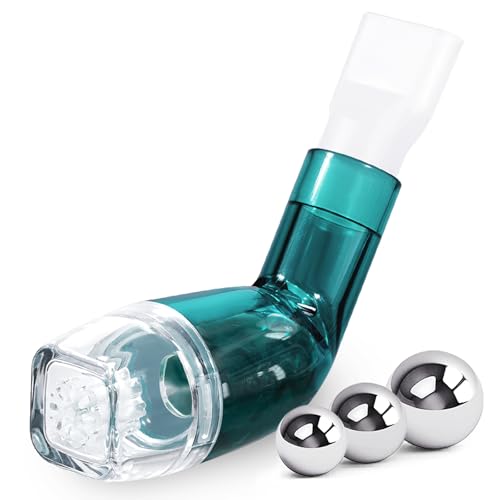
Three steel-ball resistance options distinguish this flutter valve, giving users a choice of airflow resistance in a compact body measuring 4.3 × 3.3 × 1.7 inches. The maker says the pressure mechanism is intended to help loosen mucus and support breathing exercises. Its small dimensions may suit storage at home or carrying in a bag. The main limitation is that the specifications do not identify a visual breathing indicator or included case, so choose another option if either feature is important to your routine.
Bottom line: Choose this if compact size and three resistance options matter most.
Giyosk Green Breathing Device
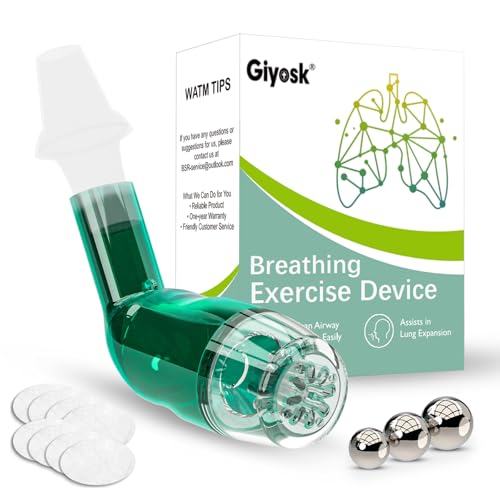
Heat tolerance and a curved, lockable front distinguish this compact device from the other flutter valve options. It measures 4.33 × 3.15 × 1.65 inches; the maker says its food-grade PP body withstands temperatures up to 130°C and the front locks with a 30-degree counterclockwise turn. The maker describes it as a positive expiratory pressure device that uses airflow to mobilize secretions. Its resistance selection relies on choosing a metal ball rather than complicated level settings, which may not suit someone who wants a numeric setting or visual feedback.
Bottom line: Pick this if the PP body and simple ball selection suit your routine.
Non-Measuring Flutter Valve

A non-measuring design sets this flutter valve apart: it offers three steel-ball resistance choices but does not present itself as a measuring spirometer. The maker says the resistance can be adjusted for breathing practice and that the device needs no batteries. Its transparent blue-green color may help users see the internal mechanism, though the specifications give no dimensions to compare for portability. Choose another option if you need a specified size, a built-in visual breathing indicator, or measured breathing results.
Bottom line: Choose this for a non-measuring valve with adjustable resistance.
Portable OPEP Device with Travel Case

A moving indicator and travel case make this OPEP device distinct from the simpler flutter valves. It measures 6 × 3 × 2 inches and includes three stainless-steel balls; the maker says exhalation moves the indicator to provide visual feedback and that oscillating positive expiratory pressure helps mobilize mucus. The larger footprint may matter if storage space or pocket portability is a priority. The maker links larger balls with stronger resistance and vibration, but users who need a clinician-directed resistance setting should confirm the appropriate setup with their clinician.
Bottom line: Pick this if visible exhalation feedback and a case are priorities.
How flutter valves help move airway mucus
Flutter valves create resistance and oscillation as a person exhales through the device, which can help mobilize secretions for coughing. OPEP means oscillating positive expiratory pressure; devices may use a ball or similar mechanism to create that effect. A flutter valve is different from an incentive spirometer, which is designed to encourage and measure a slow, deep inhalation rather than generate expiratory oscillation. Device designs and resistance levels vary, so a clinician can help select a suitable approach, especially for people with chronic lung conditions. Stop and seek medical advice for new or worsening breathing difficulty, chest pain, or blood in coughed-up mucus.
Choosing resistance and feedback
Choose a valve based on a comfortable, controlled exhalation rather than the strongest resistance. These products use different steel-ball options, while one adds a moving indicator; the ball size alone does not establish the right setting for an individual. If a clinician has specified a resistance, device type, or breathing routine, confirm that the chosen model matches it before use. For independent comparison, look at the features you can identify: a three-ball choice, a visual indicator, and a carrying case. Do not increase resistance simply because mucus feels thicker; symptoms and appropriate airway-clearance methods require clinical judgment.
The practical choice changes with the need:
| Need | Feature to prioritize | Trade-off |
|---|---|---|
| Compact storage | Smaller stated dimensions | Not every compact model gives feedback |
| Visual breathing cue | Moving exhalation indicator | Larger stated dimensions |
| Measured inhalation | Incentive spirometer type | Different purpose from an OPEP valve |
Cleaning and using a breathing device safely
Clean reusable airway-clearance equipment after each session according to its manufacturer’s cleaning directions, then allow parts to dry fully before storage; moisture left inside can encourage microbial growth. Do not share a mouthpiece, and wash hands before handling equipment. Heat tolerance applies only when a maker provides a specific temperature limit; it does not mean every part can be boiled or put in a dishwasher. Follow the device’s cleaning method and ask a clinician or pharmacist if disinfecting instructions are unclear. Stop if the device provokes dizziness, wheezing, pain, or worsening breathlessness, and seek medical guidance rather than pushing through symptoms.
Frequently Asked Questions
How is a flutter valve different from a spirometer?
A flutter valve creates expiratory resistance and oscillation, while an incentive spirometer encourages a slow inhalation and gives a volume or flow measure. The two device types serve different breathing exercise purposes.
How often should I clean a mucus removal device?
Clean a reusable device after each session and let it dry fully before storage. Follow the device’s cleaning directions, since heat and disinfectant limits vary by material and design.
Can I use a flutter valve without medical advice?
People with persistent or worsening respiratory symptoms should get clinical guidance before choosing an airway-clearance method. A clinician can advise on device type, resistance and technique, particularly for chronic lung conditions.
What symptoms mean I should stop using it?
Stop if use causes new pain, dizziness, wheezing or worsening shortness of breath. Seek prompt medical advice for severe breathing difficulty, chest pain or blood in coughed-up mucus.
Can a flutter valve replace prescribed breathing treatment?
No; a flutter valve should not replace prescribed treatment or a clinician-directed airway-clearance plan. Ask the prescribing clinician how the device fits with existing care.