
AGM TS35 384 Rattler: Models Compared by Fit

The AGM Rattler TS35-384 is the closest match for a buyer seeking the named model, with a 35mm lens, 384 × 288 sensor and 8× digital zoom. Choose a newer V2 or V3 option instead if you want features such as shot-activated recording or an integrated laser rangefinder.
Thermal riflescopes display heat differences rather than visible-light detail, so identification and safe target confirmation still require care.
We earn a commission if you buy through links on this page. As an Amazon Associate I earn from qualifying purchases. Products are compared on manufacturer specifications, not hands-on testing.
- Best overall: AGM Rattler TS35-384 – It is the named TS35-384 model, with a 35mm lens and 8× digital zoom.
- Best for ranging: AGM Rattler V3 35-384 LRF – It adds an integrated 1000m laser rangefinder and ballistic calculator.
- Best for recording: AGM Rattler V2 35-384 – Its feature set includes shot-activated recording and up to 24× digital zoom.
| Product | Best for | Base magnification | Digital zoom | Shop |
|---|---|---|---|---|
| AGM Rattler TS35-384 | Named TS35-384 fit | — | 8× | Check Price on Amazon |
| AGM Rattler V3 35-384 LRF | Integrated ranging | 3.5× | — | Check Price on Amazon |
| AGM Rattler V2 35-384 | Shot-activated recording | 3× | 3×–24× | Check Price on Amazon |
| AGM Rattler V2 35-384 Bundle | Quick-detach mounting | 3× | 3×–24× | Check Price on Amazon |
AGM TS35 384 Rattler Thermal Scopes
Compare the exact TS35-384 with related Rattler models by sensor, magnification and features that change how you use the optic.
AGM Rattler TS35-384

The TS35-384 is the exact model name in this comparison, with a 35mm lens and 384 × 288 thermal sensor. Its feature set includes an OLED display, adjustable color palettes and Wi-Fi streaming or recording through a mobile app. AGM describes the scope as waterproof and shockproof, but the features do not give a protection rating. Choose it when the TS35-384 designation and 8× digital zoom match your needs; consider a newer variant if you specifically want a built-in laser rangefinder or shot-activated recording.
Bottom line: Choose this when the TS35-384 model name and its 8× zoom fit your setup.
AGM Rattler V3 35-384 LRF

The V3 35-384 LRF stands apart with a built-in laser rangefinder and ballistic calculator, features absent from the named TS35-384’s specifications. It pairs a 35mm Germanium lens with a 384 × 288, 12μm sensor and an OLED display; AGM says its thermal sensitivity is below 15mK and its rangefinder reaches 1000m. The magnification range is 3.5–28×. This variant suits buyers who want ranging integrated into the scope, but it is a V3 LRF model rather than the TS35-384. Confirm ballistic compatibility with your setup before choosing that workflow.
Bottom line: Pick this if integrated ranging matters more than matching the TS35-384 model.
AGM Rattler V2 35-384
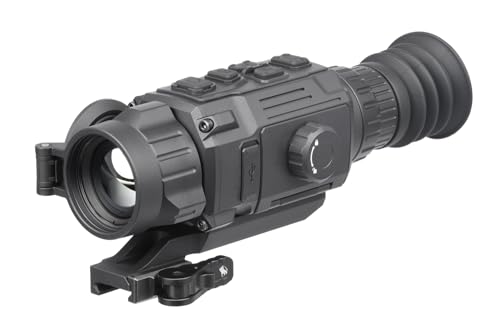
The V2 35-384 adds shot-activated recording, which separates it from the exact TS35-384 model in this comparison. It has a 35mm lens, a 384 × 288 sensor, 3× base magnification and 3×–24× digital zoom. AGM says it detects targets up to 1,800 yards and runs for up to 11 hours; it also includes Wi-Fi and an IP67 rating. Consider this model when recording and a broader zoom range are priorities. It is a V2 variant, not the TS35-384, and its high digital zoom does not replace careful target identification.
Bottom line: Choose this V2 when shot-activated recording and up to 24× digital zoom suit your priorities.
AGM Rattler V2 35-384 Bundle

This V2 bundle distinguishes itself with a quick-detach mount, so it may suit a setup where removing and reinstalling the optic is useful. The scope has a 35mm lens, a 384 × 288, 12-micron sensor, 3× base magnification and 3×–24× digital zoom. AGM says it offers detection up to 1,800 yards and up to 11.5 hours of runtime, with USB-C external power support. It also includes recording and Wi-Fi streaming. Choose it for the mount and power options; it is a bundle version of the V2, not the TS35-384.
Bottom line: Pick this bundle if the quick-detach mount and USB-C power support fit your setup.
How to choose an AGM Rattler 384 scope
Start with model fit: TS35-384 is the named model, while V2 and V3 identify related variants with different feature sets. A 384 × 288 sensor has 110,592 detector pixels; a 640 × 512 sensor, by comparison, has 327,680, so sensor resolution is a useful first distinction when comparing thermal optics. Lens focal length and base magnification also shape the view: a longer lens and higher starting magnification narrow the field of view. Digital zoom enlarges the displayed image but does not add sensor detail. If you need ranging in the optic, the V3 LRF is the only model here that identifies an integrated rangefinder. Match the exact model and mounting setup before selecting a variant.
What 384 × 288 thermal resolution tells you
A 384 × 288 thermal sensor produces 110,592 pixels, but resolution alone does not determine how easily a target can be recognized. Lens size, detector sensitivity, display, viewing conditions and the target’s temperature contrast all affect the image. A 35mm lens gathers thermal energy across a narrower scene than a shorter lens, which can help when viewing farther away but makes scanning broad areas slower. Detection range is not the same as reliable identification range: the quoted distance describes detecting a heat signature, not confirming what it is. Fog, rain, vegetation and warm backgrounds can reduce contrast. Treat digital zoom as a framing aid rather than additional optical resolution.
How to mount and zero a thermal riflescope
Mount the optic securely and verify eye relief, reticle alignment and zero with the firearm unloaded before handling ammunition. A thermal sight still needs a live-fire zero because its display and reticle do not establish where the projectile impacts. Use a safe, legal range with a backstop and confirm the point of impact at the distance you intend to use; a 100-yard zero is common for many rifles, but the appropriate distance depends on cartridge, trajectory and intended use. Never use thermal imaging alone to identify a person or establish a safe shot. Keep the muzzle pointed in a safe direction and positively identify the target and what lies beyond it.
How to compare Rattler variants and care for them
Choose a variant by the feature that changes your workflow: the TS35-384 is the exact model name, V2 adds features such as shot-activated recording, and V3 LRF incorporates ranging and a ballistic calculator. IP67 is an ingress-protection rating associated with dust protection and temporary immersion under standardized test conditions; it is not permission to ignore the manufacturer’s limits or expose an optic to every water condition. Keep the lens cap on when the optic is stored, and clean the Germanium lens with materials intended for coated optics rather than a rough cloth. Before a hunt or range session, check that the mount remains secure, the battery is charged and the zero is unchanged.
Frequently Asked Questions
Does the TS35-384 have a built-in rangefinder?
The V3 35-384 LRF is the variant in this comparison that specifies an integrated 1000m laser rangefinder.
Is detection range the same as identification range?
No. Detection range means noticing a thermal signature, while identification requires enough image detail and contrast to distinguish what the target is. Weather, background temperature and lens magnification can all affect identification.
What does a 384 × 288 thermal sensor mean?
A 384 × 288 sensor has 110,592 detector pixels. A higher digital zoom enlarges the displayed image but does not increase that underlying sensor resolution.
Can a thermal scope see through glass?
No, ordinary glass blocks much of the long-wave infrared radiation used by thermal scopes, so the optic generally shows the glass surface rather than a clear thermal image beyond it. Do not rely on a thermal view through a window to identify a target.
How often should I check a riflescope zero?
Confirm zero whenever the optic or mount has been removed, the firearm has been transported roughly, or impact shifts during use. A safe live-fire check at the intended distance is more dependable than assuming a digital reticle or mount retained zero.