
Best Hip Compression Wraps: 5 Adjustable Options Compared

ODOFIT 5-in-1 Hip Brace is the best hip compression wrap for most people because it offers adjustable compression and lets you select a side and size range. Choose another option if you want a two-strap design, a specified material, or a particular left-side fit.
Hip compression wraps use adjustable straps or panels to apply support around the hip and upper thigh; a secure fit should not restrict circulation.
We earn a commission if you buy through links on this page. As an Amazon Associate I earn from qualifying purchases. Products are compared on manufacturer specifications, not hands-on testing.
- Best overall: ODOFIT 5-in-1 Hip Brace – Adjustable compression with left- or right-leg selection and regular or plus sizing.
- Best for two-strap coverage: Bodyprox Adjustable Groin Wrap – Adds a second strap around the waist to its groin wrap.
- Best for ventilated neoprene: Roxofit Hip Brace, Medium Left – Uses perforated, latex-free neoprene and comes in a medium left-side fit.
| Product | Best for | Fit options | Design | Shop |
|---|---|---|---|---|
| ODOFIT 5-in-1 Hip Brace | Adjustable fit | Regular/plus; left/right | Hip, thigh, groin | Check Price on Amazon |
| Bodyprox Adjustable Groin Wrap | Two-strap design | One count; adjustable | Groin, hip, thigh | Check Price on Amazon |
| Roxofit Hip Brace, Medium Left | Ventilated neoprene | Medium; left | Hip, thigh, groin | Check Price on Amazon |
| SOLOEVER Adjustable Hip Brace, Left | Left-side support | Left side | Hip, abdomen, thigh, back | Check Price on Amazon |
| Janustar Hip Compression Sleeve | Breathable design | Medium | Hip, thigh, groin | Check Price on Amazon |
Best Hip Compression Wraps
Compare the wrap styles, fit options and construction to find support suited to your intended use.
ODOFIT 5-in-1 Hip Brace

ODOFIT 5-in-1 Hip Brace stands out for offering left- or right-leg selection alongside regular and plus size ranges. Its adjustable wrap targets the hip flexor, groin, thigh and hamstring, and the maker says it is intended for support during walking and daily movement. The maker also presents it for strains and discomfort associated with sciatica. This breadth suits buyers who want one wrap style for several hip and upper-thigh areas. A limitation is that choosing the correct fit requires measuring the waist or hip and thigh and using the size chart; the specifications also identify the item as one size.
Bottom line: Choose this if you want a selectable side and size range for multi-area support.
Bodyprox Adjustable Groin Wrap
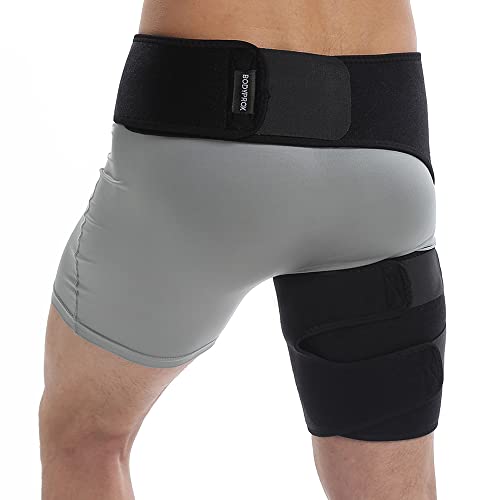
Bodyprox Adjustable Groin Wrap is the only option here explicitly built around a two-strap layout: a primary groin wrap plus a secondary strap around the waist. The maker says the design is intended to compress and stabilize the affected muscles, with the waist strap also targeting the sciatic nerve area. That layout may suit someone who wants support extending from the groin toward the waist rather than a thigh-focused sleeve. The specifications identify one count but do not provide a side selection or a size range, so buyers who need a left- or right-specific pattern should confirm that fit before choosing it.
Bottom line: Choose this if a second waist strap is the deciding design feature.
Roxofit Hip Brace, Medium Left

The maker says the wrap provides compression for the hip and thigh and is designed for wear under or over clothing. The medium left-side version is a clear match for shoppers who already know they need that side and size. The single-side medium fit is also its main limitation: it is not the flexible selection for a right leg or a different size. The maker describes heat retention as part of its design, so consider that if you prefer less warmth.
Bottom line: Choose this if you need a medium left-side wrap in perforated neoprene.
SOLOEVER Adjustable Hip Brace, Left
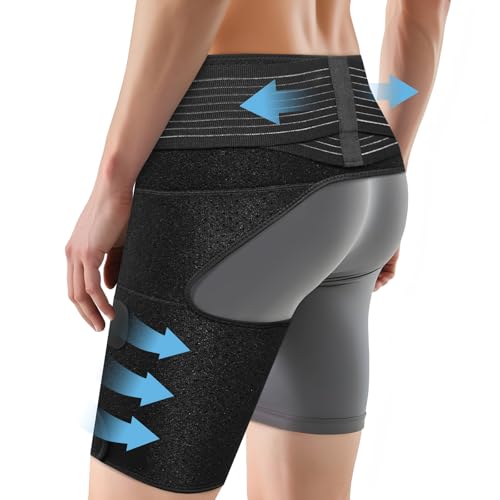
SOLOEVER Adjustable Hip Brace, Left is distinguished by its coverage across the hip, abdomen, thigh and lower back. The maker says its adjustable compression is intended to support daily activity for a range of hip and thigh complaints. That wider coverage may appeal to buyers seeking more than a narrow groin or thigh wrap. This version is identified as left-sided, which matters when matching the brace to the affected leg.
Bottom line: Choose this if you want left-side support with coverage extending to the abdomen and lower back.
Janustar Hip Compression Sleeve

Janustar Hip Compression Sleeve emphasizes ventilation, with the maker describing breathable holes in its adjustable support. It is presented for the hip and thigh, including groin and hamstring areas, and the maker says it can be worn for activities such as sitting, driving or exercise. That emphasis makes it a possible fit for shoppers who prioritize airflow in a wrap-style brace. Its dimensions are not treated as the brace’s fit range.
Bottom line: Choose this if a ventilated design and medium size suit your needs.
How to Choose a Hip Compression Wrap
Choose a hip compression wrap by matching the side, circumference fit and coverage to the area you want supported. Wraps commonly use elastic straps, hook-and-loop closures or neoprene panels; adjustable closures let you tune snugness, but they do not replace correct sizing. Measure at the points specified by the maker rather than relying on clothing size, since hip and thigh circumference can differ. If you need support on the left or right, prioritize a clearly identified side rather than assuming the wrap reverses. A practical decision rule is to choose a model with a published size range if your measurements fall near a size boundary. A wrap should feel secure without causing tingling, numbness, skin discoloration or increasing pain; loosen or remove it if those occur.
Hip Wrap Coverage and Strap Designs
Coverage matters because a groin wrap, a thigh sleeve and a wider hip brace do not support the same areas. A single thigh band mainly surrounds the upper leg, while a waist-linked design adds an anchor above the hip; wider panels can reach the abdomen or lower back. Check where each strap crosses your body and whether it can be tightened independently. The table compares the design cues that separate these options. Choose a waist-linked wrap when an anchor around the waist is important, and a broader panel when you want coverage beyond the upper thigh. More material can also mean more warmth and bulk under clothing, so a narrow design may suit buyers prioritizing a lower-profile feel.
| Design need | What to look for |
|---|---|
| Hip and upper-thigh compression | Adjustable wrap or thigh panel |
| Added waist anchoring | A second strap around the waist |
| Airflow or lower warmth | Perforated or breathable construction |
| Broader body coverage | Panels reaching abdomen or lower back |
Getting the Fit and Compression Right
A proper wrap fit is snug and stable, not tight enough to cause numbness, tingling or a change in skin color. Measure the hip or waist and thigh at the points required by the size chart; measuring over bulky clothing can distort the result. Put the wrap on while standing or in the position specified by its maker, then check that the straps lie flat and do not bunch behind the leg. Start with modest tension and adjust only enough to prevent slipping. Compression is not a reason to ignore worsening pain or weakness; stop using the wrap and seek medical advice if symptoms worsen or circulation signs appear. People with circulation problems or reduced skin sensation should consult a clinician before using compression.
When to Use and Care for a Hip Brace
Hip braces are support garments, not a diagnosis or a substitute for care when an injury is severe. For a new injury with inability to bear weight, major swelling, deformity or sudden severe pain, seek prompt medical assessment rather than relying on a wrap. During ordinary movement, check the skin after removing the brace and avoid wearing a damp wrap for long periods, since trapped moisture can irritate skin. Neoprene retains warmth, while perforations may improve airflow but do not make a brace appropriate for every skin condition. Follow the care instructions supplied with the specific garment because washing methods differ by fabric and closure. Replace a wrap if its closures no longer hold securely or the material has stretched enough to slip.
Frequently Asked Questions
How tight should a hip compression wrap feel?
A hip compression wrap should feel snug and stay in place without numbness, tingling or skin discoloration. Loosen or remove it immediately if those signs appear.
Should I choose a left or right hip brace?
Choose the side that matches the leg you intend to support; some brace versions are side-specific. Confirm the side and measure the hip or thigh at the points required by the size chart.
Can I wear a hip wrap under clothing?
Many low-profile wraps are designed to fit under or over clothing, but thicker panels and multiple straps can add bulk. Wear it over a thin layer if direct contact irritates your skin.
How long can I wear a hip compression brace?
There is no single wear duration that fits every brace or person. Start with a short period, check your skin and comfort, and stop if you develop numbness, tingling or discoloration.
Can a hip wrap help with a new severe injury?
A wrap should not delay assessment of a severe injury. Seek prompt medical care for inability to bear weight, major swelling, deformity or sudden severe pain.