
Best Indian Curry Powder: 4 Blends Compared by Fit

Rani Mild Curry Powder, 16 oz suits most cooks seeking Indian curry powder because its 10-spice blend is mild and contains no chili or peppers. Choose Rani Mild Curry Powder, 3 oz for a smaller jar of the same blend; McCormick Gourmet Organic Curry Powder is an alternative with red pepper and organic certification, while Chief Curry Powder, 8 oz is from Trinidad and Tobago rather than an explicitly Indian blend.
We earn a commission if you buy through links on this page. As an Amazon Associate I earn from qualifying purchases. Products are compared on manufacturer specifications, not hands-on testing.
- Best overall: Rani Mild Curry Powder, 16 oz – Its 10-spice mild blend contains no chili or peppers and comes in a 1-pound jar.
- Best for trying a small jar: Rani Mild Curry Powder, 3 oz – It has the same 10-spice, chili-free blend in a 3-ounce jar.
- Best for organic seasoning: McCormick Gourmet Organic Curry Powder – The blend is certified organic and includes red pepper.
- Best for Trinidadian cooking: Chief Curry Powder, 8 oz – It is a curry powder made in Trinidad and Tobago.
| Product | Best for | Size | Chili or pepper | Notable attribute | Shop |
|---|---|---|---|---|---|
| Rani Mild Curry Powder, 16 oz | Mild, frequent cooking | 16 oz | No chili or peppers | 10-spice blend | Check Price on Amazon |
| Rani Mild Curry Powder, 3 oz | Small-quantity cooking | 3 oz | No chili or peppers | 10-spice blend | Check Price on Amazon |
| McCormick Gourmet Organic Curry Powder | Organic seasoning | 1.75 oz | Red pepper | Organic blend | Check Price on Amazon |
| Chief Curry Powder, 8 oz | Trinidadian curry dishes | 8 oz | — | Made in Trinidad and Tobago | Check Price on Amazon |
Indian Curry Powder Compared
Compare the blend style, heat cues and jar size to choose a curry powder for the way you cook.
Rani Mild Curry Powder, 16 oz

For cooks who use curry powder often, this 1-pound jar holds the mild Rani blend in a larger quantity than the 3-ounce version. The 10-spice mix contains no chili or peppers and is salt-free; the brand also identifies it as vegan, kosher, non-GMO and gluten friendly. Its mild profile suits recipes where you want a spice blend without chili heat. One limitation is the large jar: occasional cooks may prefer a smaller amount so the spice is used while its aroma is still lively.
Bottom line: Pick this when you want a mild, chili-free blend in a larger jar.
Rani Mild Curry Powder, 3 oz

The 3-ounce Rani jar offers the same mild, chili-free 10-spice blend as the larger Rani option, but in a smaller quantity. It is salt-free and described by the brand as vegan, kosher, non-GMO and gluten friendly. This size makes sense for a cook who uses curry powder occasionally or wants to try a mild blend before committing to more. The tradeoff is less seasoning on hand for frequent batches, so cooks who regularly season curries, rice or vegetables may prefer a larger jar.
Bottom line: Choose this for occasional cooking or a smaller amount of the Rani blend.
McCormick Gourmet Organic Curry Powder
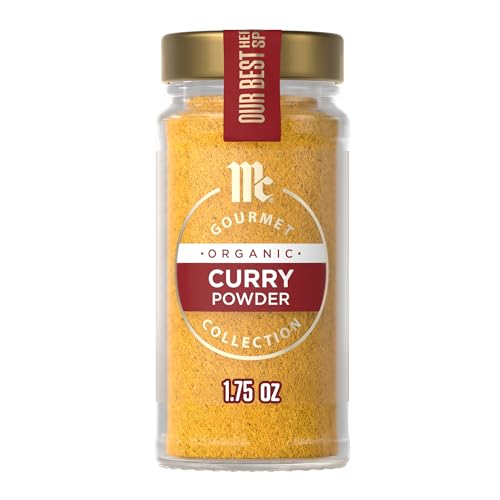
McCormick Gourmet is the only blend here identified as certified organic, and its ingredients include red pepper alongside coriander, fenugreek, turmeric and ginger. The 1.75-ounce jar is the smallest option in this comparison, useful for cooks who want an organic seasoning for Indian curries as well as roasted vegetables, rice or eggs. Unlike the Rani blends, it contains red pepper, so it is not the chili-free choice. The ingredients give a different flavor profile, but the facts do not establish a heat level.
Bottom line: Choose this when organic certification and red pepper suit your cooking.
Chief Curry Powder, 8 oz

Chief stands apart by origin: this 8-ounce curry powder is made in Trinidad and Tobago, rather than being identified as an Indian blend. That makes it a relevant option for cooks seeking a Trinidadian curry powder or comparing regional curry styles, but it is not the closest match for a specifically Indian-curry search. The product facts do not give an ingredient list or heat cue, so choose it for its regional origin rather than assuming a particular spice mix or level of chili heat.
Bottom line: Pick this for Trinidadian curry cooking, not when Indian origin is essential.
How to Choose an Indian Curry Powder
Choose by heat, ingredient preference and how quickly you will use the jar. Curry powder is a blended seasoning, not a single spice, and recipes can vary widely; the term does not guarantee one fixed Indian formula. A chili-free blend works when you need to control heat separately, while red pepper in a blend brings a different heat cue. For a quick comparison, use the label and ingredient list rather than the word “curry” alone.
| Need | Look for |
|---|---|
| Avoid chili | Blend explicitly marked without chili or peppers |
| Organic sourcing | Organic certification |
| Regional Trinidadian flavor | Trinidad and Tobago origin |
For the options here, Rani Mild Curry Powder, 16 oz and Rani Mild Curry Powder, 3 oz meet the no-chili preference, while McCormick Gourmet Organic Curry Powder is certified organic and includes red pepper.
Curry Powder and Indian Masala Are Not Interchangeable
Curry powder is a pre-mixed seasoning, while masala commonly refers to a spice blend whose ingredients and proportions vary by dish and region. Many Indian recipes build flavor by frying whole spices in oil at the start, then adding ground spices; adding a premixed powder does not recreate that sequence by itself. Ground spices can scorch quickly, so stir them briefly into oil over moderate heat and add liquid soon after rather than leaving them in a dry, hot pan. Use a recipe’s named spices when it specifies a particular masala or whole-spice tempering; use curry powder when the recipe calls for a general blended seasoning.
How Much Curry Powder to Use
Start with about 1 teaspoon of curry powder per 4 servings, then adjust to taste; recipes and blend strength differ, so treat that as a starting point rather than a fixed ratio. For a dish with 1 pound of vegetables or meat, begin with 1 to 2 teaspoons and add more after simmering if the seasoning tastes faint. Bloom the powder in oil for roughly 20 to 30 seconds, stirring constantly, then add wet ingredients before it darkens. This brief cooking helps disperse the spices, while prolonged high heat can make ground spices taste bitter.
Store Curry Powder for Better Flavor
Keep curry powder tightly closed in a cool, dry cupboard away from the stove, sunlight and steam. Ground spices generally hold their best flavor for about 6 months after opening, though they may remain usable longer; aroma fades before the seasoning becomes unsafe. Buy a jar size that fits your pace: a 3-ounce jar suits infrequent cooking better than a 1-pound jar, while regular cooks may prefer the larger quantity. A dull smell or weak aroma is a practical sign that the blend may no longer bring much flavor, even if the powder still looks normal.
Frequently Asked Questions
Does curry powder have one standard Indian recipe?
No single formula defines Indian curry powder, and many Indian dishes use recipe-specific masalas instead. Blends can differ in spices, proportions and heat, so check the ingredients when a dish calls for a particular flavor.
How can I make curry powder less spicy?
Choose a blend explicitly labeled without chili or peppers, then add it gradually. For a prepared dish that is already too spicy, increasing the unsalted base ingredients can dilute the heat without changing the seasoning blend itself.
Should I toast curry powder before adding liquid?
Briefly bloom ground curry powder in oil for about 20 to 30 seconds, stirring so it does not scorch. Add liquid promptly; dry, high heat can make ground spices bitter.
How much curry powder should I use for four servings?
Start with about 1 teaspoon for four servings and adjust after tasting. A stronger or milder blend, and the other spices in the recipe, can change the amount needed.
How long does opened curry powder keep its flavor?
Ground spices generally retain their best flavor for about 6 months after opening. Store the jar tightly closed in a cool, dry cupboard; heat, light and moisture can dull its aroma sooner.