
Gossen Luna Pro Light Meter: Three Models Compared

For a Gossen Luna Pro light meter with incident, reflected and flash metering, choose Gossen Luna-Pro F; Gossen Luna Pro SBC suits photographers who prefer a digital EV readout and setting ring. These handheld meters help translate light readings into camera exposure settings.
Choose Gossen Luna-Pro with Leather Case if the original leather case matters more than a confirmed feature set, but verify that the meter works before relying on it.
We earn a commission if you buy through links on this page. As an Amazon Associate I earn from qualifying purchases. Products are compared on manufacturer specifications, not hands-on testing.
- Best overall: Gossen Luna-Pro F – Its name specifies analog incident, reflected and flash metering.
- Best for digital readout: Gossen Luna Pro SBC – The SBC displays EV and transfers the reading to a ring of shutter-speed and aperture combinations.
- Best for a case: Gossen Luna-Pro with Leather Case – The model is described with an original leather case.
| Product | Best for | Metering modes | Readout | Extra feature | Shop |
|---|---|---|---|---|---|
| Gossen Luna-Pro F | Flash metering | Incident, reflected, flash | Analog | — | Check Price on Amazon |
| Gossen Luna Pro SBC | EV readout | Incident, reflected | Digital EV | Clock, alarm, timer, temperature | Check Price on Amazon |
| Gossen Luna-Pro with Leather Case | Case included | — | — | Original leather case | Check Price on Amazon |
Gossen Luna Pro Light Meter Models
Compare the metering modes and readout styles to match a meter to your camera workflow.
Gossen Luna-Pro F
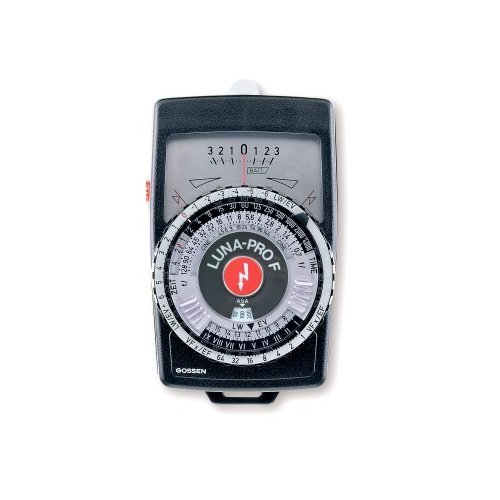
Gossen Luna-Pro F is the option in this group whose name explicitly identifies analog incident, reflected and flash metering. That combination suits photographers who need a handheld meter for both available light and flash exposures. Its analog operation distinguishes it from the digital readout of Gossen Luna Pro SBC. The product name also identifies it as model 4030. Choose it when those three modes are the deciding requirements; if you specifically want an EV display and exposure-setting ring, Gossen Luna Pro SBC is the closer match.
Bottom line: Pick this if you need an analog meter identified for incident, reflected and flash readings.
Gossen Luna Pro SBC

Gossen Luna Pro SBC pairs incident or reflected readings with a digital EV display that transfers to a setting ring, where shutter-speed and aperture combinations can be read together. That readout approach makes it the distinct choice for photographers who want exposure combinations visible at a glance. It also includes a clock, alarm, timer and temperature readout. The modes do not identify flash metering, so photographers who need a meter explicitly identified for flash should consider Gossen Luna-Pro F instead.
Bottom line: Choose this for the digital EV readout and exposure-setting ring.
Gossen Luna-Pro with Leather Case

Gossen Luna-Pro with Leather Case stands apart because its name identifies an original leather case, while the other Gossen options here name particular metering modes or readout features. It may suit a buyer seeking a Luna-Pro meter with its case rather than a specific documented mode set. The model name alone does not distinguish its metering capabilities, so do not choose it when incident, reflected or flash operation is essential without first verifying that the meter works and has the functions you need.
Bottom line: Pick this when the original leather case is a priority and you can verify operation.
How to Choose a Gossen Luna Pro Light Meter
Choose by metering mode first, then by how you want to read exposure. Incident metering measures light falling on a subject, while reflected metering measures light bouncing from the subject toward the meter; the two approaches can yield different readings because subject reflectance affects reflected readings. Flash metering is a separate requirement from ambient-light metering. If you need a meter explicitly identified for incident, reflected and flash use, Gossen Luna-Pro F names all three. For an EV display and a ring of shutter-speed and aperture combinations, Gossen Luna Pro SBC describes that workflow. A classic exposure meter helps set camera exposure, but it does not replace checking focus, motion blur or depth of field in the camera. Match the meter to the job rather than assuming every Luna Pro variant has identical functions.
Incident and Reflected Metering Compared
Incident and reflected readings answer different questions, so choose the method based on where you can measure and what is in the frame. An incident reading measures illumination at the subject, commonly with the meter held at the subject and aimed toward the camera; a reflected reading measures the scene from the camera position. Bright or dark subjects can mislead a reflected meter because it measures the light returned by the scene, not just the illumination falling on it. Use an incident reading when you can safely reach the subject and want to measure its illumination; use reflected readings when the subject is distant or inaccessible. The table summarizes the practical choice.
| Method | Measures | Useful when |
|---|---|---|
| Incident | Light falling on subject | You can meter at the subject |
| Reflected | Light returned from scene | Subject is distant or inaccessible |
| Flash | Flash exposure | Flash is part of the lighting setup |
Exposure Metering Mistakes to Avoid
Keep the meter’s position and the camera’s settings consistent when turning a reading into an exposure. A reflected reading taken from a bright sky or dark clothing can shift the suggested exposure because those surfaces return different amounts of light; meter the important subject area instead of an unrepresentative background. For incident readings, hold the meter at the subject’s position and orient it according to the meter’s design. With flash, confirm that the meter and flash are set to compatible modes before taking a reading. Older handheld meters also rely on working controls and readable scales, so verify operation before a shoot rather than discovering a fault on location. Record shutter speed and aperture together to avoid transferring only part of an exposure setting.
Frequently Asked Questions
What is the difference between incident and reflected light readings?
Incident readings measure light falling on a subject, while reflected readings measure light bouncing from the scene. A bright or dark subject can affect reflected readings because the meter sees the light returned by the subject.
Where should I hold a meter for an incident reading?
Take an incident reading at the subject’s position so the meter measures light falling there. If you cannot safely reach the subject, a reflected reading from the camera position is more practical.
Can a light meter measure flash exposure?
A meter needs a flash mode to measure flash exposure; ambient-only metering does not establish flash exposure. Gossen Luna-Pro F is identified for flash metering, so confirm flash capability when choosing a different model.
Why can a reflected reading change with the subject?
A reflected meter measures light returned by the scene, so a bright surface and a dark surface under the same illumination can produce different readings. Aim at the subject area that should guide the exposure rather than an unusually bright or dark background.
What should I check on an older handheld light meter?
Verify that the controls move, the readout is legible and the meter responds to light before relying on it. For a vintage meter, confirm the operation and required metering modes before a shoot.