
1-Inch Foam Noodles: Craft Rods and Pipe Tubes Compared

For general craft use, Frienda Black Foam Noodle, 1 in x 40 ft is the closest fit because its 1-inch foam rope runs 40 feet and can be bent or cut for projects. Choose Blue Expanded Polyethylene Foam Noodle, 1 in x 40 ft instead if expanded polyethylene is important, or a pipe tube if you need insulation rather than a solid craft rod.
We earn a commission if you buy through links on this page. As an Amazon Associate I earn from qualifying purchases. Products are compared on manufacturer specifications, not hands-on testing.
- Best overall: Frienda Black Foam Noodle, 1 in x 40 ft – A 1-inch-diameter, 40-foot flexible foam rope suits a range of craft projects.
- Best for expanded polyethylene: Blue Expanded Polyethylene Foam Noodle, 1 in x 40 ft – This 40-foot blue tube is made from expanded polyethylene foam.
- Best for multiple pipe sections: Amylove Pre-Slit Pipe Foam, 12 x 3.3 ft – Twelve 3.3-foot pre-slit tubes are sized for 1-inch copper pipes.
| Product | Best for | Diameter or pipe fit | Length | Form | Shop |
|---|---|---|---|---|---|
| Frienda Black Foam Noodle, 1 in x 40 ft | Long craft projects | 1 in diameter | 40 ft | Foam rope | Check Price on Amazon |
| Blue Expanded Polyethylene Foam Noodle, 1 in x 40 ft | Material-specific crafts | 1 in diameter | 40 ft | Foam tube | Check Price on Amazon |
| Amylove Pre-Slit Pipe Foam, 12 x 3.3 ft | Pipe insulation | 1.65 in OD; 1.06 in ID | 3.3 ft each | Pre-slit tubes | Check Price on Amazon |
| Foam Pipe Tube, 1 in ID x 6 ft | Short insulation runs | 1 in ID; 1.41 in OD | 6 ft | Foam tube | Check Price on Amazon |
1-Inch Foam Noodles Compared
Compare the foam format and dimensions first, since craft rods and pipe insulation serve different jobs.
Frienda Black Foam Noodle, 1 in x 40 ft

Frienda Black Foam Noodle, 1 in x 40 ft gives craft projects a continuous 40-foot length, rather than a set of short pipe sleeves. The black foam rope measures 1 inch across and is described as flexible enough to bend, twist, and cut into shapes for modeling and DIY work. Its roll format makes it suitable when a project needs long runs or repeated pieces. The material is described as soft and lightweight. The main limitation is its craft-rod format: choose a pre-slit tube instead when you need a sleeve that opens around an existing pipe.
Bottom line: Choose this for long craft runs that need a 1-inch foam rod.
Blue Expanded Polyethylene Foam Noodle, 1 in x 40 ft
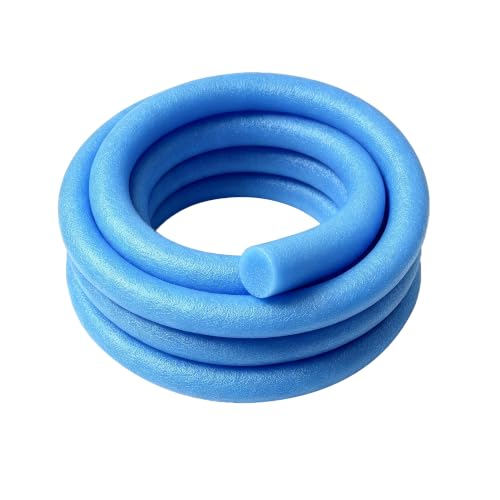
Blue Expanded Polyethylene Foam Noodle, 1 in x 40 ft stands out for its expanded polyethylene construction and 40-foot length. The blue foam tube measures 1 inch in diameter and is described as closed-cell, flexible, and easy to cut, which suits modeling, craft shaping, or work where a foam backer rod is needed. The maker also describes resistance to moisture and heat, but those claims do not establish a particular insulation rating or building-code suitability. Its cylindrical tube form is not the same as a pre-slit pipe sleeve, so check the opening and fit before choosing it to wrap a pipe.
Bottom line: Choose this when expanded polyethylene is the deciding material.
Amylove Pre-Slit Pipe Foam, 12 x 3.3 ft

Amylove Pre-Slit Pipe Foam, 12 x 3.3 ft is designed around pipe wrapping rather than a solid 1-inch craft rod: each of its 12 white tubes is about 3.3 feet long and pre-slit. Its 1.06-inch inner diameter is intended for 1-inch copper pipe, while the outer diameter is 1.65 inches. The PEP foam is described as flexible and reusable, and the pieces can also suit some craft uses. The important limitation is the mismatch between its 1-inch pipe fit and the search for a 1-inch-diameter solid noodle; use the inner and outer measurements to confirm the application.
Bottom line: Choose this for multiple short, pre-slit sleeves around 1-inch copper pipe.
Foam Pipe Tube, 1 in ID x 6 ft

Foam Pipe Tube, 1 in ID x 6 ft is a short pipe-insulation tube with a 1-inch inner diameter and 1.41-inch outer diameter, not a solid 1-inch-wide craft rod. Its six-foot length suits a limited run or a piece to cut for an AC unit or guitar stand. The maker describes the material as low-density closed-cell foam and gives an operating temperature range from -50 to 110 °C. Flame-retardant and thermal-performance statements are maker claims, so verify suitability for the intended installation and local requirements. The single six-foot tube offers less continuous length than the craft ropes.
Bottom line: Choose this for a short pipe or equipment-covering run with a 1-inch inner diameter.
How to choose a 1-inch foam noodle
Start by deciding whether you need a solid craft rod or a sleeve around a pipe; a 1-inch outside diameter and a 1-inch inside diameter are different measurements. Craft rods are suited to shaping, modeling, and cutting, while pipe sleeves use an inner diameter to fit over a pipe. For the options here, the 40-foot ropes favor long craft projects, while the pre-slit insulation pieces favor wrapping pipes. Match the measurement to the job: choose by outside diameter for a rod, and by inner diameter for a sleeve. If a pipe is labeled 1 inch, confirm the sleeve is explicitly intended for that nominal pipe size rather than relying on the foam’s outer diameter.
Craft rods and pipe insulation are different formats
Craft foam ropes and pipe insulation tubes differ in how they fit and are used. A craft rope is a continuous cylinder that can be cut or bent; pipe insulation is commonly split lengthwise so it can close around a pipe. Closed-cell polyethylene foam is often used where moisture resistance matters, but performance depends on the exact product and installation. For pipes, measure the outside diameter and account for the insulation wall thickness, which increases the covered diameter. For a craft project, compare continuous length and flexibility instead. The table distinguishes the formats in this selection; the 1-inch dimensions do not mean every item has the same fit.
| Format | Dimension to match | Typical job |
|---|---|---|
| Craft rod or rope | Outside diameter | Shaping and modeling |
| Pipe sleeve | Inside diameter and pipe size | Insulating or covering a pipe |
Measure pipe foam before fitting
Pipe-fit decisions depend on the tube’s inside diameter and whether it is pre-slit. A nominal 1-inch copper pipe is not a 1-inch outside-diameter tube, so use a sleeve specifically sized for the pipe rather than comparing nominal sizes alone. A pre-slit sleeve can open for installation around an existing pipe; a closed tube may need to slide on from an end. Also consider the finished outside diameter: insulation makes the pipe assembly wider, which can affect tight clearances and clamps. For a run longer than 6 feet, the 40-foot craft ropes offer more length but are not automatically pipe-insulation substitutes.
Cut and handle foam tubes safely
Foam is easy to damage with a rough cut, so use a sharp utility knife or shears and cut on a stable surface, keeping fingers clear of the blade. Measure each section before cutting; short pieces cannot be rejoined seamlessly. Foam insulation is not a substitute for a pipe’s required freeze protection, heat rating, or fire-rated assembly. The six-foot tube’s operating range is a maker claim, not a universal rating for every installation. Keep foam away from direct flame and hot surfaces unless the specific product is approved for that exposure, and verify the required material ratings for the installation.
Frequently Asked Questions
How do I tell a 1-inch rod from a 1-inch pipe sleeve?
A rod’s 1-inch measurement is its outside diameter, while a sleeve’s 1-inch measurement may refer to its inside diameter. Check both the measured pipe size and the foam’s inner or outer diameter before fitting.
Can I cut a 40-foot foam noodle into shorter pieces?
Yes, the craft-rope options are described as cuttable, so measure each segment before making a clean cut. Use a sharp blade on a stable surface and keep hands out of the cutting path.
Does a pre-slit foam tube fit over an installed pipe?
A pre-slit tube can open around an existing pipe instead of needing to slide on from an end. Confirm the sleeve’s inside diameter is intended for the pipe size, because its outer diameter does not determine fit.
How much longer is the 40-foot craft rope than the 6-foot tube?
The 40-foot rope is 34 feet longer than the 6-foot tube. That extra continuous length favors larger craft runs, while a shorter pipe sleeve may suit a small equipment section.
Can pipe insulation foam go around hot equipment?
Only use foam within the temperature and fire requirements for the specific installation. One tube’s maker gives a range of -50 to 110 °C, but check the applicable equipment requirements and keep foam clear of direct flame.