
Silicone Nose Pads: 4 Options by Fit and Mounting

Silicone Adhesive Nose Pads, 20 Pairs suits most people who want adhesive silicone nose pads, with 20 pairs and a peel-and-stick design for many frame styles. Choose Mr.ZzjOOj Screw-In Air-Chamber Pads instead for frames with screw-in mounts; adhesive pads will not replace that hardware.
Eyeglass nose pads cushion the bridge where frames touch the nose, and the right attachment style must match the frame.
We earn a commission if you buy through links on this page. As an Amazon Associate I earn from qualifying purchases. Products are compared on manufacturer specifications, not hands-on testing.
- Best overall: Silicone Adhesive Nose Pads, 20 Pairs – The adhesive design and 20-pair pack suit people replacing stick-on pads on varied frames.
- Best for screw-in frames: Mr.ZzjOOj Screw-In Air-Chamber Pads – The set includes six pairs of screw-in air-chamber pads and a micro screwdriver.
- Best for a slim profile: Bloom&Bloom 1 mm Adhesive Nose Pads – The 1 mm adhesive pads have a teardrop shape.
| Product | Best for | Attachment | Pad size (mm) | Pack size | Shop |
|---|---|---|---|---|---|
| Silicone Adhesive Nose Pads, 20 Pairs | Multi-pair supply | Adhesive | 19 × 8 mm | 20 pairs | Check Price on Amazon |
| Bloom&Bloom 1 mm Adhesive Nose Pads | Slim adhesive fit | Adhesive | 1 mm | 6 pairs | Check Price on Amazon |
| Mr.ZzjOOj Screw-In Air-Chamber Pads | Screw-in frames | Screw-in | 15 × 8 mm | 6 pairs | Check Price on Amazon |
Silicone Nose Pads for Glasses
Match the replacement pads to your frame’s mounting style and the space on its bridge.
Silicone Adhesive Nose Pads, 20 Pairs
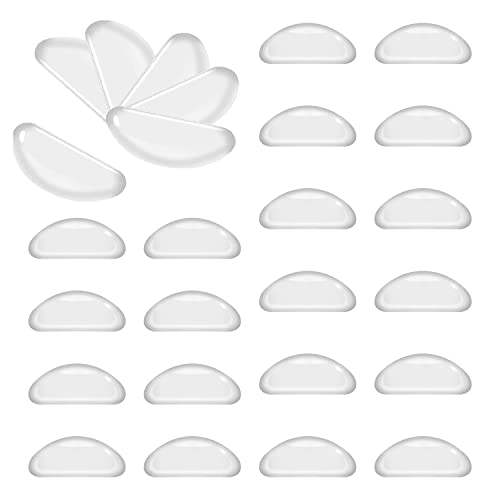
For people who want multiple adhesive replacements, this set has 20 pairs of transparent silicone pads. The maker says to clean the application area with rubbing alcohol and let it dry thoroughly before sticking on a pad; that preparation matters because oil or moisture can interfere with adhesion. The size is 19 × 8 mm, so compare it with the available area on the frame before applying. These pads suit many eyeglasses and sunglasses, but they are not a replacement for screw-in pads or other built-in mounting hardware.
Bottom line: Pick this set if you want a multi-pair supply of adhesive pads and have a clean, flat application area.
Bloom&Bloom 1 mm Adhesive Nose Pads

The 1 mm thickness is the distinguishing feature here: these adhesive silicone pads are designed for a slimmer profile than thicker cushioning. Their teardrop shape is intended to follow the nose bridge, and the six-pair pack is aimed at plastic frames and sunglasses. The maker claims the upgraded adhesive lasts up to three times longer than ordinary nose pads and peels off without residue or frame damage. Adhesive pads need a suitable surface to hold, so choose another mounting style if your frame has screw-in pads or lacks a usable contact area.
Bottom line: Choose these when a slim, teardrop-shaped adhesive pad is the priority.
Mr.ZzjOOj Screw-In Air-Chamber Pads

Unlike adhesive replacements, these pads attach with screws and are meant only for frames with screw-in nose pads. The set includes six pairs of soft silicone air-chamber pads, matching screws, and a micro screwdriver. The maker says the air-chamber design deforms under frame pressure and that a plastic backbone supports the frame. The 15 × 8 mm size gives a useful fit check before purchase: compare it with the existing pads and the available bridge space. This option will not suit plastic frames that rely on stick-on pads.
Bottom line: Pick these for a frame that already has screw-in nose pads and a compatible pad size.
How to Choose Silicone Nose Pads
Start by matching the attachment, because adhesive pads and screw-in pads are not interchangeable. Adhesive styles stick to a clean surface on many plastic frames; screw-in styles need a frame with matching screw mounts. Next, compare the pad footprint and thickness with the bridge area: a pad that overhangs an edge can catch or peel, while one that is too small may not cover the contact point. Adhesive-pad instructions commonly call for cleaning with rubbing alcohol and letting the surface dry fully before application. A simple decision rule is to choose screw-in replacements only when the frame already has screw mounts; otherwise, look for adhesive pads that fit the available flat area.
Adhesive and Screw-In Nose Pads Compared
Adhesive pads add a layer to a frame surface, while screw-in pads replace a mechanically attached pad. The mounting style determines compatibility more than the silicone material does. Use the comparison below to narrow the choice before considering shape or thickness.
| Mount style | Frame requirement | Fit check |
|---|---|---|
| Adhesive | Flat, clean contact area | Pad footprint and surface space |
| Screw-in | Existing screw mount | Screw position and pad dimensions |
Do not force a screw-in pad onto an adhesive frame or use adhesive pads to cover a screw mount. If the current mount is unclear, inspect the frame where the pad attaches before choosing a replacement.
How to Apply Adhesive Nose Pads
Adhesive nose pads hold best when the frame surface is clean, dry, and large enough for the whole pad. Remove old adhesive residue, clean the contact area with rubbing alcohol, and let it dry completely before placing a replacement. Align both pads evenly so they contact the nose in corresponding positions; uneven placement can make the frame sit crooked. Press the adhesive surface into place, then allow it to settle before regular wear. Sweat, skin oils, and repeated handling can weaken adhesive over time, so replace a pad once an edge lifts rather than pressing debris back underneath it.
When to Replace Glasses Nose Pads
Replace nose pads when they are loose, torn, hardened, discolored, or no longer sit securely on the frame. Adhesive pads often need attention first at an edge that begins to lift; moisture and skin oils can shorten their hold. Screw-in pads need a separate check: a loose screw can let a pad shift even when the silicone remains intact. Keep replacement parts matched to the original mount and dimensions rather than choosing only by material. Nose pads affect how glasses sit, but they do not correct a poorly adjusted frame; if a frame remains crooked or presses unevenly after replacement, an optician can adjust its fit.
Frequently Asked Questions
How do I know whether my glasses need screw-in or adhesive nose pads?
Check the pad attachment on the frame: a visible screw mount calls for screw-in pads, while a flat frame surface can accept adhesive pads. Adhesive replacements cannot substitute for a missing screw mount.
How should I prepare glasses before sticking on nose pads?
Clean the application area with rubbing alcohol and let it dry fully before applying the pad. Oil or moisture can compromise the adhesive bond.
Can adhesive nose pads fit every plastic frame?
No; the frame needs a clean, flat area large enough for the pad footprint. Compare the pad size with the bridge surface before applying it.
When should I replace adhesive nose pads?
Replace an adhesive pad when an edge lifts, it shifts, or the silicone is damaged. Sweat and skin oils can weaken the bond, so a loose pad should not be treated as secure.
Do thicker nose pads always stop glasses from slipping?
No; thickness alone does not ensure a stable fit. Slipping also depends on frame shape, pad placement, and the contact surface, so match the pad profile to the available bridge area.