
Kirkland No Salt Seasoning: 4 Blends Compared

Kirkland Signature Organic No-Salt Seasoning is the closest match for Kirkland no salt seasoning: it is an organic, 21-spice blend in a 14.5-ounce bottle. Choose another blend if you need a larger bottle or a vegetable-focused mix; the options below include both.
Salt-free seasoning blends combine herbs and spices without salt, while a potassium-based salt substitute is a different product type.
We earn a commission if you buy through links on this page. As an Amazon Associate I earn from qualifying purchases. Products are compared on manufacturer specifications, not hands-on testing.
- Best overall: Kirkland Signature Organic No-Salt Seasoning – The only Kirkland match here, with an organic 21-spice blend in a 14.5-ounce bottle.
- Best for a larger bottle: Badia 14 Spices Salt-Free Seasoning – Its 20-ounce bottle is the largest among the seasoning blends.
- Best for vegetables: McCormick Salt Free Vegetable Seasoning – The blend combines onion, garlic, tomato and red bell pepper for vegetable dishes.
| Product | Best for | Package size | Blend | Distinctive feature | Shop |
|---|---|---|---|---|---|
| Kirkland Signature Organic No-Salt Seasoning | Kirkland shoppers | 14.5 oz | 21 spices | Organic; includes cup | Check Price on Amazon |
| Badia 14 Spices Salt-Free Seasoning | Larger bottle | 20 oz | 14 spices | Garlic, onion, herbs | Check Price on Amazon |
| Dash Original Salt-Free Seasoning | Original blend | 21 oz | Original blend | 21 oz package | Check Price on Amazon |
| McCormick Salt Free Vegetable Seasoning | Vegetable dishes | 4.16 oz | Onion, garlic, tomato | No salt or MSG added | Check Price on Amazon |
Kirkland No Salt Seasoning and Alternatives
Compare the Kirkland blend with salt-free seasonings that differ in size, blend composition and intended use.
Kirkland Signature Organic No-Salt Seasoning

Kirkland Signature Organic No-Salt Seasoning is the only Kirkland option here and pairs a 14.5-ounce bottle of organic no-salt seasoning with a collapsible silicone cup. The blend contains 21 spices and is kosher. It suits shoppers who want the Kirkland blend in a bundle rather than a seasoning bottle alone. The cup is an extra, not another seasoning; buyers who want only a spice blend may prefer a standalone alternative. Use the seasoning as a salt-free way to add a multi-spice flavor to meals, and adjust the amount to suit the dish.
Bottom line: Pick this if you specifically want Kirkland’s organic 21-spice blend and do not mind the bundled cup.
Badia 14 Spices Salt-Free Seasoning
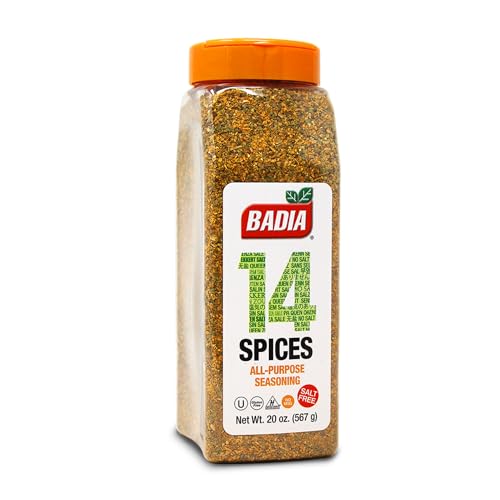
Badia 14 Spices Salt-Free Seasoning has a larger 20-ounce bottle than the Kirkland blend and uses 14 spices, including garlic, onion and parsley. The maker positions it as an all-purpose blend for cooking, grilling, marinades, meats, vegetables, soups and salads. Its broad kitchen use makes it a sensible alternative if bottle size matters more than matching Kirkland’s organic 21-spice profile. The tradeoff is that the ingredient examples do not establish a full recipe or sodium amount per serving, so check the package label if those specifics will determine your choice.
Bottom line: Choose this for a larger salt-free all-purpose blend with garlic, onion and herbs.
Dash Original Salt-Free Seasoning

Dash Original Salt-Free Seasoning is the largest seasoning bottle in this comparison at 21 ounces, and its name identifies it as Dash’s Original salt-free blend. That makes it a practical alternative for cooks who want a larger quantity without switching to a vegetable-specific seasoning. The product facts do not give its spice count or ingredients, so buyers who need to avoid a particular herb or spice should inspect the package before choosing it. Its package dimensions are not a substitute for the useful distinction here: this is a large, general-purpose original blend.
Bottom line: Choose this when a 21-ounce package of an original salt-free blend is the priority.
McCormick Salt Free Vegetable Seasoning

McCormick Salt Free Vegetable Seasoning is the purpose-specific choice: its blend includes onion, garlic, tomato and red bell pepper, and the maker says no salt or MSG is added. The 4.16-ounce bottle is much smaller than the Kirkland, Badia and Dash packages, which can suit cooks who want a focused vegetable seasoning rather than a large all-purpose blend. The maker also suggests it for salads, chicken, fish, eggs, rice and pasta. The narrower vegetable-seasoning identity is the limitation for anyone seeking a general seasoning to use across many recipes.
Bottom line: Pick this for a smaller bottle centered on vegetables and other everyday dishes.
How to Choose a Salt-Free Seasoning
Start with the dish and the blend’s ingredients, then compare package size. A general blend works across soups, vegetables and grilled foods, while a vegetable seasoning can center ingredients such as onion, garlic, tomato and pepper. Salt-free and sodium-free are regulated label claims: FDA definitions set “sodium-free” at less than 5 milligrams of sodium per serving, while “very low sodium” means 35 milligrams or less per serving. A seasoning may still contribute sodium from ingredients, so check the Nutrition Facts panel when counting intake. For reference, the FDA Daily Value for sodium is less than 2,300 milligrams per day. Pick a smaller bottle when you are trying a distinct flavor; choose a larger bottle only if you expect to use it regularly.
Salt-Free Blend Versus Salt Substitute
A salt-free seasoning blend is made from herbs and spices, while a salt substitute may replace sodium chloride with potassium chloride. Potassium chloride can taste more bitter or metallic than sodium chloride, especially at higher amounts. People with chronic kidney disease or taking medicines that can raise blood potassium should ask a clinician before using potassium-based salt substitutes. If the goal is to add flavor without adding table salt, choose an herb-and-spice blend; if replacing the saltiness itself, read the substitute’s ingredient panel and consider medical constraints first.
How to Use Salt-Free Seasoning in Recipes
Salt-free blends add aroma and spice but do not reproduce salt’s salty taste, so they will not make a dish taste exactly like a salted version. Add a small amount early enough for the flavors to mingle, then taste before adding more; seasoning blends can vary in strength and recipes vary in volume. Dry rubs work well on foods with a surface that can hold the spices, while soups and sauces give dried herbs time to hydrate. For a dish that needs more brightness, acid such as lemon juice or vinegar can balance flavor without adding sodium. Do not assume a “salt-free” label means zero sodium in every serving; use the Nutrition Facts panel when tracking a daily sodium limit.
Storing Seasoning for Better Flavor
Store dried seasoning in a tightly closed container away from heat, steam and direct sunlight; a cool, dry cabinet is better than the shelf beside a stove. Ground spices generally keep their best flavor for about 2 to 3 years, while leafy dried herbs often fade sooner, around 1 to 3 years. These are flavor windows, not food-safety cutoffs, and a mixed seasoning may lose aroma at different rates depending on its ingredients and storage. Replace a blend when its smell has faded or it no longer flavors food at the usual amount. Keep measuring spoons dry to avoid introducing moisture, which can cause clumping and shorten quality life.
Frequently Asked Questions
Does salt-free seasoning contain any sodium?
Salt-free seasoning can still contain a small amount of sodium from its ingredients. FDA rules define “sodium-free” as less than 5 milligrams per serving, so check the Nutrition Facts panel if you are tracking sodium closely.
Is potassium salt the same as a salt-free seasoning blend?
No. Potassium salt substitutes use potassium chloride in place of sodium chloride, while seasoning blends use herbs and spices for flavor. People with kidney disease or medicines that affect potassium should consult a clinician before using a potassium-based substitute.
How long does an opened seasoning blend stay flavorful?
Most dried spices retain their best flavor for roughly 2 to 3 years, while leafy dried herbs often fade within 1 to 3 years. Heat, light and moisture can shorten those windows, so store the blend tightly closed in a cool, dry cabinet.
When should I add salt-free seasoning to soup?
Add dried seasoning early enough for the herbs and spices to hydrate, then taste before adding more near the end. Salt-free blends add spice and aroma but do not duplicate salt’s salty taste.
What does sodium-free mean on a seasoning label?
The FDA definition of sodium-free is less than 5 milligrams of sodium per serving. A seasoning can be salt-free without having literally zero sodium, so check serving size and sodium per serving when the amount matters.