
NORTIV 8 Running Shoes: Models Compared by Fit

For most everyday workouts, NORTIV 8 ActiveFloat Walking Running Shoe is the clearest fit because its cushioned EVA midsole and rubber outsole suit walking, running and gym use. Choose a trail-focused model instead for uneven ground, or a wide toe-box design if you want more room at the forefoot.
We earn a commission if you buy through links on this page. As an Amazon Associate I earn from qualifying purchases. Products are compared on manufacturer specifications, not hands-on testing.
- Best overall: NORTIV 8 ActiveFloat Walking Running Shoe – Its EVA midsole and rubber outsole are suited to running, walking and gym workouts.
- Best for rugged trails: NORTIV 8 Trail Running Shoe with 4 mm Lugs – Its full-rubber outsole has 4 mm multidirectional lugs and a TPU toe.
- Best for a low drop: NORTIV 8 Wide Toe Box Trail Shoe, 5 mm Drop – The 5 mm heel-to-toe drop and wide toe box distinguish this trail shoe.
- Best for a roomy toe box: NORTIV 8 Wide Toe Box Trail Shoe – The wide toe box is paired with an arch-support insole.
| Product | Best for | Design | Toe box | Outsole or drop | Shop |
|---|---|---|---|---|---|
| NORTIV 8 ActiveFloat Walking Running Shoe | Daily workouts | Walking/running | Standard | Rubber outsole | Check Price on Amazon |
| NORTIV 8 Trail Running Shoe with 4 mm Lugs | Rugged trail paths | Trail running/walking | Standard | 4 mm lugs | Check Price on Amazon |
| NORTIV 8 Wide Toe Box Trail Shoe, 5 mm Drop | Low-drop trail use | Trail running | Wide | 5 mm drop | Check Price on Amazon |
| NORTIV 8 Wide Toe Box Trail Shoe | Roomy forefoot | Trail running | Wide | — | Check Price on Amazon |
| NORTIV 8 Women’s ActiveBreeze Walking Running Shoe | Women’s daily walks | Walking/running | Standard | Rubber outsole | Check Price on Amazon |
NORTIV 8 running shoes
Compare the everyday and trail-focused designs by the features that affect fit and terrain.
NORTIV 8 ActiveFloat Walking Running Shoe

Among these NORTIV 8 options, NORTIV 8 ActiveFloat Walking Running Shoe is the everyday walking and running design rather than a trail-specific shoe. Its thick EVA midsole is paired with a mesh-foam insole, a breathable mesh upper and a TPU film for added structure. The rubber outsole is described as slip-resistant, making this a reasonable choice for pavement, gym sessions and general daily wear. The tradeoff is that its features do not include the trail lugs or toe protection found on dedicated trail models, so runners tackling rocky or uneven paths should consider a trail shoe instead.
Bottom line: Choose this for a general walking, running and gym shoe.
NORTIV 8 Trail Running Shoe with 4 mm Lugs

For rougher ground, NORTIV 8 Trail Running Shoe with 4 mm Lugs stands out with a full-rubber outsole and 4 mm multidirectional lugs, plus a TPU toe intended to shield against roots and bumps. Its flexible EVA midsole provides cushioning and responsive energy return, while the maker describes the outsole as grippy on trails, dirt paths, wet surfaces and uneven terrain. This combination makes it the most trail-protective choice among the standard-width options here. The tradeoff is its conventional toe-box design; runners who need extra forefoot room may prefer one of the wide toe-box models.
Bottom line: Pick this for trail routes where lugged traction and toe protection matter.
NORTIV 8 Wide Toe Box Trail Shoe, 5 mm Drop

NORTIV 8 Wide Toe Box Trail Shoe, 5 mm Drop is the trail option with a specified 5 mm heel-to-toe drop, a useful distinction for shoppers comparing drop rather than just cushioning. The wide toe box is designed to let toes spread, and its engineered mesh upper has TPU overlays for structure. That makes it a fit-focused alternative for trail running, hiking and walking.
Bottom line: Choose this if you want a wide toe box and a 5 mm drop.
NORTIV 8 Wide Toe Box Trail Shoe
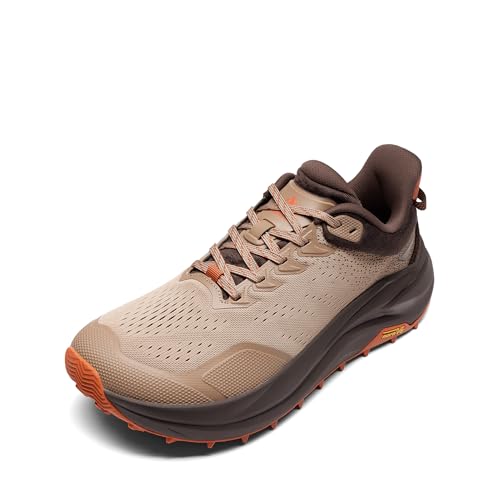
NORTIV 8 Wide Toe Box Trail Shoe pairs a roomy toe box with a Jacquard mesh upper, an arch-support insole and a lightweight EVA midsole. Compared with the other wide toe-box option, its features emphasize arch support and cushioning for running or walking rather than a specified heel-to-toe drop. The maker describes the upper as sweat-wicking and the rubber outsole as grippy. It may suit runners who want more toe space but do not require a drop measurement.
Bottom line: Pick this for a roomy forefoot with an arch-support insole.
NORTIV 8 Women’s ActiveBreeze Walking Running Shoe

NORTIV 8 Women’s ActiveBreeze Walking Running Shoe is the women’s walking and running option in this group, with a mesh upper and thick EVA midsole. The rubber outsole is described as slip-resistant for pavement and gym floors, making the design more relevant to everyday walks and workouts than trail routes. Its features focus on cushioning, airflow and traction rather than a wide toe box or trail lugs. Because this is a women’s model, shoppers should use its own size and fit guidance rather than assuming a men’s size converts directly; the size alone is not enough to determine fit.
Bottom line: Choose this women’s model for walking and general workouts.
How to choose NORTIV 8 running shoes
Choose by surface and foot shape first, then compare cushioning and support features. Road and gym use favor a general athletic outsole, while uneven trails benefit from lugs that can engage dirt and loose ground; NORTIV 8 Trail Running Shoe with 4 mm Lugs is the only option here with a 4 mm lug depth. For extra forefoot room, the wide toe-box designs are NORTIV 8 Wide Toe Box Trail Shoe and NORTIV 8 Wide Toe Box Trail Shoe, 5 mm Drop. A 5 mm drop makes NORTIV 8 Wide Toe Box Trail Shoe, 5 mm Drop easier to compare if drop is one of your fit preferences. Drop alone does not tell you how cushioned a shoe feels: stack height and midsole firmness also matter. If you run on mixed terrain, decide how much time you spend on pavement versus dirt before choosing an aggressive tread, since trail lugs can feel less smooth on hard surfaces.
Trail shoe fit and heel-to-toe drop
Trail shoes should hold the heel securely while leaving room for toes to spread, especially on descents when feet slide forward. A practical starting point is about a thumb’s width between the longest toe and the front of the shoe; try shoes with the socks you plan to run in. Wider toe boxes can help accommodate broader forefeet, but they do not replace a secure midfoot fit. Heel-to-toe drop is the height difference between heel and forefoot; NORTIV 8 Wide Toe Box Trail Shoe, 5 mm Drop specifies 5 mm, while the other models here do not give a drop measurement. Runners changing to a lower drop should transition gradually, since a different geometry can change calf and ankle loading. Fit should feel stable without toe pressure.
What trail traction measurements mean
Lug depth is a useful clue for trail traction, but tread layout and rubber compound also affect grip. Deeper, more separated lugs generally suit soft dirt better, while shallower patterns tend to feel more comfortable on pavement and packed paths. No shoe tread makes every wet or rocky surface safe, so shorten your stride and slow down on slick descents. A TPU toe adds a layer over the front of NORTIV 8 Trail Running Shoe with 4 mm Lugs, but it does not make the shoe protective footwear. Match the outsole to your common route, not only the most technical trail you might occasionally encounter.
When to replace running shoes
Many runners use roughly 300 to 500 miles as a starting replacement range for running shoes, but body weight, gait, surfaces and shoe construction change wear. Inspect the outsole for smooth patches, the midsole for lasting compression or creases, and the upper for tears or loosened overlays. A shoe that no longer feels stable or comfortable is a reason to reassess sooner than a mileage target. Rotate shoes only if you already have another suitable pair; a second pair does not restore worn tread. For trail use, prioritize outsole condition because worn lugs lose their ability to bite into loose ground. These checks are especially useful after regular runs on wet pavement or abrasive dirt paths.
Frequently Asked Questions
How much room should running shoes have at the toes?
About a thumb’s width in front of the longest toe is a useful starting point. Check the fit while standing and wearing your running socks, since feet can swell during activity.
What does a 5 mm shoe drop mean?
A 5 mm drop means the heel sits 5 mm higher than the forefoot. It does not describe cushioning or stack height, and runners should transition gradually when changing drop.
Are trail running shoes suitable for pavement?
Trail shoes can be used on pavement, but pronounced lugs may feel less smooth on hard ground than a road-oriented outsole. For routes mostly on pavement, choose a shoe designed for everyday running or walking.
How often should running shoes be replaced?
A common starting range is about 300 to 500 miles, with terrain, gait and wear changing the timing. Replace sooner if the outsole is smooth or the shoe no longer feels stable.
Do wide toe box shoes run wider everywhere?
A wide toe box gives more space at the forefoot, but it does not necessarily widen the heel or midfoot. Check for secure heel hold and no midfoot slipping when trying them on.