
Hill’s GI Biome Dog Food: Dry and Wet Compared

For most dogs needing Hill’s GI Biome, the 27.5-pound dry chicken bag is the practical choice because it provides the largest dry-food size; choose the 4.5-pound bag to start with a smaller quantity. GI Biome is a prescription digestive-care food, so consult your veterinarian about whether it suits your dog.
Choose the canned chicken and vegetable stew if you need the wet format rather than dry kibble.
We earn a commission if you buy through links on this page. As an Amazon Associate I earn from qualifying purchases. Products are compared on manufacturer specifications, not hands-on testing.
- Best overall: Hill’s GI Biome Dry Chicken, 27.5 lb – The largest dry option, in a 27.5-pound bag.
- Best for a smaller bag: Hill’s GI Biome Dry Chicken, 4.5 lb – Dry chicken food in a 4.5-pound bag.
- Best for wet food: Hill’s GI Biome Chicken & Vegetable Stew, 12-pack – Chicken and vegetable stew in twelve 12.5-ounce cans.
| Product | Best for | Format | Package size | Recipe | Shop |
|---|---|---|---|---|---|
| Hill’s GI Biome Dry Chicken, 27.5 lb | Larger dry supply | Dry | 27.5 lb | Chicken | Check Price on Amazon |
| Hill’s GI Biome Dry Chicken, 4.5 lb | Smaller dry bag | Dry | 4.5 lb | Chicken | Check Price on Amazon |
| Hill’s GI Biome Chicken & Vegetable Stew, 12-pack | Wet-food routine | Wet stew | 12 cans, 12.5 oz each | Chicken & vegetable | Check Price on Amazon |
Hill’s GI Biome dog food options
Compare the dry and wet formats, then choose the package size that fits your feeding plan.
Hill’s GI Biome Dry Chicken, 27.5 lb

The 27.5-pound bag gives dry-food buyers the largest package among these options. Hill’s says the formula uses ActivBiome+ ingredient technology and prebiotic fibers, and is clinically shown to help firm loose stool in 24 hours and reduce recurrence risk. The chicken recipe also includes omega-3 fatty acids DHA and EPA. This option suits households committed to the dry format and a larger bag; it is less convenient if you want to try a smaller quantity before settling on a food. Consult your veterinarian about this prescription diet.
Bottom line: Pick this if you want the largest dry-food package.
Hill’s GI Biome Dry Chicken, 4.5 lb

The 4.5-pound bag is the smaller dry-food choice, useful when you want a limited amount rather than a 27.5-pound supply. It has the same chicken recipe and core digestive-care features: Hill’s says ActivBiome+ technology supports a healthy GI microbiome balance, while prebiotic fibers support regular bowel movements. The formula also contains DHA and EPA. The tradeoff is package size: this bag provides less food, so it may not suit a household seeking a larger dry supply. Ask your veterinarian whether this prescription food is appropriate for your dog.
Bottom line: Choose this when you prefer a smaller dry-food bag.
Hill’s GI Biome Chicken & Vegetable Stew, 12-pack
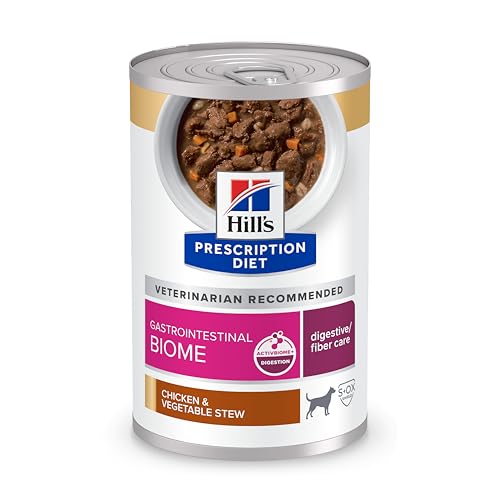
The canned chicken and vegetable stew is the only wet format in this group, setting it apart from the two dry chicken foods. Each can holds 12.5 ounces, and the pack contains 12 cans. Hill’s says the stew uses ActivBiome+ technology and balanced soluble and insoluble fibers to support healthy stool and regular bowel movements; it also contains DHA and EPA. Choose it when your feeding routine calls for wet food. Buyers who want dry kibble should choose one of the dry options instead. Because this is a prescription diet, consult your veterinarian before feeding.
Bottom line: Pick this if you need the wet-food format.
Choosing dry or wet GI Biome food
Choose by feeding format first: the dry recipes come in bags, while the stew is portioned in cans. Wet and dry foods differ in water content, so their package weights are not a direct comparison of how many meals they provide. If you are considering a transition, ask your veterinarian how to move between foods, particularly when the diet is being used for digestive concerns. A practical rule is to choose the wet stew only if you specifically want canned food; otherwise, compare the dry bag sizes.
How to choose a GI Biome package size
For the dry food, the 4.5-pound bag is the smaller package and the 27.5-pound bag is the larger one. Choose the smaller bag if you need less food on hand; choose the larger bag if your veterinarian has recommended this diet and you want more kibble per package. Bag weight does not tell you how long it will last: a dog’s daily portion depends on body size, activity, and the feeding amount prescribed. For canned food, each can is 12.5 ounces and the pack holds 12 cans. Calculate daily use from the recommended feeding amount rather than comparing a can’s ounces directly with pounds of kibble.
What the GI Biome digestive-care claims mean
Hill’s says its ActivBiome+ ingredient technology is designed to activate beneficial gut bacteria and support microbiome balance, while the recipes use fiber to support regular bowel movements. The dry formula’s fiber blend is described as prebiotic; the stew emphasizes soluble and insoluble fibers. Hill’s also says the dry recipe is clinically shown to help firm loose stool in 24 hours and reduce recurrence risk. These are manufacturer claims, not a guarantee for an individual dog. Prescription diets should be selected with veterinary guidance, especially if digestive signs are persistent or accompanied by lethargy, vomiting, blood in stool, or poor appetite; those signs warrant prompt veterinary advice.
Serving and storing prescription dog food
Use the feeding amount recommended for your dog rather than estimating portions from package size; calories per cup or can and a dog’s needs determine the daily ration. Keep dry food sealed in its original bag and stored in a cool, dry place to limit moisture exposure and preserve freshness. Refrigerate opened canned food promptly in a covered container and follow the package’s storage guidance for how long it can be kept. Introduce a diet change gradually when your veterinarian advises it, since abrupt food changes can upset digestion. Keep the prescription food separate from other pets’ meals so each animal receives the diet intended for it.
Frequently Asked Questions
Can Hill’s GI Biome dry and wet food be mixed?
The dry chicken food and chicken-and-vegetable stew are different formats, but the product facts do not give a mixing ratio. Ask your veterinarian how to combine them and adjust portions using their calorie guidance, rather than substituting can weight for kibble weight.
How much Hill’s GI Biome should a dog eat daily?
Daily portions depend on the dog’s weight, activity, and calorie needs, so use the feeding amount recommended by your veterinarian. Compare portions by calories per cup or can, not by the 4.5- or 27.5-pound bag weight.
How quickly can a dog change to GI Biome food?
A gradual transition over about 7 days is a common approach for changing dog food, unless a veterinarian directs otherwise. Ask the veterinarian for a specific schedule when changing a prescription digestive diet.
Does the dry GI Biome food help firm loose stool?
Hill’s says the dry recipe is clinically shown to help firm loose stool in 24 hours and reduce recurrence risk. That claim is not a guarantee, so contact a veterinarian if loose stool continues or your dog develops concerning signs.
How should opened canned dog food be stored?
Refrigerate opened canned food promptly in a covered container. Follow the package’s storage guidance for how long leftovers can be kept, and discard food that has been left out for an extended period.