
Furniture Leg Sliders for LVT Floors: 4 Options Compared

For LVT floors, the 1-inch PTFE nail-on glides are the closest fit because their maker says they suit vinyl flooring; their small size is best for compatible wooden legs. For larger furniture-moving discs, consider a felt option, but choose everyday chair-foot protectors instead if you need pads that stay attached during use.
We earn a commission if you buy through links on this page. As an Amazon Associate I earn from qualifying purchases. Products are compared on manufacturer specifications, not hands-on testing.
- Best overall: Furnigear 1-Inch PTFE Nail-On Glides – The maker says the PTFE glides are designed for vinyl, and the 24-pack has a 1-inch size.
- Best for moving larger furniture: X-PROTECTOR 3.5-Inch Felt Sliders – The 3.5-inch reusable felt-and-foam discs are made to slide beneath furniture.
- Best for mixed leg sizes: Yelanon 182-Piece Felt Pad Assortment – The 182-piece assortment includes nine sizes of adhesive felt pads.
| Product | Best for | Material | Size | Pack count | Shop |
|---|---|---|---|---|---|
| Furnigear 1-Inch PTFE Nail-On Glides | Vinyl-compatible glides | PTFE | 1 in. | 24 | Check Price on Amazon |
| X-PROTECTOR 3.5-Inch Felt Sliders | Moving heavy furniture | Felt and rubber foam | 3.5 in. | 16 | Check Price on Amazon |
| COVERCORNER 3.5-Inch Felt Sliders | Eight-disc moving set | Felt | 3.5 in. | 8 | Check Price on Amazon |
| Yelanon 182-Piece Felt Pad Assortment | Mixed-size leg pads | Felt | 3/8–6 in. | 182 | Check Price on Amazon |
Furniture Leg Sliders for LVT Floors
Compare the attachment style and dimensions with your furniture feet before choosing a floor protector.
Furnigear 1-Inch PTFE Nail-On Glides
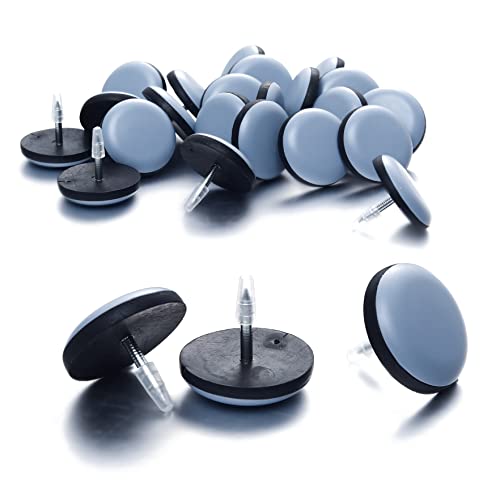
These nail-on PTFE glides are the only option here whose maker explicitly includes vinyl flooring, making them the most direct match for LVT. The pack has 24 glides, each about 1 inch across, for wooden furniture legs. The maker says they reduce friction and suit vinyl, laminate, tile, and low-pile carpet. Their small footprint makes leg-end fit important: measure the flat area and confirm it can take a nail-on glide. They are not broad, removable discs for moving large furniture, so they are a less suitable choice if you need temporary movers or have furniture feet that cannot be nailed.
Bottom line: Choose these for wooden furniture feet that can accept a nail-on glide and need a small PTFE contact surface.
X-PROTECTOR 3.5-Inch Felt Sliders

The 3.5-inch discs are the largest reusable furniture movers among these choices, unlike the small leg-mounted glides. X-PROTECTOR supplies 16 felt-and-rubber-foam sliders; its maker says the no-glue top grips furniture feet and the felt base is for hard floors. Set one beneath each foot while repositioning a sofa, table, or other heavy item, then remove them rather than leaving them as permanent leg caps. The maker does not specifically identify LVT, so this is a broader hard-floor option rather than a vinyl-specific one. Check that each disc fully supports the foot and does not slip during movement.
Bottom line: Pick these for occasional repositioning when removable 3.5-inch discs fit beneath the furniture feet.
COVERCORNER 3.5-Inch Felt Sliders

This set offers half as many 3.5-inch felt moving discs as the 16-piece alternative, which may suit a smaller moving task. COVERCORNER includes eight beige sliders and says they work with round or square legs and bulky items on hard floors. Their broad shape is intended to distribute furniture weight while sliding, rather than stay attached as a chair-foot pad. The maker names hardwood floors and other hard surfaces but does not call out LVT, so use them as temporary movers and check that their diameter supports the furniture feet. This pack is a poorer fit if you need enough sliders for more than eight contact points.
Bottom line: Choose this eight-piece set for a limited move with furniture feet that sit securely on 3.5-inch discs.
Yelanon 182-Piece Felt Pad Assortment

This assortment is made for attaching protectors to furniture feet, not for sliding furniture across the floor. Yelanon includes 182 adhesive felt pads across nine sizes, including round pads from 3/8 to 1.5 inches and larger rectangular pieces. Its maker says the pads suit wood, laminate, and tile; LVT is not specifically named, so verify compatibility before applying them. Felt can help limit direct contact between a leg and the floor, but adhesive pads can shift or collect grit with use. The mixed sizes are useful for varied furniture feet, though a loose disc-style mover is better when the goal is to reposition heavy furniture.
Bottom line: Pick these for fixed furniture feet when you need assorted adhesive felt shapes and sizes.
How to choose furniture sliders for LVT
For LVT, match the contact material and attachment style to the job: a permanent leg glide should stay centered, while a moving disc should be removed after repositioning. Smooth PTFE glides reduce friction; felt pads cushion contact but need clean, intact surfaces. Avoid dragging a bare foot across the floor, since trapped grit can act like abrasive debris. Measure the flat underside of each leg, not just its widest point, and select a protector that fully supports it. For rolling or frequently moved chairs, a stationary felt pad may migrate, so favor a securely attached glide suited to the leg. Check the flooring maker’s care guidance if it specifies acceptable protector materials, especially before using rubber-backed products.
Furniture leg size and contact area
Measure every furniture foot because a chair may have different shapes or sizes from a table or sofa. A glide should fit within the leg’s flat base; a disc used temporarily should be large enough that the foot remains centered while moving. The 1-inch glide and 3.5-inch moving discs here serve different purposes, so comparing diameter alone can mislead. A larger contact area spreads load over more floor, but it does not make an unstable or off-center foot safe to slide. For a foot wider than the protector, choose a larger, compatible option or confirm the fit before ordering. For narrow or angled legs, check that the attachment can sit flat rather than rocking.
Felt, PTFE and adhesive pads compared
Felt, PTFE, and adhesive felt pads differ in how they attach and move. Use this guide to match the protector style to the task rather than treating all floor pads as furniture sliders.
| Type | Typical use | Fit check |
|---|---|---|
| PTFE nail-on glide | Attached glide on compatible wooden feet | Flat base accepts fastener |
| Felt moving disc | Temporary furniture repositioning | Foot stays centered on disc |
| Adhesive felt pad | Stationary furniture-foot protection | Clean, flat bonding surface |
Adhesive protectors are convenient for stationary pieces, but movement can loosen them or let grit build up at the contact point. Broad discs are designed to slide under a load and are not always suitable as permanent glides.
Using furniture sliders without scratching LVT
Clean the floor and the protector before moving furniture; even a small grain of sand beneath felt can scratch a resilient surface. Lift one side of a heavy item enough to position a disc rather than forcing it under the foot, and move slowly while watching that the foot stays centered. Never use a loose slider on stairs or where the furniture could roll away. Inspect attached pads regularly and replace any that are worn, detached, or gritty. Hard plastic and metal feet can concentrate contact at a small point, while a correctly fitted protector provides a buffer. Avoid relying on a slider to compensate for a wobbly leg or uneven furniture base.
Frequently Asked Questions
Can felt sliders be used on LVT flooring?
Felt sliders can be used as temporary movers on compatible hard flooring, but the makers of the two 3.5-inch sets do not specifically name LVT. Keep the felt clean, center the furniture foot, and confirm your flooring maker permits the material.
Are PTFE glides suitable for vinyl floors?
The maker of the 1-inch PTFE glides says they are designed for vinyl flooring. Confirm that the glide fits the leg’s flat base and can be securely nailed into the wooden foot.
How often should felt furniture pads be checked?
Check felt protectors at least monthly in frequently used rooms and whenever furniture is moved. Replace a pad if it has shifted, worn through, or collected grit, which can scratch flooring.
Should furniture pads cover the whole leg base?
A fixed glide should sit flat within the leg’s base, while a temporary moving disc should keep the furniture foot centered. If the foot overhangs or rocks on the protector, select a compatible larger option before moving the furniture.
Can I leave moving sliders under furniture all the time?
Temporary moving discs are intended to help reposition furniture and may shift under everyday use. For furniture that stays in place, use a properly fitted, attached floor protector instead.