
Surge Protector for Furnace: 3 AG3000 Options Compared

For a furnace, the AG3000 is the direct match among these options because each is specified for 120/240V AC; choose the two-pack if you need two devices, or a single unit for one installation.
A surge protective device (SPD) diverts transient voltage surges away from connected equipment, but it must match the equipment’s electrical supply and be installed correctly. A different SPD may suit buyers seeking a panel-mounted unit or a different voltage rating.
We earn a commission if you buy through links on this page. As an Amazon Associate I earn from qualifying purchases. Products are compared on manufacturer specifications, not hands-on testing.
- Best overall: Intermatic AG3000 HVAC Surge Protector – A single AG3000 with three protection modes and a Type 4X enclosure.
- Best for status monitoring: AG3000 HVAC Surge Protector, Single – A single AG3000 with a green LED status indicator.
- Best for two installations: AG3000 HVAC Surge Protector, 2-Pack – The pack includes two 120/240V AC AG3000 devices.
| Product | Best for | Pack size | Enclosure | Shop |
|---|---|---|---|---|
| Intermatic AG3000 HVAC Surge Protector | Single furnace installation | 1 | Type 4X | Check Price on Amazon |
| AG3000 HVAC Surge Protector, Single | Green LED monitoring | 1 | Indoor/outdoor housing | Check Price on Amazon |
| AG3000 HVAC Surge Protector, 2-Pack | Two device installs | 2 | Type 4X | Check Price on Amazon |
Surge Protectors for Furnace
Compare the AG3000 options by electrical rating, enclosure, and how many devices are included.
Intermatic AG3000 HVAC Surge Protector
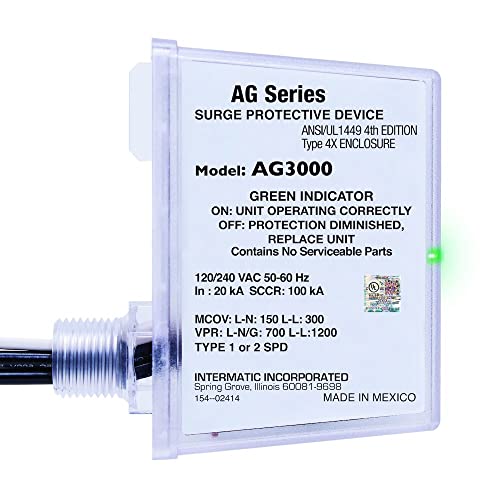
The Intermatic AG3000 is the single-unit option with three protection modes: line-to-ground, line-to-line, and line-to-neutral. Its Type 4X enclosure is described as watertight and UV resistant, making it suitable for indoor or outdoor placement. The device has dual LED indicators for protection status, and its TPMOV design is intended to reduce hazardous failure modes associated with standard MOVs. This fits a buyer who wants one device with enclosure and status features specified. Confirm the required connection and installation location with a qualified electrician before ordering.
Bottom line: Pick this for one furnace circuit where the Type 4X enclosure and dual status indicators matter.
AG3000 HVAC Surge Protector, Single

This single AG3000 option emphasizes a green LED indicator, which the product says displays surge-protection status. The product also says its TPMOV technology suppresses surges. Choose it when a single unit and a visible status indicator are the priorities; buyers who specifically require a Type 4X-rated enclosure should compare the other options instead. Verify the unit’s exact electrical connections and enclosure rating with the seller or an electrician before purchase.
Bottom line: Pick this if a green status LED is your main distinguishing requirement.
AG3000 HVAC Surge Protector, 2-Pack

The two-pack is the only option here that supplies two AG3000 devices, so it suits a home with two appropriate installation points or a planned replacement spare. The product specifies 120/240V protection, three modes—line-to-ground, line-to-line, and line-to-neutral—and a Type 4X watertight enclosure. It also describes TPMOV technology and an LED indicator. Those features do not mean one device protects every circuit in a home: each installation point and electrical connection must be suitable. Have an electrician confirm the correct locations and circuit compatibility before installing either unit.
Bottom line: Pick this when two compatible installation points need individual devices.
How to Choose a Furnace Surge Protector
Start by matching the SPD’s voltage rating to the furnace circuit and the installation point. These options are all specified for 120/240V AC, but that rating alone does not establish that a particular device fits every furnace connection. An SPD is connected in parallel with the protected electrical system so it can divert a transient surge; it is not a substitute for a correctly sized breaker or a grounding system. Ask an electrician to confirm the circuit voltage, connection method, and required protection modes before choosing. If you need one installation, select a single unit; if you have two separately appropriate locations, the two-pack supplies two devices. Do not assume a device at one location protects all wiring and appliances in the home.
What Type 4X Means for Enclosure Choice
Type 4X is an enclosure rating associated with protection against access to hazardous parts, water, and corrosion; it does not describe the SPD’s voltage rating or surge capacity. Select enclosure protection based on the actual mounting environment, especially where moisture or corrosive conditions are possible. An enclosure rating also does not make electrical installation safe to perform while energized. Have an electrician identify a suitable mounting location and verify that the device’s enclosure, wiring method, and electrical rating fit that location.
Installation and Electrical Safety
Have a qualified electrician install a furnace SPD; work at a panel or furnace disconnect can expose a person to dangerous voltage even when a control switch is off. Surge protection depends on proper grounding and bonding, as well as a compatible connection to the electrical system. Short, direct leads are generally preferred for SPDs because long wiring can reduce their effectiveness during a fast transient. The electrician should confirm whether the furnace circuit is 120V or 240V, whether neutral is present where needed, and which protection modes are appropriate. Never open energized equipment or treat an LED indicator as proof that wiring is safe or that the furnace itself has no electrical fault.
Surge Protector Features Compared
The most useful comparison is the installation quantity and enclosure feature, not a claim that one unit protects every household circuit. Three protection modes describe the paths a device is designed to protect: line-to-ground, line-to-line, and line-to-neutral. Check that those modes match the wiring at the intended installation point. Use this guide to narrow the choice, then confirm circuit compatibility before installation.
| Need | Option to compare |
|---|---|
| One unit and Type 4X enclosure | Intermatic AG3000 HVAC Surge Protector |
| Green status LED | AG3000 HVAC Surge Protector, Single |
| Two devices and Type 4X enclosure | AG3000 HVAC Surge Protector, 2-Pack |
An SPD indicator can show a protection status, but it is not a substitute for periodic visual checks or professional electrical troubleshooting. Ask the installer what the indicator means for the specific unit and what action to take if the light changes or goes out.
Frequently Asked Questions
Can a furnace surge protector protect the whole house?
A device installed on one furnace circuit should not be assumed to protect every circuit in the home. Whole-home protection generally requires a suitable SPD at the service equipment, and some installations use additional point-of-use protection for sensitive equipment.
Does a furnace surge protector need a ground wire?
Surge protective devices rely on a properly grounded and bonded electrical system to divert surges. Have an electrician verify the grounding and bonding path before installation; a status LED does not confirm that the grounding system is adequate.
Can I install an HVAC surge protector myself?
A qualified electrician should install an SPD connected to a furnace circuit or electrical panel. Electrical equipment can remain hazardous even when a thermostat or ordinary switch is off, so do not work on energized wiring.
How can I tell whether my furnace is 120V or 240V?
Check the furnace nameplate and the circuit documentation, then have an electrician verify the actual circuit. A device marked 120/240V AC is not automatically suitable for every connection or wiring arrangement.
What does a surge protector LED tell me?
An LED generally indicates a device status, but its meaning depends on the specific SPD and its wiring. Ask the installer what the indicator means and what to do if it changes or goes out.