
Onecompress Bamboo Knee Sleeves: 3 Models Compared

For a bamboo knee sleeve in an XL size, choose Onecompress Bamboo Knee Sleeve XL; its soft, breathable design is the deciding feature for everyday wear.
We earn a commission if you buy through links on this page. As an Amazon Associate I earn from qualifying purchases. Products are compared on manufacturer specifications, not hands-on testing.
- Best overall: Onecompress Bamboo Knee Sleeve XL – Its breathable bamboo fabric and XL size suit everyday knee coverage.
- Best for a two-pack: One Compress Bamboo Charcoal Knee Sleeves M – The package includes two bamboo charcoal knee sleeves in size M.
- Best for a bamboo blend: One Compression Bamboo Knee Sleeves L – Its fabric combines 60% rayon from bamboo with 40% spandex.
| Product | Best for | Material | Pack | Size | Shop |
|---|---|---|---|---|---|
| Onecompress Bamboo Knee Sleeve XL | Everyday knee wear | Bamboo fabric | — | XL | Check Price on Amazon |
| One Compress Bamboo Charcoal Knee Sleeves M | Two-sleeve sports set | Bamboo charcoal fiber | 2 sleeves | M | Check Price on Amazon |
| One Compression Bamboo Knee Sleeves L | Bamboo blend support | 60% rayon from bamboo, 40% spandex | 2 sleeves | L (165–198 lb) | Check Price on Amazon |
Onecompress bamboo knee sleeves
Compare the knee-specific options by fabric, package quantity and size before choosing a fit.
Onecompress Bamboo Knee Sleeve XL

For an XL bamboo sleeve aimed at everyday wear, Onecompress Bamboo Knee Sleeve XL is the knee-specific choice. The maker describes its fabric as breathable and lightweight, with gentle compression for wearing at home, work or while resting. The product is gray and sized XL. This option is a single knee sleeve rather than a two-pack, so it suits a buyer seeking one sleeve rather than a matching pair. Its features emphasize comfort and light support, not a rigid brace; choose another style if you need straps or a firm structure to limit knee movement.
Bottom line: Choose this for a soft, everyday knee sleeve in XL.
One Compress Bamboo Charcoal Knee Sleeves M

For a two-sleeve set in size M, One Compress Bamboo Charcoal Knee Sleeves M is the sports-oriented option, with bamboo charcoal fiber rather than the rayon-from-bamboo blend used by One Compression Bamboo Knee Sleeves L. The maker describes a lightweight, seamless profile intended to fit beneath clothing and an elastic tapered shape intended to stay in place. The color is gray, and the package contains two sleeves. The specifications do not give a circumference range for size M, so confirm the maker’s measurement chart if you are between sizes; a sleeve that slips or pinches will not provide a comfortable fit.
Bottom line: Pick this if you want two bamboo charcoal sleeves in M.
One Compression Bamboo Knee Sleeves L
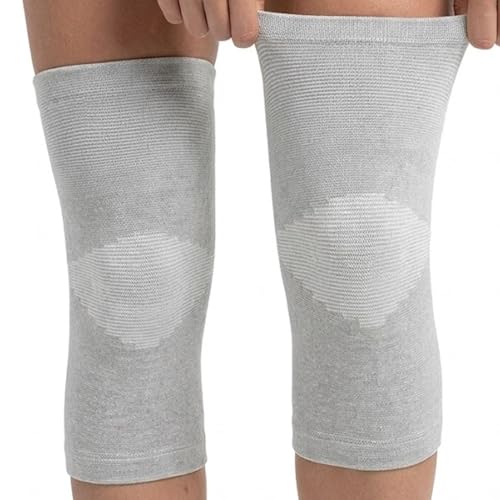
For a two-pack with a bamboo-and-spandex blend, One Compression Bamboo Knee Sleeves L gives the clearest material breakdown: 60% rayon from bamboo and 40% spandex. The gray sleeves are size L, associated with a 165–198 lb range, and include a moisture-wicking back-knee panel. The maker describes the compression as moderate and intended for daily wear. That weight range is a sizing cue, not a substitute for measuring the knee or leg circumference; choose another size if your measurements fall outside the maker’s chart or the sleeve feels restrictive.
Bottom line: Choose this for a two-pack and a bamboo blend.
How to choose a knee sleeve
A knee sleeve is a stretchy tube that provides light compression and warmth, not the rigid motion control of a hinged brace. Start with the activity and coverage you need: a knee-only sleeve covers the joint, while a full-leg sleeve extends beyond it. Fit matters more than a label such as gentle or moderate, because fabric stretch and garment shape change how pressure feels. Measure the leg at the locations named in the maker’s size chart; brands may use different points above or below the kneecap, so letter sizes are not reliably interchangeable. If you fall between sizes, compare the maker’s fit guidance and favor a comfortable, secure fit rather than sizing down for extra squeeze.
How knee sleeve sizing and fit work
A well-fitting knee sleeve should stay in place through bending without pinching, rolling or restricting movement. Measure on bare skin with a flexible tape, keep the tape level, and avoid pulling it tight enough to compress the leg. Use the maker’s measurement locations because a measurement taken directly over the kneecap may not match a chart based on thigh or calf circumference. Weight-based ranges can be a secondary cue, but they do not account for differences in leg shape. Remove a sleeve promptly if you notice numbness, tingling, unusual coldness or a change in skin color; those are signs that the fit may be too tight and warrant reassessment.
Bamboo knee sleeves versus full-leg sleeves
A knee sleeve concentrates coverage around the joint, while a full-leg sleeve runs from thigh to ankle and covers a much larger area. That coverage distinction is more important than the fabric name when selecting a garment: choose knee-only coverage when you want a sleeve centered on the knee, and full-leg coverage only when you want the longer garment. Bamboo-derived rayon and bamboo charcoal are different material descriptions, so compare the fiber content rather than assuming the fabrics are identical. The table gives a quick coverage-based choice; fit still depends on measuring against the specific maker’s chart.
| Need | Garment type |
|---|---|
| Knee-centered coverage | Knee sleeve |
| Coverage from thigh to ankle | Full-leg sleeve |
How to wear and care for compression sleeves
Put a sleeve on with the knee relaxed and smooth the fabric so it does not twist or bunch behind the joint. A sleeve should feel secure but should not cause pain, numbness or tingling; take it off if those symptoms appear. Follow the garment’s care label for washing and drying, since heat and rough washing can affect stretch fabrics. Inspect seams and elastic edges regularly, especially if the garment begins to roll or lose its shape. A sleeve is not a substitute for a clinician’s advice when knee pain is severe, persistent or follows an injury, and compression products should not be treated as a way to diagnose or manage a medical condition.
Frequently Asked Questions
How should a knee compression sleeve fit?
A knee compression sleeve should feel snug and stay put without pinching, rolling or limiting comfortable bending. Remove it if numbness, tingling, unusual coldness or skin-color changes occur.
Where should I measure for knee sleeve sizing?
Measure at the location or locations named in the maker’s chart, using a level flexible tape without tightening it against the skin. Charts differ: some use measurements above or below the kneecap, so a knee-only measurement may not match every brand’s sizing method.
Can a knee sleeve replace a hinged knee brace?
No, a stretchy sleeve provides compression and coverage but does not offer the motion control of a hinged brace. A brace may be appropriate when a clinician recommends structural support or movement limits.
Can I wear a knee sleeve while sleeping?
A sleeve should not be worn overnight unless a clinician advises it for your situation. Remove it if it causes pressure, numbness or tingling, and avoid sleeping in a garment that feels restrictive.