
Stop Headboard From Hitting Wall: Pad Options Compared

For most headboards, LveSunny EVA Pads, 23-Piece is the most adaptable choice because its 10 pads are 20 mm thick and 13 are 3 mm thick, letting you tune the cushioning to the gap. Choose Krisler Adjustable Threaded Stoppers, 4-Piece instead if you need a threaded stopper that can adjust from 30 to 68 mm; adhesive foam pads suit buyers who want a simple stick-on cushion.
We earn a commission if you buy through links on this page. As an Amazon Associate I earn from qualifying purchases. Products are compared on manufacturer specifications, not hands-on testing.
- Best overall: LveSunny EVA Pads, 23-Piece – Two pad thicknesses—20 mm and 3 mm—allow different cushioning at contact points.
- Best for adjustable reach: Krisler Adjustable Threaded Stoppers, 4-Piece – A threaded stopper adjusts from 30 to 68 mm and includes an EVA contact pad.
- Best for mixed pad sizes: LveSunny EVA Pads, 18-Piece – The set combines eight 15 mm pads with ten 5 mm pads.
| Product | Best for | Pad thickness | Pieces | Shop |
|---|---|---|---|---|
| LveSunny EVA Pads, 23-Piece | Layered cushioning | 20 mm and 3 mm | 23 | Check Price on Amazon |
| Krisler Adjustable Threaded Stoppers, 4-Piece | Adjustable reach | EVA pad | 4 | Check Price on Amazon |
| LveSunny EVA Pads, 18-Piece | Mixed pad sizes | 15 mm and 5 mm | 18 | Check Price on Amazon |
| SARDVISA EVA Wall Protectors, 20-Piece | Two thickness choices | 18.03 mm and 3.05 mm | 20 | Check Price on Amazon |
| 25-Piece EVA Furniture Pads | More pad pieces | 17.78 mm and 5.08 mm | 25 | Check Price on Amazon |
Ways to Stop a Headboard From Hitting the Wall
Compare adjustable reach, foam thickness, and piece count to match the stopper to the gap and mounting surface.
LveSunny EVA Pads, 23-Piece

LveSunny EVA Pads, 23-Piece offers the widest thickness spread among these adhesive foam sets: 20 mm and 3 mm pads. The EVA pads are intended to cushion contact and reduce rocking, vibration, and impact noise, and the set can also serve as a couch wall protector. It suits buyers who want to build up cushioning in different places rather than adjust a threaded piece. The limitation is that the specifications do not give the count of pads in each thickness, so this set is less straightforward to plan if you need a precise number of thick pads.
Bottom line: Pick this set if you want two distinct pad thicknesses for layering.
Krisler Adjustable Threaded Stoppers, 4-Piece
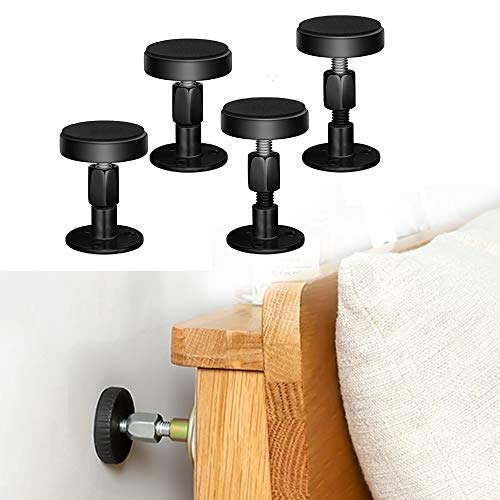
Krisler Adjustable Threaded Stoppers, 4-Piece is the only option here with threaded adjustment: the stopper extends from 30 to 68 mm, making it a fit for a measurable gap that falls within that span. Each stopper uses an EVA pad against the wall and a double-sided adhesive base attached to the bed; the stopper is then turned by hand until it reaches the wall. Its four-piece count suits buyers who prefer adjustable contact points over multiple loose foam pads. It is less suitable when the gap exceeds 68 mm or the bed surface cannot accept adhesive.
Bottom line: Choose this when the headboard gap is within its 30–68 mm adjustment range.
LveSunny EVA Pads, 18-Piece

LveSunny EVA Pads, 18-Piece pairs eight thicker 15 mm EVA pads with ten thinner 5 mm pads, providing an intermediate thickness mix compared with the 20 mm and 3 mm set. The pads are white and use adhesive intended for fabric, leather, metal, and wood surfaces. This combination suits a buyer who needs both noticeable cushioning and thinner contact points. The limitation is that its thickest pad is 15 mm, so it is not the best match for a gap that needs more than that much foam buildup.
Bottom line: Choose this if 15 mm cushioning plus thinner 5 mm pads matches the gap.
SARDVISA EVA Wall Protectors, 20-Piece

SARDVISA EVA Wall Protectors, 20-Piece supplies 20 black EVA pads in two thicknesses, given as 18.03 mm and 3.05 mm. That makes it useful when a buyer wants a thicker cushion and a slim bumper in one set; the adhesive compatibility includes fabric, leather, metal, and wood. The pads are also intended for sofas and chairs, not only headboards. Its thickness figures differ from the metric sizes in other sets, so compare the actual gap in millimeters before choosing rather than assuming the options are interchangeable.
Bottom line: Pick this for black adhesive pads with thickness options listed in millimeters.
25-Piece EVA Furniture Pads

25-Piece EVA Furniture Pads has the largest set count, with 25 pads measuring 1.57 by 3 inches and thicknesses of 17.78 mm and 5.08 mm. The maker describes combining the thicknesses for extra cushioning, and the pads are meant to reduce friction and noise while protecting smooth surfaces from scratches. It can suit buyers who need pads for several furniture contact points as well as a headboard. Its thicknesses are close to, but not identical with, those in SARDVISA EVA Wall Protectors, 20-Piece, so check the gap and required pad height before choosing between the sets.
Bottom line: Choose this if you need a larger pad count for several furniture contact points.
How to choose headboard wall stoppers
Match the stopper’s usable thickness or reach to the space between the headboard and wall. For a measured gap of 30 to 68 mm, the threaded type can adjust to reach the wall; foam sets instead provide fixed layers from 3 mm up to 20 mm in these options. Measure at more than one point because a headboard can sit unevenly, and use the thickest gap to decide how much cushioning is needed. Adhesive pads work only when the furniture surface can hold their backing, so check the contact area for fabric, leather, metal, or wood compatibility before applying. For a gap greater than 68 mm, do not assume an adjustable stopper in this range will bridge it.
Use this quick guide to match the approach to the measured clearance.
| Measured need | Approach |
|---|---|
| Gap from 30 to 68 mm | Threaded adjustable stopper |
| Gap up to 20 mm, with different contact points | Layered foam thicknesses |
| Several furniture surfaces need cushioning | Multi-piece adhesive pad set |
Foam pad thickness and placement
Foam pads cushion contact rather than mechanically fasten a bed to a wall. In these options, fixed pad thickness ranges from 3 mm to 20 mm, and some sets combine thicker and thinner pieces to accommodate different clearances. Place pads where the headboard or frame actually contacts the wall, using more than one contact point if the furniture rocks across a wide span. Clean, dry contact surfaces generally give adhesive a better chance to bond; a dusty or textured spot can weaken the hold. Do not stack foam so high that it pushes the headboard forward or makes the frame unstable. Recheck the contact after moving the bed or changing bedding.
Adjustable stoppers versus adhesive bumpers
Threaded stoppers are useful when a measured gap falls within their adjustment range, while adhesive bumpers are simpler when a fixed foam thickness is enough. The adjustable type here reaches 30 to 68 mm; the foam sets use pieces from 3 mm to 20 mm. A threaded support needs a secure attachment point on the bed, whereas adhesive pads depend on surface compatibility and bond strength. Choose foam for a small, consistent clearance and adjustable reach for a larger one within range. Both methods can reduce wall contact noise, but neither should be used to correct a loose, damaged, or improperly assembled bed frame. Tighten the frame’s normal fasteners if the structure itself wobbles.
Installing headboard stoppers safely
Install pads or stoppers with the bed unloaded and stable, and keep the frame’s feet firmly on the floor. An uneven floor or loose bed joint can make a headboard continue moving even after a wall cushion is added. For the threaded type, attach the base to the bed as intended and turn the padded end only until it meets the wall; excessive pressure can shift furniture or damage a weak wall surface. For adhesive pads, test placement and avoid painted areas that are peeling or damp. Keep small adhesive pads away from children and pets, since loose foam pieces can present a choking hazard. Inspect the bond periodically and replace a pad if it peels or compresses flat.
Frequently Asked Questions
How much gap can an adjustable headboard stopper cover?
The threaded option here adjusts from 30 to 68 mm. Measure the wall clearance at the intended contact point and choose a different solution if the gap exceeds 68 mm.
How thick should headboard wall pads be?
Choose a pad thickness close to the measured clearance; these sets include thicknesses from 3 mm to 20 mm. Measure at several contact points because a headboard can sit unevenly.
Can adhesive foam pads stick to fabric headboards?
Some pads in these options specify adhesive compatibility with fabric, leather, metal, and wood. Check the surface at the actual mounting spot and apply only to a clean, dry area.
Where should I place pads behind a headboard?
Place pads where the headboard or frame makes contact with the wall, and use multiple contact points if the furniture rocks across a wide span. Avoid building up more foam than the measured gap requires.
Do headboard stoppers fix a wobbly bed frame?
Wall stoppers cushion contact but do not repair a loose bed joint or damaged frame. If the frame still shifts independently, stabilize its joints and feet before relying on a wall bumper.