
Best Golf Club Weight Tape: 4 Options Compared

For most golfers, 2 g/in Lead Tape, 60 in is the most flexible choice because its 2-gram-per-inch roll lets you cut a piece to the amount you want. Choose pre-cut strips instead if you prefer fixed 3-gram increments rather than measuring and cutting tape.
Golf weight tape is adhesive material added to a club to change its mass and feel. Because these products contain lead, handle them carefully and keep them away from children.
We earn a commission if you buy through links on this page. As an Amazon Associate I earn from qualifying purchases. Products are compared on manufacturer specifications, not hands-on testing.
- Best overall: 2 g/in Lead Tape, 60 in – The 60-inch roll can be cut to length, with each inch adding 2 grams.
- Best for fixed increments: Golf Weighted Lead Tape, 3 g, 30 Pieces – Each adhesive piece adds 3 grams, and the pack contains 30 pieces.
- Best for a long roll: Yeshom Lead Tape, 2 g/in Roll – The roll format provides a 2-gram-per-inch increment for custom cuts.
| Product | Best for | Format | Weight increment | Dimensions | Shop |
|---|---|---|---|---|---|
| 2 g/in Lead Tape, 60 in | Custom adjustments | Roll | 2 g/in | 0.5 × 60 in | Check Price on Amazon |
| DSCMLIS 3 g Lead Tape, 30 Pieces | Compact pre-cuts | 30 adhesive pieces | 3 g per piece | 2 × 0.4 in each | Check Price on Amazon |
| Golf Weighted Lead Tape, 3 g, 30 Pieces | Fixed-weight strips | 30 adhesive pieces | 3 g per piece | 2 × 0.4 in each | Check Price on Amazon |
| Yeshom Lead Tape, 2 g/in Roll | Roll-format tuning | Roll | 2 g/in | 0.5 × 60 in | Check Price on Amazon |
Golf Club Weight Tape Compared
The main difference is whether you want a continuous roll for custom cuts or pre-cut pieces with a fixed weight.
2 g/in Lead Tape, 60 in
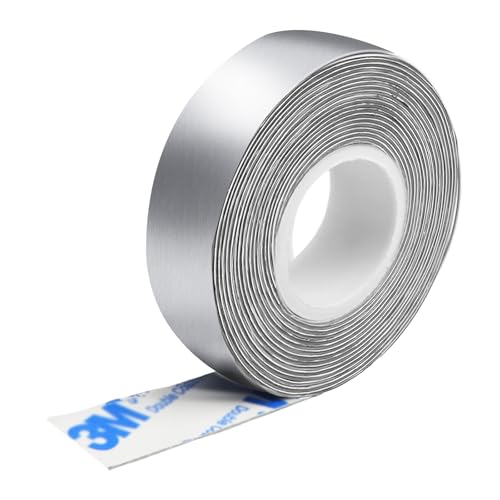
2 g/in Lead Tape, 60 in stands out for its continuous roll, which lets you choose a cut length instead of adding a fixed-size piece. The tape is 0.5 inch wide and 60 inches long, with a weight of 2 grams per inch. Its backing peels away for application, and the tape can be cut to size. That makes it a practical fit for golfers who want to make smaller or varied adjustments. The limitation is that the final weight depends on the length you cut, so measure each piece rather than treating the roll as a single fixed-weight strip.
Bottom line: Choose this if you want to measure and cut custom increments.
DSCMLIS 3 g Lead Tape, 30 Pieces

DSCMLIS 3 g Lead Tape, 30 Pieces comes as 30 separate pieces, each weighing 3 grams, rather than as a roll. Each piece measures about 2 inches by 0.4 inch and has an adhesive backing; the set also includes a storage box. The fixed increments suit golfers who would rather apply a whole strip than calculate a cut length. Its limitation is that the pieces do not offer the same fine length-based adjustment as a continuous roll. Since it contains lead, avoid handling the adhesive or tape with food-contact surfaces and wash your hands after use.
Bottom line: Pick this if ready-cut 3-gram pieces suit your adjustment plan.
Golf Weighted Lead Tape, 3 g, 30 Pieces

Golf Weighted Lead Tape, 3 g, 30 Pieces provides 30 pre-cut adhesive pieces, each weighing 3 grams and measuring about 2 inches by 0.4 inch. Like a roll cut into equal sections, the pack is intended for repeatable additions without trimming tape to length. The features mention use on golf-club heads, including wood, graphite, or titanium woods, as well as irons and putters. This is a better match for golfers who want a simple fixed increment. The tradeoff is less flexibility: a 3-gram strip may be more weight than you want for a small adjustment.
Bottom line: Choose this when a repeatable 3-gram strip is the right increment.
Yeshom Lead Tape, 2 g/in Roll

Yeshom Lead Tape, 2 g/in Roll is another continuous roll, with a 0.5-inch width and 2 grams of weight per inch. The size is 60 inches long, so it supports custom cuts rather than a set of uniform pieces. Its features also mention use with golf clubs, putters, tennis rackets, and pickleball paddles. That broad use may suit someone adjusting more than one kind of equipment. The main limitation is the same as with any roll: you must measure and cut the tape yourself, and the product’s 2-gram-per-inch weight means short cuts are needed for small changes.
Bottom line: Pick this if you want a roll that can be cut for different equipment.
How to choose golf club weight tape
Choose a roll for fine length-based changes and pre-cut strips for repeatable fixed additions. These rolls weigh 2 grams per inch, while the pre-cut options here add 3 grams per strip. A common club-fitting rule of thumb is that about 2 grams added at the clubhead changes swingweight by roughly one point; actual feel also depends on where the mass sits and the club’s length and balance. Start with a small amount, then reassess before adding more. Tape near the head can influence head feel differently from mass placed elsewhere, so keep placement consistent when comparing adjustments. If you need a precise swingweight target, use a swingweight scale or consult a club fitter rather than relying on tape length alone.
Rolls versus pre-cut strips
Rolls let you choose the length, while pre-cut strips give a fixed weight per application. For the 2-gram-per-inch rolls, a 1-inch cut adds 2 grams and a 2-inch cut adds 4 grams. A 3-gram strip is a single fixed increment, so several pieces allow larger additions in repeated steps. This table gives the practical choice by adjustment style.
| Need | Choose |
|---|---|
| Custom weight by length | 2 g/in roll |
| Repeatable 3 g addition | Pre-cut strips |
Measure the intended cut before removing the backing, since adhesive tape is easier to position before it is stuck down. Do not assume equal lengths from different products have equal mass unless their weight rate matches.
Where and how to apply weight tape
Apply tape only to a clean, dry surface and press it down firmly so its adhesive can make contact. The product features describe placement on club heads and also mention other racket or paddle uses, but they do not establish a universal placement pattern for every club. Keep placement consistent between clubs when you are comparing feel, and avoid covering grooves, markings, or moving parts. Use small increments and check that the tape remains attached before play. Lead is toxic if swallowed and can leave residue on hands; keep tape and scraps away from children, avoid touching your face while handling it, and wash hands afterward.
Common weight-tape adjustment mistakes
The most common mistake is adding too much weight at once. A 2-gram change is already a meaningful starting increment under the usual head-weight rule of thumb, so cut short lengths from a 2-gram-per-inch roll when you want a smaller step. Another mistake is changing both the amount and placement simultaneously; make one change at a time so you can identify what altered the club’s feel. Use scissors on a stable surface, collect offcuts immediately, and do not leave lead pieces where children or pets could reach them. If the tape peels, shifts, or catches during play, stop using the club until the tape is secured or removed.
Frequently Asked Questions
How much weight does one inch of golf tape add?
The 2-gram-per-inch rolls add 2 grams for each inch cut. A 3-gram pre-cut strip adds 3 grams as a single piece.
How much lead tape changes swingweight by one point?
A common fitting rule of thumb is about 2 grams at the clubhead per swingweight point. The result is approximate because club length, balance, and tape placement also matter.
Can I cut golf club weight tape to size?
Yes, the roll-style tapes can be cut to length. At 2 grams per inch, a half-inch piece weighs about 1 gram.
Is lead tape safe to handle on golf clubs?
Lead can be harmful if swallowed or transferred from hands to food. Keep tape and offcuts away from children, avoid touching your face while applying it, and wash your hands afterward.
Does lead tape change where a club’s weight is felt?
Yes, placement affects how added mass influences the club’s balance and feel. Keep the location consistent when comparing adjustments, and change one variable at a time.