
Cortland 9-Foot Fly Rod and Reel Options Compared

The Cortland Guide Series Freshwater 9-foot 6-weight outfit is the closest match for anglers seeking a Cortland 9-foot rod-and-reel setup, with a fast-action rod, large-arbor aluminum reel and 150 yards of backing. Choose a different weight or saltwater setup if your target fish and flies call for another line weight; the Redington outfits are alternatives, not Cortland models.
We earn a commission if you buy through links on this page. As an Amazon Associate I earn from qualifying purchases. Products are compared on manufacturer specifications, not hands-on testing.
- Best overall: Cortland Guide Series Freshwater 9-Foot 6-Weight – A 9-foot 6-weight Cortland freshwater outfit includes a large-arbor reel and 150 yards of backing.
- Best for 7-weight freshwater: Cortland Guide Series Freshwater 9-Foot 7-Weight – This Cortland outfit pairs a 9-foot 7-weight graphite rod with a matte-finish blank and fighting butt.
- Best for saltwater: Cortland Guide Series Saltwater 9-Foot 8-Weight – This Cortland 9-foot 8-weight saltwater rod includes dual-locking reel-seat nuts and a Cordura rod tube.
| Product | Best for | Line weight | Rod action | Reel or outfit features | Shop |
|---|---|---|---|---|---|
| Cortland Guide Series Freshwater 9-Foot 6-Weight | Freshwater versatility | 6 wt | Fast | Large-arbor aluminum reel; 150 yd backing | Check Price on Amazon |
| Cortland Guide Series Freshwater 9-Foot 7-Weight | Heavier freshwater flies | 7 wt | — | Graphite blank; fighting butt | Check Price on Amazon |
| Cortland Guide Series Saltwater 9-Foot 8-Weight | Saltwater fishing | 8 wt | Fast | Aluminum reel seat; dual locking nuts | Check Price on Amazon |
| Redington Crosswater Outfit 9-Foot 5-Weight | Beginner travel kit | 5 wt | Medium-fast | Crosswater reel; WF5F line | Check Price on Amazon |
| Redington Freshwater Kit 9-Foot 5-Weight | Dry-fly trout kit | 5 wt | Medium | Crosswater reel; RIO Mainstream line | Check Price on Amazon |
Cortland 9-Foot Fly Rod and Reel Options
Compare the Cortland models by line weight and intended water, with Redington outfits included as alternatives.
Cortland Guide Series Freshwater 9-Foot 6-Weight

The freshwater 6-weight is the only exact Cortland 9-foot outfit in this group with both reel and backing specifications. Its four-piece graphite rod has a fast action, and the large-arbor aluminum reel comes with 150 yards of backing; Cortland’s two-color line has a welded loop. A 6-weight is a practical crossover for larger trout flies, light streamers and moderate wind compared with a lighter trout setup. Choose this model if freshwater is the priority and you want the reel and backing included. Its fast action may be less forgiving for beginners than a medium-action rod.
Bottom line: Choose this for freshwater fishing when a 6-weight fast-action rod suits your flies and conditions.
Cortland Guide Series Freshwater 9-Foot 7-Weight

The four-piece graphite blank has a matte finish, an anodized down-locking reel seat, and a cork-composite fighting butt. A 7-weight can help turn over larger flies and handle heavier freshwater work than a 5- or 6-weight, though it is more rod than many small-stream trout situations require. Pick it when the extra line weight matters; buyers who need confirmation of the included reel should check before ordering.
Bottom line: Choose this when heavier freshwater flies matter more than a confirmed reel package.
Cortland Guide Series Saltwater 9-Foot 8-Weight

The Cortland Saltwater 8-weight is the saltwater-oriented option, distinct from the two freshwater Guide Series models. Its four-piece lightweight graphite rod is fast action, uses an aluminum reel seat with dual locking nuts, and includes a fighting butt and Cordura rod tube. An 8-weight is a common saltwater all-around class for medium-sized flies and moderate wind, but it is not a universal match for every species or destination. The specifications describe rod hardware and a tube, not reel specifications, so it is a partial match for a rod-and-reel search.
Bottom line: Choose this when saltwater use and an 8-weight line fit your target species.
Redington Crosswater Outfit 9-Foot 5-Weight
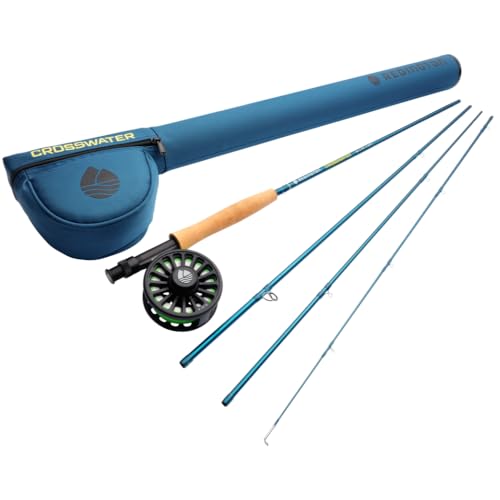
The Redington Crosswater outfit is a complete beginner-oriented alternative rather than a Cortland model. It combines a four-piece 9-foot 5-weight medium-fast graphite rod with a Crosswater reel, RIO Mainstream WF5F line, leader and zippered travel case. A 5-weight is a standard starting class for trout and lighter freshwater flies; the medium-fast action is more moderate than the Cortland 6-weight’s fast action. Choose it when a pre-rigged travel kit is more useful than staying with Cortland. It does not meet the brand-specific part of the search.
Bottom line: Choose this as a complete starter kit if the Cortland brand is not essential.
Redington Freshwater Kit 9-Foot 5-Weight

The Redington Freshwater kit is another non-Cortland 5-weight alternative, with a medium-action rod rather than the medium-fast action of the other Redington outfit. Its four-piece 9-foot rod is bundled with a Crosswater reel, backing, RIO Mainstream fly line, leader and carrying case. The maker positions the rod for dry flies as well as dry-droppers, streamers and nymphs, so it suits a trout angler seeking a softer-action kit. The fields do not identify the fly line’s weight-forward profile, which matters to buyers matching line taper to casting needs.
Bottom line: Choose this for a softer-action 5-weight trout kit rather than a Cortland outfit.
Choosing a 9-foot fly rod weight
Choose line weight by fly size, wind and target fish: 5-weight is a common trout all-around class, 6-weight adds room for larger trout flies and light streamers, and 8-weight is a common saltwater general-purpose class. A 7-weight bridges heavier freshwater use and light saltwater work, but the target species and fly size should decide. Rod weight and line weight must match; a line that is too heavy or too light can change how the rod loads. For mostly small dry flies on calm trout water, favor 5-weight; for frequent streamers or wind, consider 6-weight or above. A longer rod can help control line and mend, but 9 feet is a versatile standard length.
Fast and medium actions for fly fishing
Fast-action rods flex more toward the tip and generally reward a quicker, well-timed casting stroke; medium-action rods bend farther down the blank and can feel more forgiving at shorter casting distances. Medium-fast sits between those descriptions, but action labels are not a standardized measurement across brands. Match action to casting style: beginners often find a moderate action easier to time, while experienced casters may prefer faster recovery for longer casts or wind. Line taper also matters; weight-forward lines carry more mass toward the front and are common for general-purpose casting. Avoid choosing on action alone when the line weight or fly size does not suit the fishing.
Freshwater and saltwater outfit differences
Freshwater and saltwater setups differ in target fish, corrosion exposure and fly size. Saltwater gear needs corrosion-resistant components and prompt rinsing with fresh water after use; salt deposits can damage metal parts and reel function. A locking reel seat can help keep a reel secure, but it does not replace checking that the reel foot is seated correctly. For freshwater trout, 5- to 6-weight outfits cover many general situations; saltwater commonly starts at 8-weight for moderate-size flies and species. The Cortland 8-weight here includes an aluminum reel seat and dual locking nuts, while the 6-weight Cortland outfit names an aluminum reel. Saltwater suitability still depends on the reel’s construction and target species.
Setting up a fly rod and reel
Assemble a four-piece rod by aligning the guides and seating each ferrule with a straight push and gentle twist; avoid forcing a joint at an angle. Thread the line through every guide before tying on a leader, and check that the reel’s drag works smoothly before fishing. Backing fills the reel and provides reserve line; its required amount depends on reel capacity, fly-line thickness and expected runs, so do not assume that every reel holds the same length. A welded loop makes changing leaders easier, but knots still need to be snug and trimmed. Rinse saltwater tackle with fresh water after each outing and dry it before storage.
Frequently Asked Questions
What fly rod weight works for most trout fishing?
A 5-weight is a common all-around trout choice for dry flies, nymphs and moderate streamers. Choose 6-weight when larger streamers or wind are regular factors, and 4-weight or lighter for small flies and delicate presentations.
Is a 9-foot fly rod good for beginners?
A 9-foot rod is a versatile starting length because it supports line control and mending on many rivers and lakes. In tight brush or small streams, a shorter rod around 7 to 8.5 feet can be easier to maneuver.
What does 4-piece mean on a fly rod?
A 4-piece rod separates into four sections for transport and storage. Assemble the ferrules straight and check alignment at the guides before casting; forcing a misaligned joint can damage the rod.
Can I use a saltwater fly rod in freshwater?
Yes, an 8-weight saltwater rod can be used in freshwater when its line weight suits the flies and fish. For routine trout fishing, that weight may be unnecessarily heavy; rinse the rod and reel after saltwater use to clear corrosive residue.
How much backing should a fly reel have?
Backing capacity depends on the reel, line weight and expected fish runs, so use the reel maker’s capacity guidance rather than assuming a fixed length. The Cortland 6-weight outfit here includes 150 yards of backing.