
Morton’s Neuroma Toe Spacers: 4 Options Compared

Pnrskter Gel Toe Separator with Metatarsal Pads is the closest match for Morton’s neuroma because it combines a toe separator with breathable metatarsal pads. Choose Povihome Pinky Toe Separator, 10 Pack instead if your pressure is between the fourth and fifth toes; a wider toe box may matter more than a spacer if footwear crowds the forefoot.
Toe spacers sit between toes to reduce contact or encourage separation, but they do not widen shoes or directly treat the nerve irritation associated with Morton’s neuroma.
We earn a commission if you buy through links on this page. As an Amazon Associate I earn from qualifying purchases. Products are compared on manufacturer specifications, not hands-on testing.
- Best overall: Pnrskter Gel Toe Separator with Metatarsal Pads – Combines a gel toe separator with breathable metatarsal pads and names Morton’s neuroma among its intended uses.
- Best for pinky-toe spacing: Povihome Pinky Toe Separator, 10 Pack – Its three-hole separator is aimed at overlapping toes, including a claimed use between the fourth and fifth toes.
- Best for small toes: Welnove Gel Toe Separator, 12 Pack – The single-loop design is intended for slim or small toes and comes in a 12-piece pack.
| Product | Best for | Design | Pack size | Material | Shop |
|---|---|---|---|---|---|
| Pnrskter Gel Toe Separator with Metatarsal Pads | Forefoot padding | Toe separator with half-sleeve pads | 6 pieces | Gel | Check Price on Amazon |
| Povihome Pinky Toe Separator, 10 Pack | Pinky-toe spacing | Three-hole toe separator | 10 pieces | — | Check Price on Amazon |
| Welnove Gel Toe Separator, 12 Pack | Small toes | Single-loop toe separator | 12 pieces | Medical silicone | Check Price on Amazon |
| Mind Bodhi Regular Gel Toe Separators | General toe spacing | Between-toe separator | 1 pair | Gel | Check Price on Amazon |
Morton’s Neuroma Toe Spacers
Compare each design by where it sits and whether it includes forefoot padding.
Pnrskter Gel Toe Separator with Metatarsal Pads

Unlike a simple toe spacer, this option pairs a gel separator with breathable half-sleeve metatarsal pads. The maker says it is intended to reduce friction between toes and pressure on the front of the foot, and names neuroma among its uses. It may suit someone looking for both toe separation and forefoot cushioning in one design. The product is reusable and latex-free. Because pad placement affects pressure, check that the pad sits behind the ball of the foot rather than directly under the most tender spot; this design may not suit anyone whose shoes already feel tight across the forefoot.
Bottom line: Choose this if you want toe separation and metatarsal padding together.
Povihome Pinky Toe Separator, 10 Pack
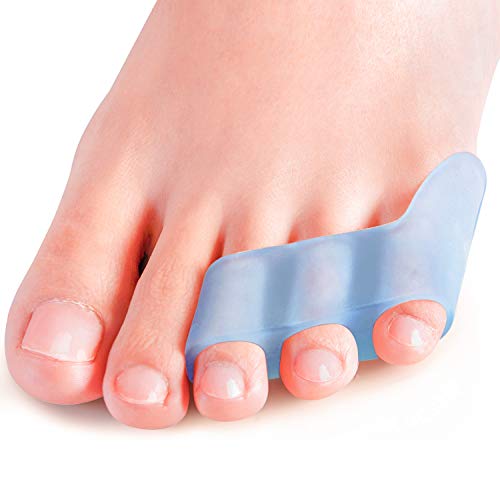
For an overlapping little toe, this three-hole separator is more specifically aimed at pinky-toe spacing than the other options. The maker says it creates space between adjacent toes and between the little toe and the shoe, and describes use between the fourth and fifth toes or the third and fourth toes. That makes it a possible fit when symptoms accompany toe overlap, rather than a general forefoot pad. The pack contains 10 separators. Its focus on the little toe may be a limitation if the discomfort is centered under the ball of the foot rather than between toes.
Bottom line: Pick this when little-toe overlap is the main fit concern.
Welnove Gel Toe Separator, 12 Pack

The single-loop design makes this the small-toe-focused choice among the general separators. The maker says the elastic silicone loop fits slim and small toes, while its pad reduces pressure and absorbs shock; the product is also described as washable, reusable, and latex-free. A 12-piece pack is useful if you want multiple separators available. The maker advises against using it on the big toe or a swollen toe, so it is a poor match for those fits. It is not a metatarsal pad, and buyers seeking cushioning under the forefoot should look for a different design.
Bottom line: Choose this for a slim or small toe that fits its loop.
Mind Bodhi Regular Gel Toe Separators

For general spacing across the toes rather than a pinky-specific sleeve, this regular-size pair is the straightforward option. The maker says the gel separators are intended to fit between toes and can be worn barefoot, with socks, or in shoes during activities such as yoga or workouts. The pair is BPA- and latex-free. It may suit someone seeking broad toe separation, but it does not include the metatarsal padding found in Pnrskter Gel Toe Separator with Metatarsal Pads. A regular size is not a universal fit: if toes are crowded in a narrow shoe, adding a spacer can make that pressure worse.
Bottom line: Pick this for general toe spacing when the regular size fits comfortably.
How to choose a spacer for Morton’s neuroma
Start with where pressure occurs: between toes or under the ball of the foot. Morton’s neuroma commonly affects the nerve between the third and fourth metatarsal heads, while a spacer acts between toes and a metatarsal pad sits behind the ball of the foot. A spacer may reduce toe-to-toe contact, but it cannot substitute for forefoot cushioning when pressure is under the ball. Choose a toe separator only if toes can spread without being forced against the shoe. If symptoms are between the fourth and fifth toes, the pinky-focused design may be a more relevant fit than a broad separator. Burning, numbness, or persistent pain warrants a clinician’s assessment rather than relying on a spacer alone.
Fit toe spacers inside shoes
A spacer needs room to sit without pushing toes into the sides or top of a shoe. Many adults find a toe box that is about a half-inch wider than the foot’s forefoot helpful for toe movement; compare the shoe’s interior width with your foot while standing, since feet spread under load. Low heels also reduce forefoot pressure compared with high heels. A practical rule: if a spacer makes toes touch the shoe upper or side, remove it or switch to roomier footwear rather than wearing through discomfort. Try new spacers for a short period at home first, then increase wear only if the fit remains comfortable. A tight shoe can negate the benefit of added toe space.
Toe spacers and metatarsal pads compared
Toe spacers separate neighboring toes; metatarsal pads shift load away from the metatarsal heads when positioned just behind the ball of the foot. The two designs address different contact points, so choose based on where the shoe creates pressure. A pad placed directly beneath a tender metatarsal head can add pressure instead of relieving it. The comparison below is a quick way to match the device to the contact area.
| Need | Device type | Placement |
|---|---|---|
| Reduce rubbing between toes | Toe spacer | Between neighboring toes |
| Redistribute forefoot pressure | Metatarsal pad | Just behind the ball of the foot |
| Both contact points | Combined spacer and pad | Between toes and behind ball |
Use and care for gel toe spacers
Introduce a new spacer briefly and check for rubbing, numbness, or increased pressure before wearing it for longer periods. A spacer should sit smoothly between toes without stretching skin sharply or forcing the toes apart. Follow the maker’s cleaning directions; washable and reusable products should be fully dry before storage to limit moisture against the skin. Inspect gel for tears or tackiness, and stop using a piece that irritates the skin or no longer holds its shape. People with diabetes, reduced sensation, or circulation problems should ask a clinician before using devices that alter foot pressure, because irritation can be harder to notice and may need prompt attention.
Frequently Asked Questions
Where does a metatarsal pad sit for neuroma discomfort?
A metatarsal pad generally sits just behind the ball of the foot, not directly under the sore metatarsal head. Small shifts in placement can change pressure, so remove it if discomfort increases.
Can a toe spacer make shoe pressure worse?
Yes. A spacer takes up room, so a snug toe box can push toes against the shoe and increase rubbing. Remove it if toes touch the shoe upper or side.
How long should I wear a new toe spacer?
Start with a short trial at home, such as 15 to 30 minutes, and check the skin and comfort afterward. Stop if pain, numbness, or rubbing increases instead of extending wear.
Which toes are usually affected by Morton’s neuroma?
Morton’s neuroma most commonly involves the nerve between the third and fourth metatarsal heads. Symptoms between other toes can have different causes, so persistent pain or numbness merits clinical evaluation.
Should I use a spacer with numb or irritated skin?
Avoid adding pressure to irritated or numb skin until you have guidance from a clinician. Reduced sensation can make it harder to detect rubbing, so check skin frequently whenever a foot device is used.