
Triumph 4 Post Lift: 3 Models Compared by Fit

Triumph NSS8TL 8,000-lb Lift suits most buyers seeking a Triumph 4 post lift because its 8,000-pound capacity pairs with a 180-inch runway and 99-inch drive-through width. Choose Triumph NSS-8SQ 8,000-lb Lift for a shorter vehicle footprint, or Triumph NSS-11C-G 11,000-lb Lift if you need the higher 11,000-pound capacity and wider drive-through.
A four-post lift supports a vehicle on runways, making it useful for storage and under-vehicle service. Match the runway and drive-through dimensions to the vehicle and garage before choosing.
We earn a commission if you buy through links on this page. As an Amazon Associate I earn from qualifying purchases. Products are compared on manufacturer specifications, not hands-on testing.
- Best overall: Triumph NSS8TL 8,000-lb Lift – Its 180-inch runway and 99-inch drive-through suit a broad range of storage and service needs.
- Best for shorter spaces: Triumph NSS-8SQ 8,000-lb Lift – The 141-inch overall length and 132-inch runway are shorter than the other two lifts.
- Best for heavier vehicles: Triumph NSS-11C-G 11,000-lb Lift – Its 11,000-pound capacity exceeds the 8,000-pound capacity of the other two lifts.
| Product | Best for | Capacity | Drive-through width | Runway length | Shop |
|---|---|---|---|---|---|
| Triumph NSS8TL 8,000-lb Lift | Longer vehicles | 8,000 lb | 99 in | 180 in | Check Price on Amazon |
| Triumph NSS-8SQ 8,000-lb Lift | Shorter garages | 8,000 lb | 93 in | 132 in | Check Price on Amazon |
| Triumph NSS-11C-G 11,000-lb Lift | Higher capacity | 11,000 lb | 118 in | 196 in | Check Price on Amazon |
Triumph 4 post lifts
Compare capacity and usable dimensions to find a lift that fits both your vehicle and installation space.
Triumph NSS8TL 8,000-lb Lift
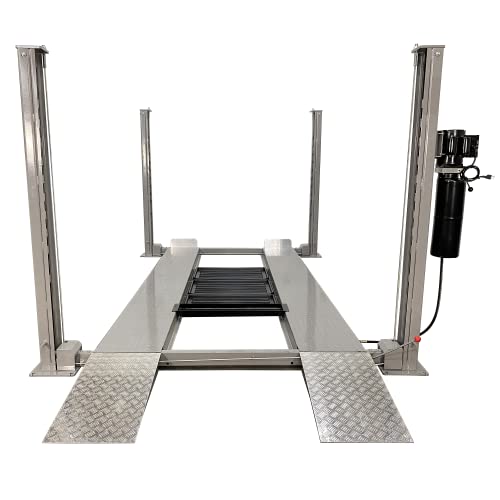
Triumph NSS8TL 8,000-lb Lift stands out for its 180-inch runway, pairing a long vehicle platform with an 8,000-pound capacity. Its 99-inch drive-through width gives more entry room than the NSS-8SQ, while its 190-inch overall length takes more floor space. The lift is positioned for storing one vehicle above another, as well as service use. A four-post design supports the vehicle at its tires on parallel runways; confirm the vehicle’s wheelbase and tire placement work with the runway layout. The longer footprint is a limitation in shorter garages, so measure available floor length before choosing.
Bottom line: Choose this lift when the 180-inch runway fits your vehicle and garage.
Triumph NSS-8SQ 8,000-lb Lift
Triumph NSS-8SQ 8,000-lb Lift is the compact-footprint option, with a 141-inch overall length and a 132-inch runway. Its 8,000-pound capacity matches Triumph NSS8TL 8,000-lb Lift, but the shorter runway and 93-inch drive-through leave less room for longer or wider vehicles. The shorter dimensions can help when garage length is the constraint, and the lift is intended for storage and service use. Measure the vehicle’s wheelbase and track width against the usable runway and drive-through dimensions; overall length alone does not establish fit. This model is less suitable when a vehicle needs the longer runway offered by the other lifts.
Bottom line: Pick it when a shorter runway is the deciding fit requirement.
Triumph NSS-11C-G 11,000-lb Lift
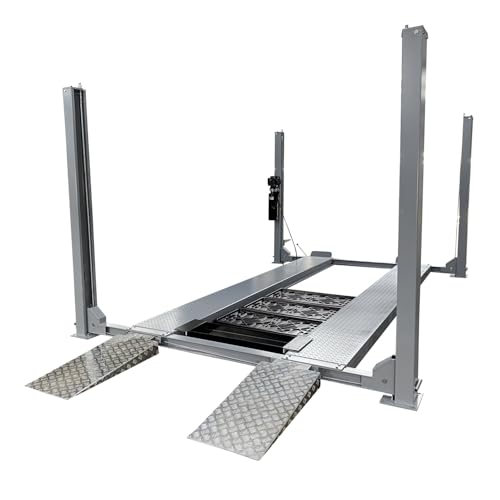
Triumph NSS-11C-G 11,000-lb Lift offers the highest capacity in this group at 11,000 pounds, along with a 196-inch runway and 118-inch drive-through. Those dimensions provide more runway and entry width than either 8,000-pound Triumph model, but the 216-inch overall length and 130-inch overall width require substantial floor space. The longer and wider layout may better suit a large vehicle, provided its weight remains within capacity and its wheel placement aligns with the runways. Its larger footprint is the tradeoff; measure garage clearances and plan the approach path before installation.
Bottom line: Choose it when its 11,000-pound capacity and wider entry match your vehicle.
How to choose a Triumph 4 post lift
Start with vehicle weight, then compare runway length and drive-through width to the vehicle and garage. The three Triumph models here have capacities of 8,000 or 11,000 pounds, runway lengths from 132 to 196 inches, and drive-through widths from 93 to 118 inches. Allow room for approach and positioning as well as the lift’s overall footprint; a vehicle that fits between the posts still needs a usable path onto the runways. A measurable rule: if the vehicle’s tire-to-tire track exceeds the drive-through width, do not assume it will pass safely. Keep the vehicle’s loaded weight below the lift’s rated capacity, and account for tools or cargo that remain in it.
Use the dimensions as a screening tool, not a substitute for checking vehicle fit and installation requirements.
Triumph lift dimensions compared
The NSS-8SQ is shortest, while the NSS-11C-G has the widest drive-through and longest runway. This table compares the three dimensions that most directly distinguish the models.
| Model | Overall length | Runway length | Drive-through width |
|---|---|---|---|
| Triumph NSS8TL 8,000-lb Lift | 190 in | 180 in | 99 in |
| Triumph NSS-8SQ 8,000-lb Lift | 141 in | 132 in | 93 in |
| Triumph NSS-11C-G 11,000-lb Lift | 216 in | 196 in | 118 in |
Overall length includes more than the runway, so do not use it as the vehicle-length limit. Check usable runway fit against the vehicle’s wheelbase and tire placement, and verify clearance for doors, posts, and the approach path. Garage ceiling height also matters when storing one vehicle above another: allow for the lifted vehicle’s full height plus clearance below the ceiling.
Four-post lift safety and installation
A four-post lift supports tires on runways, but safe capacity depends on keeping the vehicle within the rated load and correctly positioned. Before each lift, center the vehicle and engage the lift’s mechanical locks as directed by its operating procedure; do not work beneath a vehicle supported only by hydraulic pressure. Keep people clear while raising or lowering, and use wheel chocks where the lift’s instructions require them. Installation needs a suitable, level concrete floor and adequate clearance around the posts; slab thickness and strength requirements vary by lift and site. Confirm the floor requirements and electrical supply before installation, and verify applicable lift certification if certification is part of your purchase criteria.
For under-vehicle work that requires wheels to hang free, a bridge jack is a separate accessory rather than a substitute for the four-post lift’s locks. Always use properly rated equipment and secure the vehicle before working beneath it.
Frequently Asked Questions
How much ceiling height does a four-post lift need?
Allow space for the lift, the raised vehicle, and clearance above it; a second vehicle stored underneath also needs headroom. Measure both vehicles and the garage ceiling before choosing a model, since the 94- to 97-inch overall heights in the product names and features do not alone determine the required ceiling height.
How do I know if my car fits the runways?
Compare the car’s wheelbase and tire placement with the usable runway length and layout, then check track width against the drive-through opening. The Triumph runways range from 132 to 196 inches, so a vehicle’s overall length by itself is not enough to confirm fit.
Can I work beneath a car on a four-post lift?
Yes, when the vehicle is within capacity, correctly positioned, and the lift’s mechanical safety locks are engaged. Never rely on hydraulic pressure alone while working beneath a raised vehicle, and keep clear during raising and lowering.
What floor is needed for a four-post car lift?
A four-post lift needs a level concrete floor that meets the specific lift’s strength and thickness requirements. Those requirements depend on the equipment and installation, so confirm them before placing or anchoring a lift; a visibly sound floor is not proof that it meets the load requirements.
Do four-post lifts need a separate jack?
A bridge jack can raise a vehicle’s wheels clear of the runways for wheel or suspension work; the lift itself supports the tires on its runways. Use only a jack rated for the job and compatible with the lift, and secure the lift on its mechanical locks before working.