
Adagio California Air Straightening Brush Compared

The Adagio California Blowout Brush is the closest match because it combines a hot-air brush with a straightener function. Choose a different tool if you want a dedicated heated brush rather than an air styler, or need dual-voltage capability.
A hot-air brush styles with airflow, while a heated straightening brush uses heated bristles; those designs suit different routines.
We earn a commission if you buy through links on this page. As an Amazon Associate I earn from qualifying purchases. Products are compared on manufacturer specifications, not hands-on testing.
- Best overall: Adagio California Blowout Brush, 2-inch – It is the named Adagio California 2-in-1 hot-air brush with a straightener function.
- Best for high-speed airflow: High-Speed Hot-Air Straightening Brush – Its maker gives a 110,000-RPM motor and 24 m/s airflow.
- Best for dual voltage: TYMO Ionic Plus Straightening Brush, 2.4-inch – Its maker identifies dual voltage and 16 temperature settings.
| Product | Best for | Tool type | Brush width | Weight | Shop |
|---|---|---|---|---|---|
| Adagio California Blowout Brush, 2-inch | Hot-air styling | Hot-air brush, straightener function | 2 in | 1.92 lb | Check Price on Amazon |
| High-Speed Hot-Air Straightening Brush | Fast airflow styling | Hot-air styler, straightening comb | — | — | Check Price on Amazon |
| TYMO Ionic Plus Straightening Brush, 2.4-inch | Dual-voltage travel | Heated straightening brush | 2.4 in | 0.75 lb | Check Price on Amazon |
| MiroPure Enhanced Ceramic Straightening Brush | Anti-scald features | Heated straightening brush | — | 0.79 lb | Check Price on Amazon |
| TYMO iONIC Straightening Brush | Air-sandwich teeth | Heated straightening brush | — | 1.1 lb | Check Price on Amazon |
Adagio California Air Straightening Brush Options
Compare the named hot-air brush with related air stylers and heated straightening brushes by design and stated dimensions.
Adagio California Blowout Brush, 2-inch

The Adagio California Blowout Brush is the named hot-air option, combining a dryer-style brush and straightener function in a 2-inch Rose Gold design. Its dimensions are 15.35 inches long, 4.29 inches wide and 3.54 inches high. The combined format suits someone seeking airflow styling rather than a brush that only heats hair through its bristles. The product name identifies a straightener function, but the maker does not give temperature settings or voltage; buyers who need either feature should confirm it before ordering.
Bottom line: Choose this if you want the specifically named 2-inch hot-air brush.
High-Speed Hot-Air Straightening Brush

The high-speed hot-air brush emphasizes motor and airflow figures, unlike the Adagio California brush’s size and weight data. Its maker gives a 110,000-RPM BLDC motor and 24 m/s airflow, plus a one-button mode switch and negative-ion claim. The tool is presented as a hot-air styler and heated straightening comb in one, making it a related alternative for buyers prioritizing those stated motor figures. The dimensions provide no brush width or weight, so anyone choosing by storage space or hand weight should verify those measurements first.
Bottom line: Choose this if the specified motor speed and airflow matter most.
TYMO Ionic Plus Straightening Brush, 2.4-inch
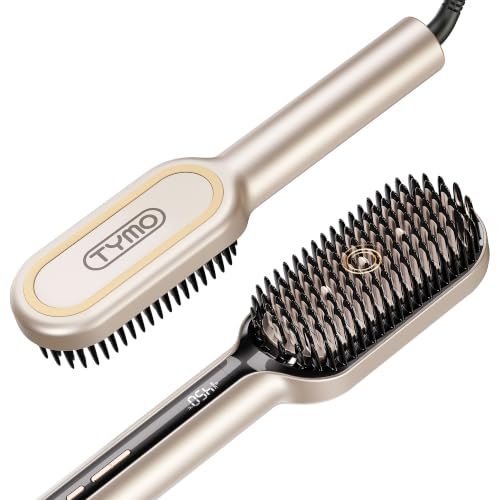
The 2.4-inch brush has 16 temperature settings, dense bristles and tourmaline ceramic bristles; its 10 million ions are a maker performance claim. At 0.75 pound, it weighs less than the Adagio California brush. Because it relies on heated bristles rather than a hot-air styling format, it suits someone seeking a compact heated comb and not someone specifically wanting airflow drying.
Bottom line: Choose this if you want a dual-voltage heated brush with multiple temperature settings.
MiroPure Enhanced Ceramic Straightening Brush

The MiroPure differs from the hot-air options by using a heated straightening brush format and naming anti-scald features. The maker says the brush heats in 60 seconds; that is a performance claim, while the weight is 0.79 pound. This alternative makes sense for someone looking for a heated brush with the named safeguards, but its maker does not establish a brush width or temperature range for comparisons based on either measurement.
Bottom line: Choose this if the named anti-scald and shutoff features are priorities.
TYMO iONIC Straightening Brush

The TYMO iONIC uses a heated straightening brush design with an air-sandwich tooth structure, rather than the Adagio California hot-air format. Its maker describes separate purple and black teeth, a double ionic generator, 16 temperature settings, an LCD display and dual voltage. The weight is 1.1 pounds.
Bottom line: Choose this if you want the described air-sandwich tooth design and dual voltage.
How hot-air and heated straightening brushes differ
Hot-air brushes combine airflow and brush styling, while heated straightening brushes use heated bristles on dry hair. The distinction matters because airflow tools can dry and shape at once; a conventional hot brush is for smoothing, not drying wet hair. The Adagio California and high-speed styler are the hot-air choices here, while the TYMO and MiroPure options are heated-brush alternatives. A hot-air brush may use a round barrel to shape a blowout; a heated straightening brush usually has a paddle or comb-like heated surface. Check the tool type before choosing by name alone, since “straightening brush” can refer to either airflow or direct heat.
How to choose by brush width and weight
For this group, the known brush widths are 2 inches and 2.4 inches, while the other tools have no comparable width supplied. A wider brush can cover more hair per pass, but a narrower one is easier to maneuver near roots and around shorter sections; hair length and desired styling control affect the tradeoff. The weights range from 0.75 to 1.92 pounds among products with a value. If you plan to hold the tool overhead or style for long sessions, use weight as a practical filter: favor the lighter measured options, then confirm the balance and grip in person. Compare dimensions as well if drawer storage is tight.
Safe use of heated hair brushes
Use a heated straightening brush on dry hair unless its maker explicitly says it is suitable for damp hair; water and direct heat can cause burns or hair damage. Hot-air brushes are designed around airflow, but the specifications here do not establish whether any model is approved for wet or damp hair, so verify that before styling hair that is not dry. Keep heated bristles away from the scalp and ears, and place a hot tool on a heat-resistant surface while it cools. Start at a lower temperature when settings are available, then increase only if the section does not smooth adequately; thin or chemically treated hair generally calls for extra caution.
What to compare before choosing a brush
Match the tool’s design to the job first, then compare the features that change daily use. The table separates airflow styling from direct-heat brushes and notes distinct selection points; it does not imply that one format can replace the other in every routine.
| Need | Choice type | Selection point |
|---|---|---|
| Drying and shaping together | Hot-air brush | Confirm damp-hair suitability and barrel dimensions |
| Smoothing dry hair with heated teeth | Heated straightening brush | Compare settings and safety features |
| Travel across voltage regions | Dual-voltage brush | Check the voltage range and plug compatibility |
Dual voltage does not automatically mean a plug adapter is included or that every outlet is compatible. Check the voltage printed on the device and the destination outlet before plugging it in.
Frequently Asked Questions
Can a straightening brush dry wet hair?
A heated straightening brush should be used on dry hair unless its maker explicitly approves damp-hair use. Hot-air brushes use airflow, but confirm the particular tool’s permitted hair condition before use.
What does dual voltage mean on a hair brush?
Dual voltage means the device can operate on more than one mains voltage range, but it does not guarantee the correct plug shape. Check the voltage printed on the device and whether your destination requires a plug adapter.
Is a wider straightening brush faster to use?
A wider brush can cover more hair in one pass, while a narrower brush is easier to control around short sections and roots. Hair length and the brush’s tooth or barrel design affect which width is practical.
How should I choose a temperature setting?
Start with the lowest setting that smooths a small dry section, then raise it only if needed.
How long should a hot brush cool before storage?
Let a heated brush cool fully on a heat-resistant surface before putting it away. Avoid placing a hot tool near fabric, paper or other materials that can be damaged by heat.