
H2 Smart Hydrogen Cup: 4 Models Compared by Output

The PUREPEBRIX H2 smart hydrogen cup is the strongest match for buyers prioritizing a reported hydrogen-output range, with its maximum of 9,060 PPB after 30 minutes. Choose another model if you want a shorter cycle or a 14-ounce bottle; the PUREPEBRIX capacity is 10 ounces.
These portable cups use electrolysis to generate dissolved hydrogen in water, but the reported output depends on cycle time and operating conditions.
We earn a commission if you buy through links on this page. As an Amazon Associate I earn from qualifying purchases. Products are compared on manufacturer specifications, not hands-on testing.
- Best overall: PUREPEBRIX 10 oz Hydrogen Water Bottle – Claims up to 9,060 PPB after a 30-minute cycle and includes a 12-hour retention claim.
- Best for a 14-ounce cup: SPHydVita 14 oz Glass Hydrogen Bottle – Pairs a 14-ounce glass cup with SPE/PEM technology and a claimed 5,000 PPB in 3 minutes.
- Best for a 3-minute cycle: BEVECK 14 oz Hydrogen Water Bottle – Claims 3,000 PPB hydrogen after a single 3-minute use.
| Product | Best for | Capacity | Claimed hydrogen output | Cycle time | Shop |
|---|---|---|---|---|---|
| PUREPEBRIX 10 oz Hydrogen Water Bottle | Output range | 10 oz | Up to 9,060 PPB | 5–30 min | Check Price on Amazon |
| SPHydVita 14 oz Glass Hydrogen Bottle | Larger glass cup | 14 oz | Up to 5,000 PPB | 3 min | Check Price on Amazon |
| PIURIFY 10 oz Hydrogen Water Bottle | Warranty coverage | 10 oz | 6,300+ PPB | — | Check Price on Amazon |
| BEVECK 14 oz Hydrogen Water Bottle | Short-cycle use | 14 oz | Up to 3,000 PPB | 3 min | Check Price on Amazon |
H2 smart hydrogen cups compared
Compare capacity, claimed hydrogen output, and generation time before choosing a portable hydrogen water cup.
PUREPEBRIX 10 oz Hydrogen Water Bottle
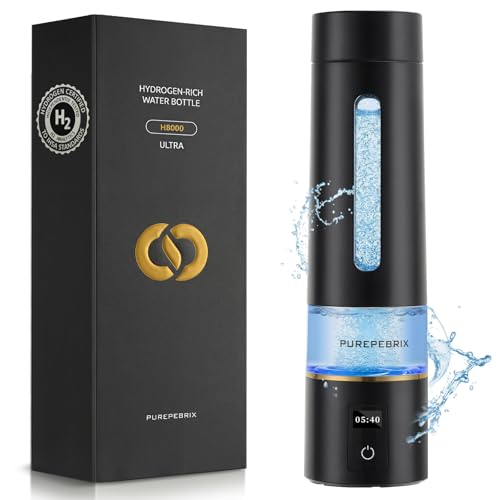
The PUREPEBRIX distinguishes itself with output figures across several cycle lengths rather than a single target. The brand reports a mean of 4,340 PPB after 5 minutes, rising to 9,060 PPB after 30 minutes, and claims 12-hour hydrogen retention. It uses SPE/PEM electrolysis with platinum-iridium-coated electrodes and a dual-chamber membrane. This 10-ounce bottle suits buyers willing to run a longer cycle for the maximum; it is less suitable when a short, three-minute preparation or larger cup matters.
Bottom line: Choose it if you value a range of reported output levels and can wait for a longer cycle.
SPHydVita 14 oz Glass Hydrogen Bottle

The SPHydVita is the only 14-ounce glass cup among these options, making its capacity the main distinction. The brand says its SPE/PEM system generates up to 5,000 PPB in 3 minutes and is designed to separate hydrogen from oxygen while minimizing ozone and chlorine byproducts. A USB-C rechargeable design suits portable use at home, work, or the gym. The output is a claimed maximum, not a guaranteed concentration for every water source, so buyers focused on a documented range should consider a different model.
Bottom line: Pick it if the 14-ounce glass cup matters more than the highest claimed output.
PIURIFY 10 oz Hydrogen Water Bottle

The PIURIFY stands apart for its 10-year warranty and included nasal cannula, alongside a claimed output of 6,300+ PPB. It has a 10-ounce capacity and uses SPE/PEM technology in a turquoise portable bottle. The features emphasize warranty support and everyday portability rather than a cycle duration, so it suits buyers who prioritize those attributes over comparing preparation times. The cannula is a specialized accessory; buyers seeking only a drinking cup may not need it.
Bottom line: Choose it if a long stated warranty and the included cannula fit your priorities.
BEVECK 14 oz Hydrogen Water Bottle

The BEVECK pairs a 14-ounce capacity with a 3-minute generation cycle, matching the larger cup size of SPHydVita while claiming up to 3,000 PPB. Its SPE/PEM technology uses electrolysis to separate and release hydrogen and oxygen. This portable USB-rechargeable cup suits buyers who want a quick cycle and a larger serving. Its claimed output is lower than the other maximums, so shoppers chiefly comparing reported concentration may prefer another option.
Bottom line: Pick it for a 14-ounce cup and a three-minute cycle.
How to compare hydrogen output claims
Compare each output figure with its cycle time, because a PPB number without a duration is not an apples-to-apples comparison. Here, one brand gives several values from 5 to 30 minutes, while other brands give a single figure tied to 3 minutes or no duration. PPB means parts per billion; the number alone does not tell you how long the water retains hydrogen. Dissolved hydrogen can escape as water sits, so pour and drink promptly after generation when hydrogen content is the goal. Treat output and retention statements as brand claims rather than a standardized guarantee across devices.
The table separates the product claims by time context, not by independently comparable test results.
| Claim context | What to compare | Buyer implication |
|---|---|---|
| Single-cycle figure | Claimed PPB plus stated cycle time | Useful for quick-preparation comparisons |
| Multiple cycle figures | Output progression and longest cycle | Allows a choice between wait time and claimed concentration |
| No cycle duration | Output claim alone | Cannot directly compare preparation speed |
Choosing cup capacity and portability
Choose capacity by how much you drink in one sitting: the two 14-ounce cups hold 4 ounces more than the two 10-ounce models. For a daily carry, compare the actual dimensions and weight as well as capacity; a bottle around 9 inches tall may fit upright in some bags but not shorter pockets. The SPHydVita weighs 0.86 pounds and the PIURIFY weighs 0.81 pounds, while other dimensions are inconsistent with ordinary bottle measurements and should not guide a fit decision. Confirm cup dimensions before ordering if a specific holder or bag pocket must accommodate it.
Glass may matter to buyers who prefer that material, but it can be more vulnerable to impact than plastic or metal. Keep any rechargeable bottle dry around its charging connection, and do not charge it while wet.
How SPE/PEM hydrogen cups work
SPE/PEM cups use an electrolysis cell to split water and route gases through a membrane system. In this context, SPE refers to a solid polymer electrolyte and PEM to a proton exchange membrane; a dual chamber is intended to separate generated hydrogen from oxygen and vent exhaust. These design terms describe the cell architecture, not a universal guarantee of output or purity. Water mineral content, temperature, fill level, and electrode condition can affect electrolysis performance, so use water suited to the maker’s instructions and avoid adding salts or flavorings unless the device permits them. Visible bubbles show gas formation but do not measure concentration.
Hydrogen generation does not make ordinary water sterile or replace safe drinking-water handling. Clean and dry the cup between uses, and follow its specified cleaning method to avoid damaging membranes or electrical components.
What to verify before using a hydrogen cup
Check cycle duration, capacity, power method, and warranty terms against your routine; a 30-minute cycle suits a different schedule than a 3-minute one. Output numbers should be compared only when the water volume and cycle time are alike, since higher duration can raise a concentration. Avoid treating claims about antioxidant effects as established personal health outcomes. Hydrogen water devices are consumer appliances, not medical treatment, and no claimed PPB level establishes that a particular health benefit will occur.
For a product with an included nasal cannula, verify its intended use and cleaning directions before attaching it; do not assume the cup is a medical oxygen or hydrogen therapy device. If a dimension is essential for a vehicle cup holder or bag sleeve, confirm that measurement before purchase.
Frequently Asked Questions
How long should hydrogen water sit before drinking?
Drink it soon after a generation cycle because dissolved hydrogen can escape from water over time. A claimed retention period is product-specific and does not mean the concentration stays unchanged throughout that period.
Does a higher PPB number mean better hydrogen water?
A higher PPB claim indicates a higher reported concentration, but compare it only at the same cycle duration and water volume. A longer cycle can produce a higher stated figure while taking more time.
Can I use tap water in a hydrogen water cup?
Use water only if it meets the device maker’s permitted water guidance; mineral content and additives can affect electrolysis and maintenance. Avoid salt, juice, or other additives unless the manual expressly allows them.
Do visible bubbles confirm the hydrogen concentration?
No, bubbles show gas being produced but do not quantify dissolved hydrogen. A PPB measurement requires an appropriate measurement method rather than visual inspection.
How should I clean a rechargeable hydrogen cup?
Rinse and dry the drinking chamber after use, while keeping charging contacts and electrical components dry. Use the maker’s cleaning method because abrasive cleaners or submerged electronics can damage the device.