
Pearl Powder for Skin: 3 Topical Powders Compared

For a topical pearl powder to mix into a DIY mask, Jutqut Freshwater Pearl Powder, 3.53 oz is the best fit because its package is a 3.53-ounce loose powder. Choose Sturelehub Organic Pearl Powder, 4 oz if tooth-powder use matters too, or Peralpow Organic Pearl Powder, 3.52 oz if you want a 3.52-ounce powder marketed for DIY skincare.
Pearl powder is a dry cosmetic ingredient, not a ready-to-use mask; mix only what you plan to use, and patch test before applying it broadly.
We earn a commission if you buy through links on this page. As an Amazon Associate I earn from qualifying purchases. Products are compared on manufacturer specifications, not hands-on testing.
- Best overall: Jutqut Freshwater Pearl Powder, 3.53 oz – A 3.53-ounce loose powder is specifically presented for DIY skincare.
- Best for multi-use: Sturelehub Organic Pearl Powder, 4 oz – The 4-ounce powder is presented for masks and tooth-powder use.
- Best for DIY masks: Peralpow Organic Pearl Powder, 3.52 oz – The 3.52-ounce powder is marketed for DIY skincare and mask use.
| Product | Best for | Package amount | Stated grade or purity | Other stated use | Shop |
|---|---|---|---|---|---|
| Jutqut Freshwater Pearl Powder, 3.53 oz | DIY skincare masks | 3.53 oz | Cosmetic grade | DIY skincare | Check Price on Amazon |
| Sturelehub Organic Pearl Powder, 4 oz | Masks and teeth | 4 oz | 99.9% pure; cosmetic grade | Tooth powder | Check Price on Amazon |
| Peralpow Organic Pearl Powder, 3.52 oz | DIY beauty routines | 3.52 oz | Organic; 100% natural | DIY skincare | Check Price on Amazon |
Pearl Powder for Skin
These loose powders are intended for topical DIY skincare, with differences in package size and stated uses.
Jutqut Freshwater Pearl Powder, 3.53 oz

Jutqut is a loose freshwater pearl powder sold specifically for DIY skincare, making its intended topical format clear. The package contains 3.53 ounces, and the maker says the powder can be mixed for skincare use. That format suits someone who wants to prepare a small mask or blend rather than swallow capsules. The maker also claims moisturizing and pore-cleansing effects, but those benefits are not a substitute for established skin-care treatments. Because powdered ingredients can be gritty or irritating on some skin, mix a small amount and patch test before facial use.
Bottom line: Choose this if you want loose pearl powder presented for DIY skincare.
Sturelehub Organic Pearl Powder, 4 oz
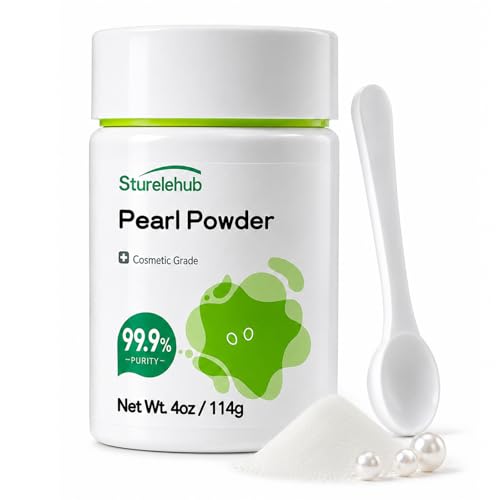
Sturelehub is the only option here that explicitly combines DIY masks with tooth-powder use. Its 4-ounce package is the largest of these three, and the maker describes the powder as fine-textured and easy to blend, with a scoop included. That combination may suit someone who wants one dry ingredient for different cosmetic projects. Tooth powders can be abrasive, so avoid vigorous brushing and do not assume this powder replaces fluoride toothpaste or dental care. For facial use, make a fresh small batch and patch test first; the maker’s skin-benefit claims should not be treated as proven results.
Bottom line: Choose this if tooth-powder use is also part of your plan.
Peralpow Organic Pearl Powder, 3.52 oz

Peralpow is positioned as a multi-purpose DIY skincare powder, with a 3.52-ounce package close in size to Jutqut Freshwater Pearl Powder, 3.53 oz. The maker describes it as free from additives and says it can be used for masks and beauty care. That makes it a fit for someone prioritizing a natural-ingredient positioning rather than a cosmetic-grade label. The package claims hydration, brightening, and elasticity benefits; these are maker claims, not guarantees. Like any new face product, the powder should be tested on a small area first, especially if your skin is reactive or you already use exfoliating products.
Bottom line: Choose this if its natural-ingredient positioning fits your DIY routine.
How to Choose Pearl Powder for Skin
Choose a loose powder sold for topical cosmetic use when you intend to mix a mask; capsule supplements are a different format. Compare package amount, stated grade, and intended uses rather than relying on claims such as brightening or anti-aging. Cosmetic products are not approved by the FDA before sale, and cosmetic-grade wording does not establish that a product is effective for a particular skin concern. A useful decision rule is to choose a product that explicitly names topical skincare if a face mask is your main use; choose a multi-use powder only if you also plan to use its other application. Avoid treating a DIY powder as a replacement for sunscreen or a treatment recommended by a clinician.
How to Mix and Patch Test Pearl Powder
Mix a small amount of dry powder with a compatible liquid in a clean dish just before use; do not store a wet DIY mixture, since adding water can allow microbes to grow without a preservative system. Keep the mixture out of the eyes and off broken or irritated skin. For a new cosmetic, apply a small amount to a discreet area and observe it for 24 to 48 hours before broader use; stop if you develop burning, swelling, or a rash. Powder texture can feel abrasive, so use gentle pressure rather than scrubbing. If your skin is sensitive or you use exfoliating acids or retinoids, avoid layering multiple potentially irritating products in one session.
Loose Pearl Powder Versus Other Formats
Loose powder is the format to choose when you want to control the amount and mix a DIY topical product. Capsules are designed for measured supplement use, even if a maker also suggests opening one for topical application; the capsule shell and serving directions make them less direct than a loose cosmetic powder. Use this quick comparison to match format to purpose.
| Format | Best suited to | Practical consideration |
|---|---|---|
| Loose powder | DIY topical mixing | Prepare only a fresh portion |
| Capsules | Measured supplement routine | Not the simplest mask format |
| Ready-made mask | Convenience | Follow its own use directions |
Do not infer that a powder is safer or more effective simply because it has fewer ingredients or a natural positioning. Use any product only for applications its packaging supports, and discontinue it if irritation develops.
What to Know About Pearl Powder Claims
Statements about hydration, pores, aging, or skin tone are cosmetic benefit claims, not proof that a powder can change skin structure or prevent aging. No topical powder can replace daily broad-spectrum sunscreen; dermatology guidance commonly recommends SPF 30 or higher for exposed skin. For persistent acne, pigment changes, or a rash, a clinician can help identify a suitable treatment instead of relying on a DIY mask. The practical limit of a loose powder is that the user chooses the liquid, concentration, and contact time, so a homemade mixture does not have the same standardized formula or preservation system as a finished cosmetic. Keep expectations modest and stop use if your skin reacts.
Frequently Asked Questions
How often can I use a pearl powder face mask?
Start with one brief application and watch for irritation over the next 24 to 48 hours. There is no universal frequency for homemade masks because the mixture and skin tolerance vary.
Should I mix pearl powder with water before use?
You can make a fresh small portion with water or another suitable liquid, but do not save the wet mixture. Water can support microbial growth in a DIY mixture that has no preservative system.
Can pearl powder irritate sensitive skin?
Yes, any cosmetic ingredient or gritty powder can irritate sensitive skin. Patch test a small area for 24 to 48 hours, and avoid applying it to broken or inflamed skin.
Can pearl powder replace sunscreen or moisturizer?
No; a DIY pearl powder mixture is not a substitute for sunscreen or a formulated moisturizer. Use broad-spectrum SPF 30 or higher on exposed skin for sun protection.
Is loose pearl powder the same as pearl capsules?
No; loose powder is packaged for measuring and mixing, while capsules are a supplement format. Do not assume a capsule product is intended for topical use unless its own directions say so.