
Nano Car Scratch Removal Spray: 4 Options Compared

For a nano car scratch removal spray, P40 Nano Scratch Repair Spray is the closest match because it is a spray marketed for minor surface scratches and paint flaws. Choose Carfidant Scratch & Swirl Remover if you want a polish for light clearcoat marks, or Car Scratch Repair Wax, 1 oz or Nano Magic Cloth Scratch Remover Kit if you prefer a paste or cloth-based process.
Scratch-removal products work on different kinds of marks: a fingernail that catches in a scratch can indicate damage beyond the clearcoat, which a surface spray or polish may not correct.
We earn a commission if you buy through links on this page. As an Amazon Associate I earn from qualifying purchases. Products are compared on manufacturer specifications, not hands-on testing.
- Best overall: P40 Nano Scratch Repair Spray – A nano spray format aimed at minor scratches and surface flaws.
- Best for clearcoat marks: Carfidant Scratch & Swirl Remover – A polishing kit intended for light scratches, swirls, scuffs, and water spots.
- Best for paste application: Car Scratch Repair Wax, 1 oz – A one-ounce polishing paste for minor surface imperfections.
| Product | Best for | Format | Size | Application | Shop |
|---|---|---|---|---|---|
| P40 Nano Scratch Repair Spray | Spray application | Spray | 120 mL | Spray on | Check Price on Amazon |
| Carfidant Scratch & Swirl Remover | Light clearcoat marks | Polish kit | 8.4 fl oz | Hand or machine | Check Price on Amazon |
| Car Scratch Repair Wax, 1 oz | Paste application | Polishing paste | 1 oz | Wipe and sponge | Check Price on Amazon |
| Nano Magic Cloth Scratch Remover Kit | Cloth-based process | Cloth and wax kit | 6 cloths; wax | Wipe, then sponge | Check Price on Amazon |
Nano Car Scratch Removal Sprays and Alternatives
Compare the application format and intended scratch type before choosing a surface product.
P40 Nano Scratch Repair Spray

P40 Nano Scratch Repair Spray is the only spray in this group marketed specifically for quick nano scratch repair, so it fits buyers who want a spray rather than a rubbing compound or cloth kit. The maker says its formula fills minor scratches and surface flaws and forms a protective film; it also claims the film levels within 30 seconds. The 120 mL bottle is suited to spot treatment. Its limitation is scratch depth: a surface product is not a substitute for paint repair when a mark catches a fingernail or exposes a lower paint layer.
Bottom line: Choose this if you want a spray for minor surface marks.
Carfidant Scratch & Swirl Remover

Unlike P40 Nano Scratch Repair Spray, Carfidant Scratch & Swirl Remover is a polishing kit designed for light clearcoat damage rather than a nano spray. The maker says it can address light scratches, swirls, scuffs, water spots, and oxidation, and includes an applicator pad. Its nail test is a useful screening rule: if a fingernail catches, the mark may extend beyond the clearcoat and this kind of polish may not be enough. The maker says stubborn marks may need two or three passes; consider this format when you are prepared to work the surface by hand or with a dual-action polisher.
Bottom line: Choose this for light marks that do not catch a fingernail.
Car Scratch Repair Wax, 1 oz

Car Scratch Repair Wax, 1 oz comes as a one-ounce polishing paste, a different approach from the spray in P40 Nano Scratch Repair Spray. The maker describes it as a water-free formula for minor scratches, marks, and surface abrasions, with a protective film after application. Its compact size makes it a spot-treatment option for small areas such as marks around door handles. Although the product name refers to deep scratches, the described use is minor imperfections; buyers dealing with a scratch that catches a fingernail should not assume paste can restore missing paint.
Bottom line: Choose this if you prefer a paste for small surface marks.
Nano Magic Cloth Scratch Remover Kit
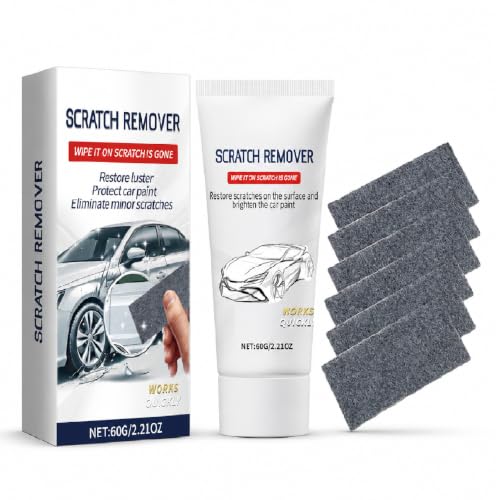
Nano Magic Cloth Scratch Remover Kit combines six nano cloths with a separate scratch-repair wax, unlike the single-format spray P40 Nano Scratch Repair Spray. Its process involves cleaning the area, wiping with a cloth, then applying wax with a sponge and wiping it away. That multi-step format may suit buyers who want cloths as well as a finishing product. The maker describes it for light scratches and stains, not deep paint damage. Because the kit requires surface cleaning and separate wax application, it is less direct than a spray for someone seeking a single-step spot treatment.
Bottom line: Choose this if you want cloths and a separate wax step.
How to tell whether a scratch is light
A fingernail test can help separate a light clearcoat mark from a deeper scratch: if your nail catches, a spray or polish may not be enough. Automotive paint usually has a clearcoat over color, with primer and metal or plastic farther underneath; visible color loss or exposed primer calls for a paint-matched repair rather than surface polishing. A mark that does not catch may still need careful assessment, since contamination or transferred paint can look like a scratch. Wash and dry the panel before judging it, and test any product on a small inconspicuous area first. Avoid aggressive rubbing on a hot panel or in direct sun, which can make products dry unevenly.
Choosing between a spray, polish, paste, and cloth
Choose by the surface problem and the amount of work you want to do: sprays are applied directly, while polishes and pastes need rubbing and cloth kits add a separate wiping step. Abrasive polishing works by leveling a tiny amount of surrounding clearcoat, so repeated aggressive passes can thin the finish rather than fix deeper paint loss. A protective film or ceramic-style coating does not rebuild missing color or clearcoat. The table compares the product formats and their use; it is not a ranking by repair strength.
| Format | Typical role | Consider when |
|---|---|---|
| Spray | Spot application | You want a direct spray format |
| Polish | Light surface correction | The mark does not catch a fingernail |
| Paste | Small-area rubbing | You prefer a sponge or wipe process |
| Cloth kit | Wiping plus separate wax | You accept a multi-step application |
Preparing paint before scratch treatment
Clean the panel before treating a mark, because grit trapped under a cloth can create additional swirls. Use a clean, soft microfiber towel and work on a cool surface in the shade; heat can cause compounds or waxes to dry before they are evenly spread. Apply only a small amount at first and follow the product’s process, keeping treated areas limited so you can assess the result. Gloves are prudent when handling automotive chemicals, and keep products off eyes, skin, and surfaces they are not intended for. If the scratch exposes primer or bare substrate, stop polishing and seek a paint-repair method matched to the vehicle finish.
Frequently Asked Questions
Can a spray fix a scratch that catches a fingernail?
A scratch that catches a fingernail may extend beyond the clearcoat, so a surface spray is unlikely to replace missing paint. Use a paint-repair approach suited to the exposed layer instead of repeated rubbing.
Should I wash my car before using scratch remover?
Yes, wash and dry the area first so dirt does not get dragged across the finish. A clean, cool panel in the shade also helps a product spread evenly.
Can scratch remover damage clearcoat?
Abrasive rubbing can remove a small amount of clearcoat, and repeated or forceful passes can worsen the finish. Test a small spot and stop if the mark does not improve.
Does ceramic spray repair paint scratches?
A maintenance coating adds a surface layer but does not replace missing paint or clearcoat. Choose a scratch-correction product only for marks within its intended range.
When should I use touch-up paint instead?
Use a paint-matched repair when color is missing, primer shows, or the scratch catches a fingernail. Surface sprays and polishes are intended for minor marks rather than rebuilding a damaged paint layer.