
Bushnell Equinox X650: Model Fit and Features Compared

The Bushnell Equinox X650 suits buyers who want a handheld digital night vision monocular with 3x optical magnification, 5x digital zoom and a viewing range of up to 650 feet. Choose a related Equinox model instead if its range, magnification or mobile streaming is a closer match.
Digital night vision uses an electronic sensor and infrared illumination to form an image in darkness; daylight viewing is also supported by these models.
We earn a commission if you buy through links on this page. As an Amazon Associate I earn from qualifying purchases. Products are compared on manufacturer specifications, not hands-on testing.
- Best overall: Bushnell Equinox X650 – Its 3x optical magnification, 5x digital zoom and recording support address the X650 search directly.
- Best for longer range: Bushnell Equinox Z 4.5×40 – The Equinox Z is specified for viewing distances up to 750 feet.
- Best for mobile streaming: Bushnell Equinox Z2 6×50 – The Equinox Z2 6×50 supports live video streaming to a mobile device.
| Product | Best for | Magnification | Objective | IR viewing range | Shop |
|---|---|---|---|---|---|
| Bushnell Equinox X650 | Handheld day/night viewing | 3x optical; 5x digital zoom | 32 mm | Up to 650 ft | Check Price on Amazon |
| Bushnell Equinox Z 4.5×40 | Longer stated range | 4.5x; 1–3x digital zoom | 40 mm | Up to 750 ft | Check Price on Amazon |
| Bushnell Equinox Z2 6×50 | Mobile video streaming | 6x; app-controlled digital zoom | 50 mm | More than 1,000 ft | Check Price on Amazon |
| Bushnell Equinox Z2 4.5×40 | 4.5x Z2 format | 4.5x | 40 mm | — | Check Price on Amazon |
Bushnell Equinox X650 and Related Night Vision Monoculars
Compare the closest Equinox alternatives by magnification, objective size and stated infrared viewing distance.
Bushnell Equinox X650

The Equinox X650 is the direct match for this search, with 3x optical magnification and up to 5x digital zoom. Its 32 mm objective and handheld design suit buyers who want a compact monocular for daytime or nighttime observation. The built-in IR illuminator is specified for a viewing range of up to 650 feet, and the unit can record video to a microSD card.
Its main tradeoff is the shorter stated range than the related Z and Z2 models. Choose another option if maximum listed distance or mobile streaming matters more than this model’s fit to the X650 name.
Bottom line: Pick this if you want the Equinox X650 with day/night viewing and onboard recording.
Bushnell Equinox Z 4.5×40

The Equinox Z offers a longer stated IR viewing distance than the X650: up to 750 feet. It pairs 4.5x magnification with a 40 mm objective and 1–3x digital zoom, making it a related alternative for buyers prioritizing those specifications over the X650’s direct model match. Daytime color viewing, video recording, image capture and video out are supported; recording uses a separately purchased microSD card up to 32 GB.
This model uses four AA batteries, which are not included. Choose it if the 750-foot stated distance and video-out capability suit your setup; it is not the X650 model.
Bottom line: Choose this if its 750-foot stated range and video-out feature matter most.
Bushnell Equinox Z2 6×50
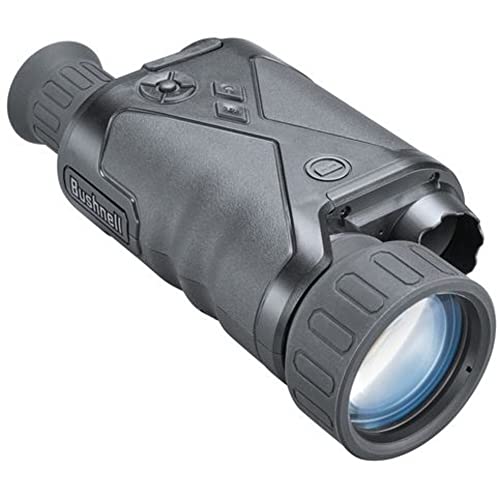
The Equinox Z2 6×50 stands apart with live video streaming to a mobile device and app control for zoom, recording, image capture and IR brightness. Its 6x magnification and 50 mm objective are larger specifications than those of the X650. Bushnell specifies a built-in IR illuminator for targets more than 1,000 feet away, and the model captures 1080p video in day or night modes.
Choose this related model when remote viewing and app controls are central to your use. Its feature set differs from the X650, so buyers specifically seeking the X650 should select the direct model instead.
Bottom line: Pick this for mobile streaming, app control and its specified longer reach.
Bushnell Equinox Z2 4.5×40

The Equinox Z2 4.5×40 is a related day-and-night monocular with HD imaging, infrared illumination, streaming and recording capabilities. Its 4.5x magnification and 40 mm objective distinguish it from the X650’s 3x optical magnification and 32 mm objective. The name identifies it as a Z2 model, while the available product features emphasize imaging and connectivity rather than a viewing distance.
That makes this a less complete specification match for buyers comparing infrared reach. Consider it if the 4.5×40 size and Z2 feature set are what you need; choose the X650 if you specifically want that model.
Bottom line: Choose this if 4.5x magnification and the Z2 feature set fit your needs.
How to choose a digital night vision monocular
Start with optical magnification and the viewing conditions, not digital zoom alone. Optical magnification changes the image before electronic processing; digital zoom enlarges the displayed image and can make fine detail harder to distinguish. Compare objective diameter, too: a larger objective can gather more light, but it does not guarantee a clearer image because the sensor and illumination also matter.
For use in total darkness, check the built-in IR illuminator’s range and treat that number as a maximum claim, not a guaranteed identification distance. Ambient light, target size, weather and contrast all affect what you can recognize. If your priority is moving video to a phone, confirm that mobile streaming is a function; recording to a memory card is not the same as live streaming.
What viewing range and zoom figures mean
Viewing range describes how far away a device may show an object under favorable conditions; it does not establish how much detail remains recognizable at that distance. For identification, consider the target’s size and contrast as well as the distance. A 1,000-foot range should not be treated as equivalent to identifying a small object at 1,000 feet.
Optical and digital magnification figures also describe different things. Optical magnification is the primary comparison for bringing a distant scene closer, while digital zoom crops or enlarges the captured image. Compare the optical figure first, then consider digital zoom as a secondary convenience. A larger objective can help collect light, but sensor performance and IR illumination still influence nighttime image quality.
Equinox model differences at a glance
Choose by the feature that changes your use: the X650 is the direct model match, while the Z models offer different magnification, range or connectivity specifications.
| Need | Model fit | Decision point |
|---|---|---|
| Direct X650 match | Equinox X650 | 3x optical, 5x digital zoom, up to 650 ft |
| Longer stated range | Equinox Z 4.5×40 | Up to 750 ft; four AA batteries |
| Mobile live stream | Equinox Z2 6×50 | 6x magnification; 1080p video |
| 4.5x Z2 configuration | Equinox Z2 4.5×40 | 4.5x magnification and 40 mm objective |
Use the table to narrow the choice, then confirm practical setup needs. Memory cards and batteries are not interchangeable assumptions across models: one model specifies a separately purchased card and AA batteries, while the X650 supports microSD recording.
Using night vision safely and effectively
Night vision improves visibility but does not make nighttime terrain safe to cross. Keep a separate light available for walking, and avoid relying on a monocular to judge holes, branches or changes in ground level. A magnified view also narrows the scene, so scan slowly and return to unaided observation when moving.
For clearer viewing, stabilize the monocular when practical; a tripod mount can reduce hand movement at higher magnification. Avoid pointing IR illumination through glass, since reflections can wash out the image. In daylight, use only the device’s supported daytime mode and follow the model’s operating guidance, rather than assuming every night vision unit handles bright light the same way.
Frequently Asked Questions
Does digital night vision work in complete darkness?
Digital night vision can form an image in darkness when its infrared illuminator supplies light the sensor can detect. The usable distance depends on the illuminator, target and conditions, so a maximum range is not a promise of clear identification.
What does a 32 mm objective lens affect?
A 32 mm objective is the diameter of the front lens, not the magnification. A larger objective can gather more light, but sensor quality, focus and infrared illumination also affect the nighttime image.
Is digital zoom as useful as optical magnification?
No: optical magnification enlarges the scene optically, while digital zoom enlarges or crops the electronic image. Compare optical magnification first, especially when fine detail matters.
Can night vision monoculars record video?
Some digital night vision models record video, but storage method and capacity vary. The X650 supports microSD recording, while the Equinox Z supports video and image capture using a separately purchased card up to 32 GB.
What affects how far away a target is visible?
Target size, contrast, weather, ambient light and the illuminator all affect visibility. Use the range as a reference under favorable conditions, not as a guaranteed distance for identifying small targets.