
Ozark Trail 16-Person 3-Room Tent Options Compared

Ozark Trail Hazel Creek 16-Person Tent is the closest match for an Ozark Trail 16-person, 3-room family cabin tent because it has two sewn-in dividers and 230 square feet of floor space. The maker does not confirm three entrances, so verify that feature before choosing it.
Choose an alternative if you prioritize a three-door layout or a different tent capacity; those options are not the requested Ozark Trail 16-person model.
We earn a commission if you buy through links on this page. As an Amazon Associate I earn from qualifying purchases. Products are compared on manufacturer specifications, not hands-on testing.
- Best overall: Ozark Trail Hazel Creek 16-Person Tent – It is the Ozark Trail 16-person cabin tent with two dividers for a three-room layout.
- Best for three doors: KTT 14-Person 2-Room Tent – Its maker identifies three doors, but it is a 14-person, two-room tent.
- Best for three-room capacity: CAMPROS CP 12-Person 3-Room Tent – It is a 12-person tent with two divider curtains and 180 square feet of floor space.
| Product | Best for | Capacity | Floor area | Center height | Shop |
|---|---|---|---|---|---|
| Ozark Trail Hazel Creek 16-Person Tent | Requested model | 16 people | 230 sq ft | 80 in | Check Price on Amazon |
| KTT 14-Person 2-Room Tent | Three-door layout | 12–14 people | 176 sq ft | 88.8 in | Check Price on Amazon |
| CAMPROS CP 12-Person 3-Room Tent | Lower capacity | 12 people | 180 sq ft | 72 in | Check Price on Amazon |
| Ozark Trail 10-Person 3-Room Tent | Smaller group | 10 people | 200 sq ft | 78 in | Check Price on Amazon |
Ozark Trail 16-Person Family Cabin Tent Options
Compare the closest match with related tents that differ in capacity, room layout or stated entrance count.
Ozark Trail Hazel Creek 16-Person Tent
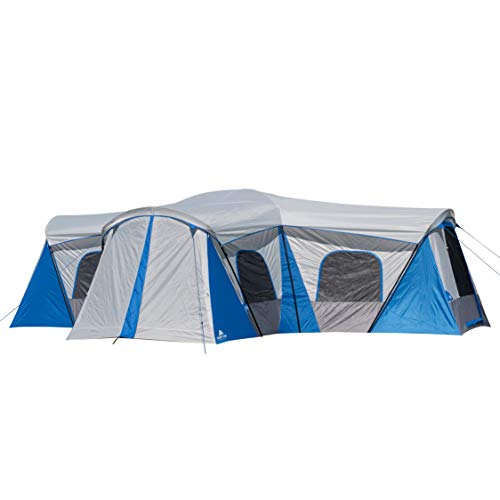
Ozark Trail Hazel Creek 16-Person Tent is the requested Ozark Trail 16-person family cabin tent, with 230 square feet of floor space and two sewn-in dividers that create three rooms. Its 80-inch height gives more standing room than the 72-inch model here. The room dividers suit families who want separate sleeping areas within one tent. The key limitation is that the maker does not confirm three entrances, so verify the entrance count if that feature is essential. A tent’s capacity is not the same as a comfortable sleeping arrangement; consider how much space your group needs for bags and movement.
Bottom line: Choose it for the specified Ozark Trail brand, 16-person capacity and three-room layout.
KTT 14-Person 2-Room Tent

KTT 14-Person 2-Room Tent is the only option here whose product name and features specify three doors, making it relevant if entrance count matters more than matching the Ozark Trail model. It is a 14-person, two-room tent with interior dimensions of 16 by 11 feet and a height of 7.4 feet; those dimensions equal 176 square feet and 88.8 inches. Mesh windows and doors are part of its described layout. Unlike a quick-pitch tent, this one requires hand assembly, so allow time to set it up and make sure your group is comfortable handling the poles. It does not match the requested brand or three-room arrangement.
Bottom line: Choose it when three stated doors matter more than the Ozark Trail brand or a third room.
CAMPROS CP 12-Person 3-Room Tent

CAMPROS CP 12-Person 3-Room Tent offers a three-room arrangement in a smaller 12-person format, with 180 square feet of floor space and a 72-inch center height. Its two divider curtains create the rooms, while the product features also describe a rainfly and six large mesh windows. That makes it a related choice for a group that needs three separate areas but does not need a 16-person tent. Its lower stated capacity and shorter center height distinguish it from the Hazel Creek. The setup time and weather-protection claims come from the maker, not independent testing.
Bottom line: Choose it if a three-room layout matters more than 16-person capacity or extra headroom.
Ozark Trail 10-Person 3-Room Tent
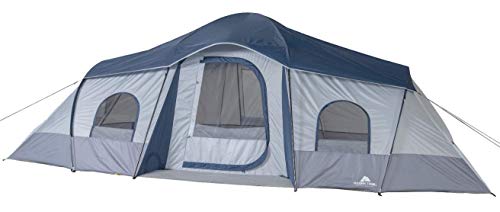
Ozark Trail 10-Person 3-Room Tent is another Ozark Trail option, but its 10-person capacity is well below the requested 16-person size. Its footprint is 20 by 10 feet, or 200 square feet, with a 78-inch height. That gives it a broad floor area for a smaller group, though it is still 30 square feet less than the Hazel Creek. The features only call out that airbeds are not included, so do not assume a particular divider or entrance arrangement from the product name alone. It suits shoppers prioritizing the Ozark Trail name and a smaller stated capacity.
Bottom line: Choose it for a smaller group seeking an Ozark Trail tent rather than a 16-person model.
How to choose a 16-person family cabin tent
Start with usable floor area and room layout, not the maximum person count alone. A common comfort-planning range is about 20 to 25 square feet per person, though sleeping-pad size, bags and shared gear change what fits. At that guideline, 16 people would need roughly 320 to 400 square feet for spacious sleeping; a 230-square-foot tent is a tighter fit for that many people. Use capacity as a starting point, then decide whether you need clear sleeping zones, space for gear, or headroom to change clothes. A measured floor plan helps: compare the footprint with the dimensions of your sleeping pads before packing.
What three rooms and three entrances mean
A three-room tent typically uses divider panels to separate one interior into zones; the panels do not make three independently weatherproof rooms. Entrance count is a separate feature: three doors can improve access when sleepers are arranged across a wide floor, but door placement matters as much as the count. Check that a tent explicitly confirms both features if you need three rooms and three entrances. Also check whether dividers are sewn in or detachable, since that affects how freely the interior can be rearranged. For this comparison, only KTT 14-Person 2-Room Tent explicitly specifies three doors, while Ozark Trail Hazel Creek 16-Person Tent specifies dividers for three rooms.
Plan sleeping space by measured footprint
Use the tent’s floor dimensions to sketch sleeping pads and walkways before choosing a capacity. For a quick comparison, multiply length by width when both dimensions are supplied; an 18-by-14-foot floor is 252 square feet, while 16 by 11 feet is 176 square feet. Actual usable space can be reduced by sloped walls, corners and gear, so a cabin shape with straighter walls may feel less cramped than a sloping design of similar area. The table compares stated floor area and height, not guaranteed sleeping capacity or doorway placement.
| Need | What to prioritize |
|---|---|
| More sleeping room | Floor area and pad layout |
| Separate sleeping zones | Divider count and placement |
| Multiple entry points | Confirmed door count and position |
| Standing room | Center height and wall shape |
Set up large tents safely
Choose level ground away from dead branches, drainage channels and exposed ridgelines, then stake and guy out the tent as directed for the site conditions. Large cabin tents present substantial surface area to wind, so do not treat a tall shape as suitable for severe weather simply because it has a rainfly. Never use a stove, lantern with an open flame, or other fuel-burning appliance inside a tent; combustion can cause carbon-monoxide poisoning and fire. Keep exits clear, and avoid blocking doors with bags or bedding. Practice pitching a multi-room tent at home so you can identify poles and dividers before arriving at camp.
Frequently Asked Questions
Does the Hazel Creek have three entrances?
The specifications confirm two sewn-in dividers for three rooms but do not confirm three entrances. Verify the door count and placement before choosing it if three entry points are required.
How much space does a 16-person tent need?
A common comfort-planning range is about 20 to 25 square feet per person, or roughly 320 to 400 square feet for 16 people. Sleeping-pad size, luggage and the layout can make a smaller tent workable only with less personal space.
Can I use a camping stove inside a family tent?
No. Do not operate a stove or other fuel-burning appliance inside a tent because carbon monoxide can build up and flames can ignite fabric.
What should I check before buying a multi-room tent?
Confirm the floor dimensions, divider arrangement, door count and center height against your group’s needs. For a tight group layout, sketch sleeping pads on the footprint and leave access to the exits.
Does a rainfly make a tent safe in strong wind?
No. A rainfly is for weather coverage, not a guarantee of wind safety. Large, tall tents catch wind, so stake and guy them appropriately and avoid exposed campsites in severe conditions.