
Best Chair Sliders for Tile Floors: 5 Types Compared

Furnigear 1-Inch PTFE Nail-On Sliders is the best fit for most people who want chair sliders for tile floors because its PTFE glides are designed for tiled floors and attach to wooden furniture legs. Choose a slip-on cover instead if you want tool-free installation, or a larger loose slider for moving heavier furniture.
Chair sliders are pads or glides fitted to furniture feet to reduce scraping when chairs move across a hard floor. Measure the leg base and check the floor for grit before choosing.
We earn a commission if you buy through links on this page. As an Amazon Associate I earn from qualifying purchases. Products are compared on manufacturer specifications, not hands-on testing.
- Best overall: Furnigear 1-Inch PTFE Nail-On Sliders – PTFE glides are designed for tiled floors and nail onto wooden furniture legs.
- Best for round legs: VIUME Round Silicone Felt Covers – The silicone covers fit round legs from 15/16 to 1-5/16 inches.
- Best for large furniture feet: Ansible Square L Silicone Felt Covers – The reusable felt sliders measure 3.5 inches across and grip furniture feet.
| Product | Best for | Glide material | Attachment | Size or fit | Shop |
|---|---|---|---|---|---|
| Furnigear 1-Inch PTFE Nail-On Sliders | Wooden chair legs | PTFE | Nail-on | About 0.96 in. | Check Price on Amazon |
| VIUME Round Silicone Felt Covers | Round chair legs | Felt with silicone | Slip-on cover | 15/16–1-5/16 in. | Check Price on Amazon |
| Ansible Square L Silicone Felt Covers | Large square legs | Felt with silicone | Slip-on cover | 1-1/16–1-5/8 in. sides | Check Price on Amazon |
| GorillaGlides 1-Inch Round Chair Glides | Fixed round glides | Low-friction glide | Self-adhesive or screw-on | 1–1-1/2 in. diameter | Check Price on Amazon |
| X-PROTECTOR 3.5-Inch Felt Sliders | Moving large furniture | Felt with rubber foam | Reusable loose slider | 3.5 in. outer diameter | Check Price on Amazon |
Chair Sliders for Tile Floors
Match the glide style to your chair-leg shape, attachment preference and how far the furniture needs to move.
Furnigear 1-Inch PTFE Nail-On Sliders
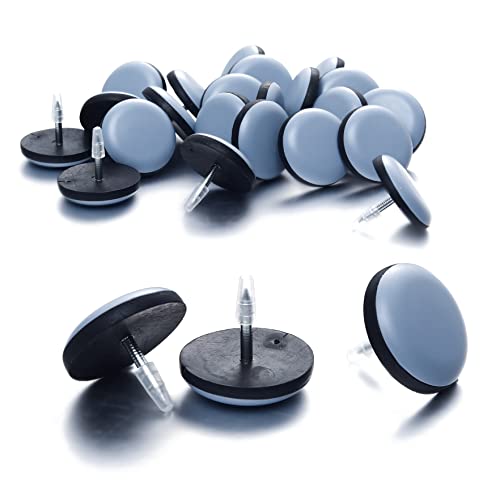
For wooden chair legs that need a fixed glide, these round PTFE sliders attach with nails and come in a 24-pack. The pads are 5 mm thick, and the actual diameter is about 0.96 inch. The maker says they are intended for tile, laminate, vinyl and low-pile carpet, and that they reduce friction and noise while furniture moves. They suit buyers who want a glide secured to the leg rather than a loose pad. The limitation is the installation: the maker recommends pre-drilling, so these are not a tool-free option and are not a fit for legs that cannot be drilled.
Bottom line: Choose these for wooden chair legs when a fixed PTFE glide is the priority.
VIUME Round Silicone Felt Covers

For round legs that need a flexible cover instead of a nailed glide, the VIUME set uses silicone caps with felt pads formed together. The 24 covers fit leg diameters from 15/16 to 1-5/16 inches, so measure the leg base before selecting them. The maker says the felt helps chairs slide smoothly while reducing noise and scratches on tile and other hard floors. This style suits buyers who want to install or remove covers without tools. Its main limitation is shape: these round caps are not intended for square legs, and legs outside the diameter range may not fit securely.
Bottom line: Pick these for round legs within the diameter range and tool-free fitting.
Ansible Square L Silicone Felt Covers

For larger square chair legs, this silicone-and-felt cover is sized by side length rather than diameter. Its square L size fits legs from 1-1/16 to 1-5/8 inches per side, so check both sides of the leg base before choosing it. The maker says the felt pad protects tile and other hard surfaces and reduces scraping noise. This model gives buyers with square feet an alternative to round caps or fixed nail-on glides. The size range is the key limitation: legs smaller or larger than that range may not get the snug fit the maker recommends, and the maker says it is not designed for carpet.
Bottom line: Choose these when the chair has square feet inside the specified side-length range.
GorillaGlides 1-Inch Round Chair Glides
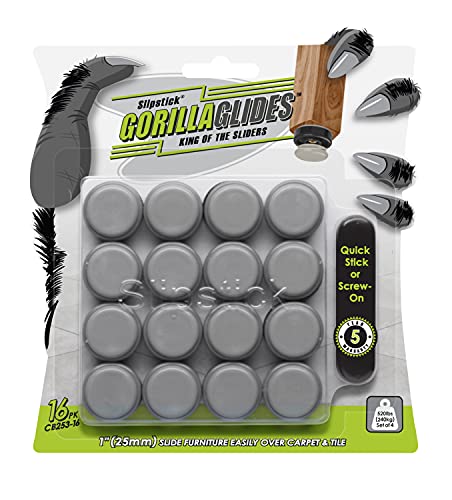
Unlike the 24-count nail-on set, GorillaGlides offer 16 round glides with a choice of self-adhesive or screw-on attachment. They are intended for furniture feet 1 to 1-1/2 inches in diameter, making leg measurement essential; the maker directs smaller and larger feet to different sizes. The maker says the low-friction bottoms slide smoothly and quietly on hard-surface floors as well as low-pile carpet. This is a useful choice when a chair foot falls within that diameter window and the buyer wants an adhesive or screw-based fitting. The limitation is the narrow fit range, and the maker suggests felt models for hardwood protection.
Bottom line: Pick these for round feet between 1 and 1-1/2 inches when an adhesive or screw-on glide suits.
X-PROTECTOR 3.5-Inch Felt Sliders

For moving larger pieces rather than fitting a small pad to each chair leg, these reusable sliders measure 3.5 inches across outside and 2.75 inches inside. They use thick felt and rubber foam, with no glue on top; the maker says the top grips furniture feet and the pads slide on hard floors. The 16-piece set suits a buyer who wants loose pads placed beneath furniture for a move or rearrangement. Their large, loose format is the tradeoff: unlike a fixed glide or leg cover, each slider has to be positioned under the furniture when needed, and the internal diameter limits the feet they can hold.
Bottom line: Choose these for moving furniture with feet that fit the 2.75-inch interior.
How to Choose Chair Sliders for Tile Floors
Choose by leg shape, measured size and whether you want a fixed glide or a removable cover. Round caps are sized by diameter, while square covers use side length; measure the furniture foot at its base, not higher up where a tapered leg may be wider. Loose sliders are a different tool: they sit under furniture for moving, rather than staying attached to each foot. For fixed use, pick an attachment method compatible with the leg material and your willingness to drill or use adhesive. Tile is hard, but small grit trapped under a pad can still scratch its surface. Sweep the floor and clean the contact area before fitting any slider.
Match the Glide to the Tile and Chair Leg
Felt-faced covers and low-friction glides serve different needs: felt creates a softer contact surface, while slick glides are intended to move with less resistance. Glazed ceramic and porcelain are hard, smooth surfaces, but grout joints interrupt a chair’s path; a small glide can catch when dragged across a deep or uneven joint. If chairs cross pronounced grout lines often, favor a secure, well-fitted cover rather than a loose pad that can shift. Avoid sliding a chair with grit beneath its feet, and lift rather than drag it when moving across debris. Check the glide periodically for wear, embedded particles or a loosened attachment; replace or clean it before it damages the tile.
Fixed Chair Glides Versus Loose Furniture Sliders
Fixed glides stay on chair legs during daily movement, while loose furniture sliders are placed under feet when furniture needs to be repositioned. Use this distinction to narrow the choice before comparing materials. A screw or nail attachment creates a fixed point but requires a leg that accepts drilling; slip-on silicone covers avoid tools but need the right leg dimensions. Adhesive glides also stay attached, though the surface must be suitable for adhesive contact. Loose pads work for a moving task, but each one must remain centered under its furniture foot as the piece shifts. The table compares the practical tradeoff by format; the dimensions still need to match the specific chair or furniture feet.
| Style | Where it works best | Fit check |
|---|---|---|
| Fixed glide | Regular chair movement | Leg base and attachment method |
| Slip-on cover | Tool-free fitting | Round diameter or square sides |
| Loose slider | Occasional furniture moving | Foot size and stable placement |
Prevent Scratches and Keep Chair Sliders Working
Clean tile and glide contact surfaces regularly because grit trapped under a chair foot acts like an abrasive during movement. Sweep or vacuum before moving furniture, then wipe the glide surface if dust or particles collect. Felt can compress or wear with use, so inspect it for thinning, tears and embedded debris; replace worn covers rather than letting a rough or exposed edge scrape tile. Check fixed glides for loose screws or nails, and slip-on covers for stretching or shifting. Never assume a floor-safe label makes every movement harmless: lifting a chair over debris or a raised grout edge reduces dragging and the chance of catching a glide.
Frequently Asked Questions
How do I measure chair legs for sliders?
Measure round feet across the widest part of the base and square feet along each side. Allow for tapered legs by measuring where the cover or glide will sit, because a difference of even a fraction of an inch can change whether a slip-on cover holds.
Can felt chair sliders scratch tile floors?
Felt itself is soft, but grit trapped in the fibers can scratch tile during repeated movement. Clean the floor and pad when debris appears, and replace felt that is torn or worn through.
Are nail-on chair glides suitable for every chair?
No; nail-on glides require a leg that can accept a fastener, and pre-drilling may be needed to help prevent splitting. Check the chair-leg material and base thickness before drilling.
Should I use chair covers or loose furniture sliders?
Use covers or fixed glides for chairs that move routinely, since those stay attached to the feet. Loose sliders are useful for occasional repositioning, but need to be centered beneath each foot and removed or repositioned afterward.
How often should I check chair sliders on tile?
Inspect them whenever you clean the floor and after moving furniture, looking for grit, loose fittings, shifting covers or worn felt. Clean or replace a damaged glide before further chair movement can scrape the tile.