
Best High Calorie Wet Dog Food for Weight Gain

Solid Gold Chicken Wet Dog Food is the best fit for most people seeking high calorie wet dog food for weight gain because it is the only canned food in this group, with chicken and whole grains in a 13.2-ounce can. Choose a different option if you need a calorie-boosting supplement rather than a meal.
Wet dog food is a moist, complete-style meal format; weight-gain powders, liquids, and gels are supplements, not substitutes for choosing food appropriate to your dog.
We earn a commission if you buy through links on this page. As an Amazon Associate I earn from qualifying purchases. Products are compared on manufacturer specifications, not hands-on testing.
- Best overall: Solid Gold Chicken Wet Dog Food – The only wet food option, with chicken and whole grains in a 13.2-ounce can.
- Best for measured calories: Under the Weather Ready Cal Powder – The maker gives 40 calories per scoop and recommends 1–2 scoops daily.
- Best for liquid feeding: Bully Max 2400 Cal Liquid Supplement – A liquid supplement with whey protein and fish oil can be mixed into food or fed directly.
| Product | Best for | Format | Serving or size | Key ingredients | Shop |
|---|---|---|---|---|---|
| Solid Gold Chicken Wet Dog Food | Canned meal | Canned wet food | 13.2 oz can | Chicken, whole grains | Check Price on Amazon |
| Under the Weather Ready Cal Powder | Measured calorie boost | Powder supplement | 40 calories per scoop | Chicken flavor | Check Price on Amazon |
| All American Canine Weight Gainer Powder | Broth-based powder | Powder supplement | 60 servings, 1.5 lb | Beef broth, whey | Check Price on Amazon |
| Bully Max 2400 Cal Liquid Supplement | Liquid supplement | Liquid supplement | 16 oz | Whey protein, fish oil | Check Price on Amazon |
| Tomlyn Nutri-Cal Dog Gel | Gel for picky eaters | Nutritional gel | 4.25 oz | Malt flavor, fish oil | Check Price on Amazon |
High Calorie Wet Dog Food and Weight-Gain Supplements
These options include one canned food and four supplements, so choose based on whether you need a meal or a calorie boost.
Solid Gold Chicken Wet Dog Food

Solid Gold Chicken Wet Dog Food is the only canned wet food among these choices, making it the closest match for someone seeking a meal rather than a calorie supplement. The 13.2-ounce can contains chicken, brown rice, barley, and superfoods, and is presented for adult dogs and puppies of all sizes. Its soft texture may suit dogs that prefer moist food. The main limitation is that the facts give no calorie count, so it cannot be compared with the supplements by calories per serving; ask your veterinarian whether the food fits your dog’s weight-gain plan.
Bottom line: Choose this if you want canned food rather than a separate calorie supplement.
Under the Weather Ready Cal Powder

Under the Weather Ready Cal Powder stands out for its calorie amount: 40 calories per scoop, with a suggested 1–2 scoops per day. The chicken-flavored powder also includes vitamins and minerals and is aimed at dogs with low appetite or weight loss. It is a supplement, not wet food, so it suits buyers who want to add calories alongside an appropriate diet rather than replace a meal. Because appetite loss or weight loss can have medical causes, check with a veterinarian before relying on a weight-gain supplement, especially during recovery from illness.
Bottom line: Pick this when you want a powder with a calorie amount per scoop.
All American Canine Weight Gainer Powder
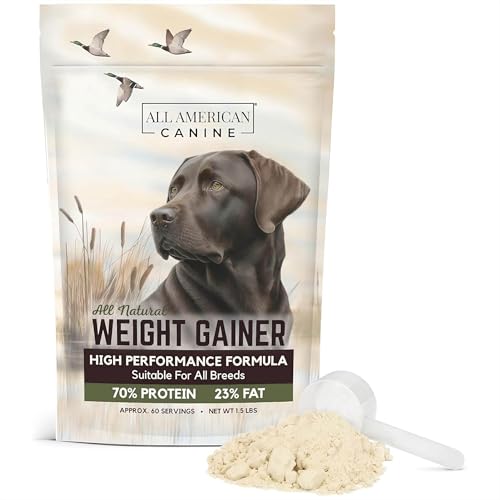
All American Canine Weight Gainer Powder differs from the chicken-flavored calorie powder by using beef broth protein and whey protein, with 60 servings in a 1.5-pound container. Its ingredients also include ground flaxseed, beef, liver powder, sweet potato, pumpkin, and blueberry powders. This is a supplement for owners who prefer a powder format and want those ingredients, not a canned meal.
Bottom line: Choose it for a beef-broth and whey powder, after confirming calories per serving.
Bully Max 2400 Cal Liquid Supplement

Bully Max 2400 Cal Liquid Supplement is the liquid option, with whey protein and omega-3-rich fish oil in a 16-ounce container. The maker says it can be mixed into food or fed directly, which offers a different feeding format from the powders and gel here. It is aimed at dogs needing calorie support, but the product facts do not state calories per serving despite the 2400 Cal name. Confirm the calorie amount and serving size before using it to plan a controlled increase; the liquid format will not suit buyers who specifically want a wet-food meal.
Bottom line: Pick this if you want a liquid supplement that can be mixed into food.
Tomlyn Nutri-Cal Dog Gel

Tomlyn Nutri-Cal Dog Gel is a malt-flavored gel rather than a can, powder, or liquid supplement. Its product features highlight extra calories, vitamins, and omega-3, omega-6, and omega-9 fatty acids from fish oil, and describe feeding directly on a dog’s nose or paws. That format may appeal when a dog resists food mixed with powder.
Bottom line: Choose it for a directly fed gel for an adult dog, not a wet-food meal.
How to Choose a Calorie Boost for Weight Gain
Choose a complete meal when your dog needs a food change, and a supplement only when you need to add calories to an otherwise suitable diet. For a measured increase, use products that provide calories per serving and weigh food with a kitchen scale; 1 gram of dry food is not interchangeable with 1 gram of wet food because moisture changes calorie density. Transition a new food over about 7 days by gradually increasing its share to reduce digestive upset. If weight loss is sudden, appetite drops, or your dog is ill, arrange veterinary guidance before increasing calories: underlying disease can cause weight change, and a high-calorie add-on does not address the cause.
Wet Food Versus Weight-Gain Supplements
Wet food is a meal format, while powders, liquids, and gels add nutrition alongside food. Canned foods commonly contain roughly 70% to 80% moisture, so compare calories per can or per 100 calories rather than judging by can weight alone. Supplements may be easier to portion in small amounts, but the useful comparison is calories per serving and the serving size, not the front-label calorie claim. Use this distinction to narrow the format before comparing ingredients.
| Need | Format to consider |
|---|---|
| Moist meal | Canned wet food |
| Measured calorie addition | Supplement with calories per serving |
| Direct feeding | Gel or liquid, if appropriate for the dog |
How to Increase Calories Safely
Increase daily calories gradually rather than making a large jump; a typical weight-management plan adjusts intake in small steps of about 5% to 10%, then checks body weight and body condition after 1 to 2 weeks. A dog’s ideal body condition is usually a visible waist from above and ribs that can be felt under a light fat covering. Keep treats and supplements within the daily calorie plan because extras can unbalance a complete diet. Puppies, pregnant dogs, and dogs with chronic disease have different nutritional needs, so a veterinarian should set the target rather than applying an adult maintenance guideline.
When Weight Loss Needs Veterinary Attention
Unplanned weight loss deserves a veterinary check, especially when paired with vomiting, diarrhea, increased thirst, or reduced appetite. Weight gain is only useful after the cause of the loss is understood; parasites, dental pain, and metabolic or digestive disease can all affect body weight. Bring a recent weight history and a record of daily food, treats, and supplement servings. For an otherwise healthy dog, weighing once weekly on the same scale helps show whether a gradual change is occurring without relying on appearance alone.
Frequently Asked Questions
How quickly should a dog gain weight?
A gradual gain is safer than a rapid increase; a common starting target is about 1% to 2% of body weight per week. Weigh weekly and have a veterinarian adjust the calorie plan if weight is not moving as expected.
Can I mix a weight-gain powder into wet food?
Many powders can be mixed with food, but check that supplement’s serving directions and count its calories in the daily total. Introduce a new supplement gradually over several days to watch for digestive upset.
How can I tell if my dog is underweight?
A body condition score of 4 to 5 on a 9-point scale is generally considered ideal for adult dogs. Prominent ribs, spine, or hip bones can indicate low body fat, but a veterinarian can distinguish thinness from illness.
Should puppies use adult weight-gain supplements?
Puppies need growth-formulated nutrition, not an adult supplement by default. Ask a veterinarian before adding calories, since excess or imbalanced nutrients can interfere with healthy growth.
When should I see a vet for weight loss?
Contact a veterinarian for unexplained weight loss, particularly if it occurs over a few weeks or comes with appetite, stool, thirst, or energy changes. A supplement cannot identify or treat the underlying cause.