
Best Cocoa Powder for Health: 4 Picks Compared

Organic Unsweetened Cacao Powder, 1 lb is the best cocoa powder for health for most people because its 1-pound package is unsweetened cacao powder for everyday drinks and baking. Choose a concentrated extract instead if your priority is a flavanol amount per serving rather than a versatile pantry ingredient.
We earn a commission if you buy through links on this page. As an Amazon Associate I earn from qualifying purchases. Products are compared on manufacturer specifications, not hands-on testing.
- Best overall: Organic Unsweetened Cacao Powder, 1 lb – A 1-pound unsweetened organic cacao powder works in baking, smoothies and hot chocolate.
- Best for concentrated flavanols: Black Forest High Flavanol Cocoa Powder, 8.6 oz – The maker claims 600 mg of flavanols and 600 mg of flavonoids per serving.
- Best for a 500 mg extract: CocoaVia Cocoa Flavanols, 500 mg – The product name specifies 500 mg of cocoa flavanols per serving.
| Product | Best for | Package size | Form | Key differentiator | Shop |
|---|---|---|---|---|---|
| Organic Unsweetened Cacao Powder, 1 lb | Everyday cooking | 16 oz | Cacao powder | Organic; unsweetened | Check Price on Amazon |
| NOW Foods Organic Raw Cacao Powder, 12 oz | Sun-dried cacao | 12 oz | Cacao powder | Sun-dried; USDA Organic | Check Price on Amazon |
| Black Forest High Flavanol Cocoa Powder, 8.6 oz | Flavanol amount | 8.6 oz | Concentrated cocoa extract | Maker claims 600 mg flavanols | Check Price on Amazon |
| CocoaVia Cocoa Flavanols, 500 mg | Measured flavanol dose | 6.8 oz | Cocoa flavanol extract | 500 mg flavanols | Check Price on Amazon |
Cocoa powders for health
Choose between everyday cacao powders and concentrated cocoa extracts based on how you plan to use them.
Organic Unsweetened Cacao Powder, 1 lb

Organic Unsweetened Cacao Powder, 1 lb is the most versatile choice here: its 1-pound bag is unsweetened organic cacao powder intended for baking as well as smoothies and hot chocolate. The maker says it can replace traditional cocoa powder at a 1:1 ratio in recipes, which suits cooks who want one ingredient for drinks and desserts. Cacao powder is made from cacao solids after much of the cocoa butter is removed, so it is not interchangeable with melted chocolate by weight. This is a pantry ingredient, not a standardized high flavanol extract with a flavanol dose.
Bottom line: Choose this for an organic unsweetened powder you can use in both drinks and recipes.
NOW Foods Organic Raw Cacao Powder, 12 oz

NOW Foods Organic Raw Cacao Powder, 12 oz stands out for its sun-dried, not roasted, cacao from Peru, plus USDA Organic and Non-GMO Project Verified claims. The maker describes the beans as fermented before drying and points to naturally occurring polyphenols and flavonols, making this a fit for buyers who value that processing approach. Cacao powder can bring bitterness to recipes; start by replacing only part of the cocoa powder if a dessert is already balanced for sweetness.
Bottom line: Pick this when sun-dried cacao and its organic certifications are priorities.
Black Forest High Flavanol Cocoa Powder, 8.6 oz
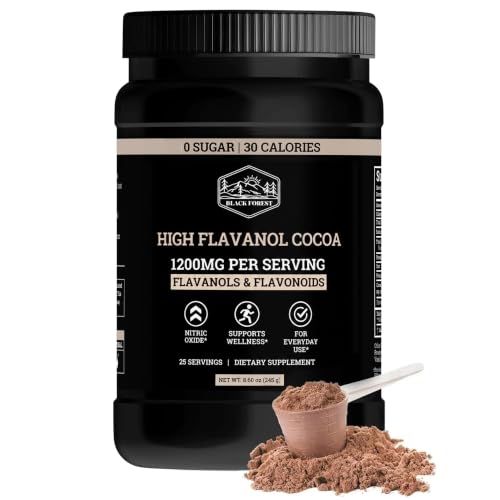
Black Forest High Flavanol Cocoa Powder, 8.6 oz separates itself with a concentrated dark cocoa extract rather than a full-size baking pouch. The maker claims each serving contains 600 mg of flavanols and 600 mg of flavonoids, including 600 mg of epicatechin, and says it blends into smoothies, coffee, oatmeal and pre-workout drinks. That makes it suited to someone comparing quantified compound claims rather than choosing a general-purpose cocoa powder.
Bottom line: Choose this if the maker’s flavanol and epicatechin amounts are your main filter.
CocoaVia Cocoa Flavanols, 500 mg

CocoaVia Cocoa Flavanols, 500 mg is a cocoa flavanol extract with 500 mg in its product name, unlike the baking-oriented cacao powders. The maker says its Cocoapro extract has 24 times the flavanol concentration of regular cocoa powder and describes research behind the ingredient; those are maker claims, not evidence that the powder treats or prevents illness. It is positioned for a daily drink or pre-workout routine, with no sugar added and 10 calories per serving according to the maker. The extract format is less suited to recipes where a larger amount of ordinary cacao powder is needed.
Bottom line: Pick this when a 500 mg flavanol extract is a closer match than baking cacao.
How to choose cocoa powder for health
Choose based on whether you want a recipe ingredient or a concentrated extract. Natural cacao powders work in baking and drinks, while cocoa extracts are formulated around flavanol amounts per serving; a higher concentration claim does not establish a health benefit. Cocoa solids and cocoa butter are separated during processing, so cacao powder will not behave like bar chocolate in a recipe. For a powder you will use in several ways, favor unsweetened cacao; for an extract, compare the amount per serving and the serving size before drawing dose comparisons. If a package does not provide both, do not infer equivalence from package weight.
Cacao powder and cocoa extract compared
Cacao powder is the more flexible format for recipes, while an extract is designed to deliver a concentrated compound in a smaller serving. Cocoa processing, including fermentation, drying and roasting, affects flavor and the retained plant compounds, so raw or sun-dried wording alone does not quantify flavanols. Use this distinction when narrowing options:
| Need | Better fit | Reason |
|---|---|---|
| Baking and drinks | Unsweetened cacao powder | Recipe-friendly format and larger package |
| Stated flavanol amount | Concentrated cocoa extract | Compound amount is a central product claim |
| Specific processing preference | Sun-dried cacao | Processing method is stated |
What flavanol claims can and cannot tell you
A quantified flavanol claim lets you compare the amount the maker associates with a serving, but it is not a promise of improved health. The products here use different formats and package sizes, and only the extracts supply a flavanol quantity in their names or features. Check whether the number refers to total flavanols, flavonoids or a particular compound such as epicatechin; these terms are not interchangeable. Cocoa flavanols are naturally present in cacao, but processing can change their levels, so a raw, organic or sun-dried label is not a substitute for a measured amount.
Using cocoa powder in drinks and recipes
Unsweetened cacao powder adds chocolate flavor without added sugar from the powder itself, but it can taste more bitter than sweetened cocoa mixes. In hot drinks, whisk powder first with a small splash of warm liquid to break up dry clumps, then add the rest. In recipes, cocoa powder and cacao powder often substitute by volume, but the flavor and acidity can differ, so test a small batch when texture matters. Concentrated extracts are intended for smaller servings and are not direct replacements for cups of baking cocoa; use the product’s serving guidance rather than substituting by weight.
Frequently Asked Questions
Does raw cacao powder contain caffeine?
Yes, cacao naturally contains some caffeine, along with theobromine, a related stimulant. The amount varies by cacao and serving size, so people sensitive to stimulants should account for the portion they use.
Can cacao powder replace cocoa powder in baking?
Often, cacao powder can replace cocoa powder in a 1:1 volume ratio, but flavor and acidity can differ. Recipes using baking soda can be sensitive to acidity, so test a small batch before changing a recipe you rely on.
Are cocoa flavanols the same as flavonoids?
No; flavanols are a subgroup of flavonoids. A product’s total flavonoid amount should not be read as an equal flavanol amount.
How should unsweetened cacao powder be stored?
Keep cacao powder sealed in a cool, dry cupboard, away from heat and moisture. A dry spoon and tight lid help prevent clumping and stale flavors.
Does organic cacao have more flavanols?
Organic certification describes how cacao is produced, not a minimum flavanol concentration. Processing and serving size also matter, so look for a quantified flavanol amount when that comparison is important.