
Condensate Drain Line Cleaner: 4 Options Compared

For a condensate drain line cleaner, Instant Power A/C Condensate Cleaner, 32 oz is the closest match for a single residential or commercial HVAC unit because it is a 32-ounce cleaner and maintainer made for condensate lines. Choose a multipack if you want the monthly-use routine described for those products, or a different option if you need a smaller bottle.
We earn a commission if you buy through links on this page. As an Amazon Associate I earn from qualifying purchases. Products are compared on manufacturer specifications, not hands-on testing.
- Best overall: Instant Power A/C Condensate Cleaner, 32 oz – A 32-ounce cleaner and maintainer explicitly intended for residential and commercial HVAC units.
- Best for monthly upkeep: AC Drain Line Cleaner, 4-Pack – A four-bottle pack described as a 12-month supply for monthly preventive use.
- Best for a smaller bottle: Uncle Todd’s Drain Line Cleaner, 16 oz – A single 16-ounce bottle with bleach-free in its name.
| Product | Best for | Package size | Pack count | Intended use | Shop |
|---|---|---|---|---|---|
| Instant Power A/C Condensate Cleaner, 32 oz | Single HVAC unit | 32 oz | 1 | Residential and commercial HVAC | Check Price on Amazon |
| Uncle Todd’s Drain Line Cleaner, 16 oz | Smaller bottle | 16 oz | 1 | AC drains and other water lines | Check Price on Amazon |
| AC Drain Line Cleaner, 4-Pack | Monthly maintenance | — | 4 | HVAC and condensate applications | Check Price on Amazon |
| AC Drain Line Cleaner, 2-Pack | Six-month supply | 8 oz each | 2 | HVAC and condensate applications | Check Price on Amazon |
Condensate Drain Line Cleaner Options
Compare the bottle quantities and use cases before choosing a cleaner for your condensate system.
Instant Power A/C Condensate Cleaner, 32 oz
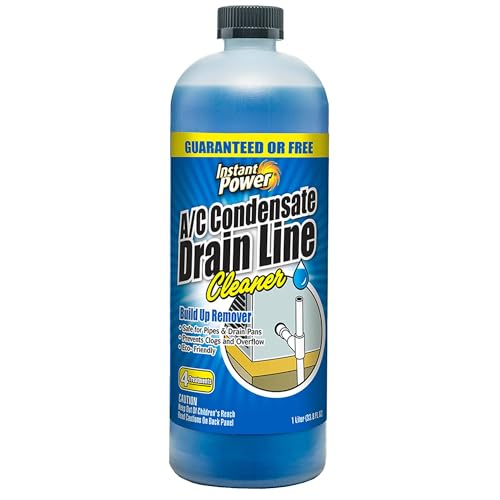
For a single system, Instant Power A/C Condensate Cleaner, 32 oz offers a 32-ounce bottle labeled for both residential and commercial HVAC units. The maker says it clears sludge and debris, helps prevent pan overflow and odors, and is formulated for PVC plumbing and septic systems. Its larger single bottle suits a homeowner who wants a cleaner and maintainer rather than a multi-bottle supply. The limitation is that the maker does not give an application dose or interval, so confirm the required amount and method on the container before use.
Bottom line: Choose this if you want one cleaner labeled for residential or commercial HVAC systems.
Uncle Todd’s Drain Line Cleaner, 16 oz

For a smaller single-bottle option, Uncle Todd’s Drain Line Cleaner, 16 oz comes in a 16-ounce size and has bleach-free in its name. The maker says the solution acts quickly on tough AC drain line clogs and provides lasting protection, and names HVAC systems, ice makers, soda fountains, drinking fountains, and pumps as uses. The compact bottle is a straightforward choice when you do not want a multipack. Its size is half the 32-ounce bottle in Instant Power A/C Condensate Cleaner, 32 oz, so it may be less suitable if you need more product for repeated maintenance.
Bottom line: Choose this if a 16-ounce bottle and bleach-free formulation suit your needs.
AC Drain Line Cleaner, 4-Pack

For recurring maintenance, AC Drain Line Cleaner, 4-Pack is a four-bottle pack the maker calls a 12-month supply. The maker recommends monthly use and says the formula is intended for condenser drain lines, drip pans, pump reservoirs, and P-traps, as well as several condensate-producing appliances. That multi-use scope makes it relevant if your upkeep includes more than one drain or reservoir.
Bottom line: Choose this if you prefer a four-bottle pack for the monthly routine described by its maker.
AC Drain Line Cleaner, 2-Pack

For a smaller multipack, AC Drain Line Cleaner, 2-Pack contains two 8-ounce bottles and is labeled a six-month supply. The maker describes the cleaner for HVAC drain lines, drip pans, pump reservoirs, P-traps, and other condensate applications, with monthly preventive use. Its smaller bottles may be easier to allocate across a short maintenance period than a four-bottle pack. The limitation is the lower total quantity: the package contains 16 ounces altogether, so check whether that is enough for your equipment and the maker’s application directions.
Bottom line: Choose this if two 8-ounce bottles fit your planned maintenance period.
How to choose a condensate drain line cleaner
Match the cleaner to the line and the task: condensate cleaners are intended for drain paths carrying water from air-conditioning or dehumidifying equipment, not for every household drain. Compare whether a product is a single-bottle treatment or a repeated-maintenance supply, and check the container directions for dose and contact time. Air conditioners remove moisture as they cool; that water drains through a line, often made of PVC, into a drain or outdoors. Organic buildup and debris can restrict the path. A cleaner may be useful for maintenance, but a fully blocked line may still need physical clearing. If water is already overflowing, switch off the system and address the blockage promptly to limit water damage.
When a condensate line needs attention
A slow or blocked condensate drain can leave water in the drain pan, trigger a float switch, or cause overflow near the indoor unit. Check the equipment’s pan and drain outlet for standing water, and look for water around the unit; do not assume that a cleaner alone will solve an active leak. Many HVAC systems use a safety float switch to stop cooling when the pan fills, but not every system has one. Keep the drain outlet clear and inspect it during cooling-season maintenance. If water returns after clearing the line, or the line is inaccessible, a qualified HVAC technician can check for a damaged pipe, poor slope, or a pump problem.
Cleaner versus physical drain clearing
Use a cleaner for the buildup and maintenance task its maker describes; use physical clearing when debris has formed a substantial obstruction. A wet/dry vacuum at an accessible outdoor drain outlet can sometimes pull out a clog, while a flexible brush or line-clearing tool may help where the system permits it. Never force a tool through a concealed or fragile drain, and do not mix drain chemicals: mixing products can release hazardous fumes or cause reactions. A drain cleaner is not a substitute for repairing a disconnected or cracked line. If you see a backed-up pan, water damage, or repeated clogs, stop the equipment and investigate the cause rather than repeatedly adding chemicals.
Safe use and routine maintenance
Read the product label before treating an HVAC condensate line, because dose, contact time, and compatibility depend on the cleaner and system. Wear eye protection and gloves when handling drain chemicals, avoid splashes, and keep products away from children and pets. Never combine cleaners with bleach, acids, or other drain products. For routine care, inspect the pan and drain outlet at least seasonally, and keep the outdoor termination free of leaves and debris. Monthly treatment is a maker’s recommendation for some products here, not a universal HVAC schedule. If the unit manufacturer gives a different maintenance method, use a compatible product and method to avoid damaging components.
Frequently Asked Questions
How often should an AC condensate drain line be cleaned?
Inspect the drain and pan at least once each cooling season; some cleaner makers recommend monthly preventive treatment. Dust, algae growth, and heavy air-conditioner use can mean more frequent attention is needed.
Can I pour bleach into an AC drain line?
Do not mix bleach with a drain cleaner or another chemical, because mixtures can produce hazardous reactions or fumes. Use only a product compatible with the equipment and follow its label directions.
Will drain line cleaner clear a completely clogged AC drain?
A cleaner may help with buildup, but a solid obstruction may need physical clearing. If water is overflowing or the clog returns, switch off the system and have the drain path checked.
Why is water leaking from my indoor AC unit?
A clogged condensate drain, a full pan, or a failed condensate pump can cause water near an indoor unit. Turn the system off if water is actively leaking and check the drain and pan before restarting.
What does an AC condensate drain line do?
The line carries water collected as an air conditioner removes moisture from indoor air. A blocked or disconnected line can leave water in the pan or leak near the equipment.