
Walking Sticks for Seniors: 4 Options Compared by Fit

For most seniors seeking a single adjustable cane, REHAND Foldable Adjustable Cane stands out for its eight height settings in 1-inch increments. Choose HONEYBULL Pivot-Base Cane instead if you want a free-standing cane with a pivoting base; paired walking poles serve a different purpose and may not suit someone who needs one cane.
We earn a commission if you buy through links on this page. As an Amazon Associate I earn from qualifying purchases. Products are compared on manufacturer specifications, not hands-on testing.
- Best overall: REHAND Foldable Adjustable Cane – Eight height settings in 1-inch increments cover a broad range of user heights.
- Best for standing storage: HONEYBULL Pivot-Base Cane – Its three-tip base is designed to let the cane stand on its own.
- Best for paired support: Urban Poling ACTIVATOR Poles – The product is a pair of adjustable poles designed for balance and rehabilitation.
| Product | Best for | Support style | Height range | Tip or base | Shop |
|---|---|---|---|---|---|
| REHAND Foldable Adjustable Cane | Adjustable fit | Single cane | 31–38 in | All-terrain tip | Check Price on Amazon |
| HONEYBULL Pivot-Base Cane | Free-standing storage | Single cane | 30–36 in | Three-tip pivot base | Check Price on Amazon |
| Urban Poling ACTIVATOR Poles | Rehab pole pair | Pair of poles | Users 4–6 ft | CoreGrip handles | Check Price on Amazon |
| TrailBuddy Trekking Poles | Trail walking | Pair of trekking poles | 24.5–54 in | — | Check Price on Amazon |
Walking sticks for seniors
Compare single canes with paired walking poles by support style, adjustment range, and the kind of walking support you need.
REHAND Foldable Adjustable Cane
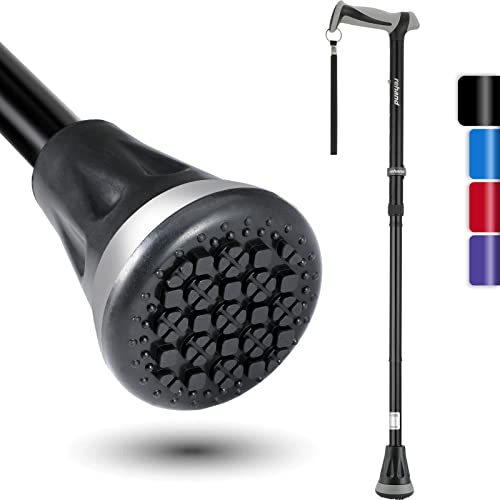
Eight height settings make this cane the most finely adjustable single-cane option here, with 1-inch steps across a 31–38-inch adjustment range. Its longer, wider handle combines hard PP and soft TPR materials, and the cane folds for transport with a travel bag. That combination suits someone who wants to tune the height and carry a cane between outings. The main tradeoff is that its all-terrain tip is not a three-point free-standing base, so choose another style if standing the cane upright by itself is important.
Bottom line: Choose this if small height adjustments and a folding design matter most.
HONEYBULL Pivot-Base Cane

A three-tip pivoting base sets this cane apart from the other single-cane choice: it is designed to stand on its own and stay flat on angled surfaces. The aluminum cane folds, adjusts from 30 to 36 inches, and has an ergonomic handle. It suits someone who values a cane that can be set upright between uses and wants a wider base than a conventional single tip. The adjustment range is narrower than REHAND Foldable Adjustable Cane’s, so confirm that the available height range matches the user’s fit before choosing.
Bottom line: Pick this if a self-standing base is the priority and its height range fits.
Urban Poling ACTIVATOR Poles

Unlike the single canes, this is a pair of adjustable walking poles designed for rehabilitation and long-term conditions. The maker says the CoreGrip handles engage core muscles and the poles support strengthening, stability, and off-loading. The aluminum pair weighs 1.44 pounds and has a maximum user weight of 250 pounds, with a 200-pound weight-bearing capacity per pole. This option suits someone specifically seeking paired poles for balance or rehabilitation. It is not a single cane, so it may not fit a request for one-handed support.
Bottom line: Choose the pair if you want poles for balance or rehabilitation rather than one cane.
TrailBuddy Trekking Poles

Trail use distinguishes these paired poles from the canes and rehabilitation poles: they are made from 7075 aluminum and use lever locks for adjustment. Each pole weighs 9.7 ounces, adjusts to a maximum height of 54 inches, and collapses to 24.5 inches. The maker describes them for rugged terrain and snowshoeing, making them a fit for seniors who want trekking poles for outdoor outings. They are a different support style from a single cane, so they may not suit someone who needs one-handed, everyday walking assistance.
Bottom line: Pick these for adjustable poles intended for trails, not as a substitute for a single cane.
How to choose a walking stick for seniors
Choose a cane when you want one-handed support, and consider paired poles when you want support on both sides during walking. A common cane-fit starting point is a handle near wrist-crease height when standing upright with arms relaxed; the elbow should bend slightly when holding it. A cane is generally held on the side opposite the weaker or painful leg, moving forward with that leg. These are fit and use guidelines, not a substitute for a clinician’s advice after surgery, a fall, or a change in balance. If standing the cane between steps matters, look for a base designed to stand independently; a conventional single tip does not offer that feature.
How to check cane height and fit
A cane should let the user stand upright without leaning or hiking a shoulder; adjustability is useful only when the actual handle height reaches that fit. Check height while wearing the shoes normally used for walking, then test the grip and a few steps on a level surface before relying on it outdoors. The products here cover different ranges: one adjusts in 1-inch steps, while the pivot-base cane offers a 30–36-inch range. For a user whose suitable height falls outside the range, neither range is a safe fit assumption; confirm the fit before choosing. Avoid judging height by the collapsed length, which describes storage rather than walking setup.
Canes and walking poles serve different needs
A single cane is generally chosen for one-handed assistance, while a pair of poles gives the user a pole in each hand and calls for coordinated use. That distinction matters more than whether a product is labeled a walking stick. This table summarizes the support style and the decision it suggests.
| Style | Typical use | Decision cue |
|---|---|---|
| Single cane | One-handed walking support | Choose when one hand is available and cane height fits |
| Paired walking poles | Support from both hands while walking | Choose when comfortable coordinating two poles |
| Trekking poles | Outdoor walking on trails | Choose for trail-focused use, not as a cane by default |
People with significant balance problems or difficulty bearing weight should get individualized advice before switching support styles. A cane or pole can slip, and no base design eliminates fall risk.
Safe use and routine checks
Before each walk, check that a folding cane is fully opened and locked and that an adjustable shaft is secure; loose joints can change height under load. Inspect rubber tips for splits, smooth wear, or a loose fit, since worn contact surfaces can reduce traction on hard floors. Keep the cane tip close enough to maintain a stable stance rather than reaching far ahead, and take extra care on wet, icy, or uneven surfaces. A three-tip base can stand upright, but it still needs firm contact with the ground when walking. A pole or cane’s weight capacity is not a guarantee against slipping, improper fit, or unsafe technique.
Frequently Asked Questions
How should a cane fit a senior?
A common starting point is a handle at wrist-crease height while standing upright with arms relaxed. The elbow should remain slightly bent when gripping it, and the height should be checked in the shoes used for walking.
Which hand should hold a walking cane?
A cane is generally held opposite the weaker or painful leg. Move the cane forward with that leg, and seek tailored guidance if both sides are affected or balance is substantially limited.
Are walking poles the same as a cane?
No. A cane is a single one-handed support, while walking poles are typically used as a pair and require coordinating both hands. Choose the support style that matches the user’s ability and intended use.
When should a cane tip be replaced?
Replace a tip when rubber is split, badly worn smooth, loose, or no longer sits securely on the cane. Check it regularly, especially before walking on wet or uneven ground, where traction matters.
Can seniors use a cane on stairs?
Stair use depends on the person’s balance, strength, and whether a handrail is available. A handrail generally provides a more secure grip than relying on a cane alone; ask a clinician to demonstrate a safe technique if stair use is uncertain.