
Best Emergency Lights for Home Power Failure Compared

ROSSEX 4-in-1 Emergency Light, 3-Pack suits most homes because its three rechargeable plug-in units can serve as flashlights, nightlights and table lamps. Choose Amerelle Emergency Light and Flashlight, 5-Pack instead if five units matter more than those extra functions, or Energizer Auto-On Flashlight, 3-Pack if impact resistance is a priority.
Plug-in outage lights charge while connected to an outlet and can turn on automatically when power fails, so placement and keeping them plugged in are central to their usefulness.
We earn a commission if you buy through links on this page. As an Amazon Associate I earn from qualifying purchases. Products are compared on manufacturer specifications, not hands-on testing.
- Best overall: ROSSEX 4-in-1 Emergency Light, 3-Pack – Three rechargeable units combine flashlight, nightlight and table-lamp functions.
- Best for more rooms: Amerelle Emergency Light and Flashlight, 5-Pack – The five-unit set provides two more devices than the three-unit options.
- Best for impact resistance: Energizer Auto-On Flashlight, 3-Pack – The maker says the flashlight withstands impact up to 1 meter.
| Product | Best for | Pack size | Functions | Shop |
|---|---|---|---|---|
| ROSSEX 4-in-1 Emergency Light, 3-Pack | Multiple light functions | 3 units | Flashlight, nightlight, table lamp | Check Price on Amazon |
| Energizer Auto-On Flashlight, 3-Pack | Impact resistance | 3 units | Flashlight, nightlight | Check Price on Amazon |
| Amerelle Emergency Light and Flashlight, 5-Pack | More rooms | 5 units | Power-failure light, flashlight | Check Price on Amazon |
Emergency Lights for Home Power Failure
Compare the number of units, light functions and stated runtime to match outage lighting to your rooms and routine.
ROSSEX 4-in-1 Emergency Light, 3-Pack

Three light functions distinguish this rechargeable plug-in set: each unit can serve as a flashlight, nightlight or table lamp. The maker says the lights turn on automatically during a power failure and recharge from a standard socket, so they can stay ready in rooms where an outlet is convenient. The three-piece count suits a small home or several high-use areas. The specifications give no runtime figure, so it is a weaker choice if you need to plan around a specific number of outage hours.
Bottom line: Choose this set if you want three units that can serve more than one lighting role.
Energizer Auto-On Flashlight, 3-Pack
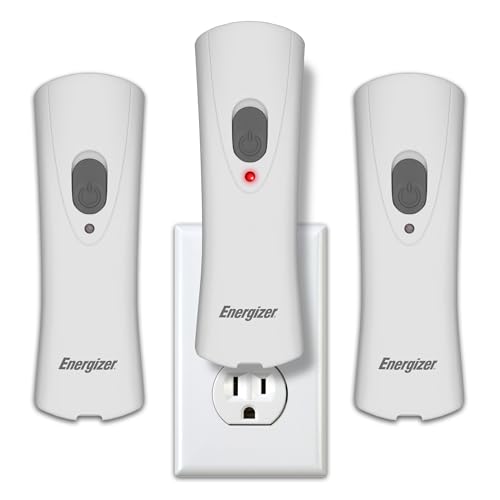
Impact resistance is the distinguishing specification here: the maker says each flashlight withstands a 1-meter impact. The three rechargeable units plug into standard outlets with retractable prongs and can also act as nightlights; the maker says they turn on automatically during an outage. This set suits homes where a handheld flashlight is the main need and accidental drops are a concern. Its functions are more focused than a unit that also serves as a table lamp, so choose another option if that additional role matters.
Bottom line: Pick this set when drop resistance matters more than a table-lamp function.
Amerelle Emergency Light and Flashlight, 5-Pack

Five units make this the largest set among these plug-in options, useful when you want to distribute lights across more rooms. Each combines an automatically illuminating front panel with an emergency flashlight, and the maker says a fully charged unit lasts 7 hours. The set uses rechargeable 3.6-volt, 200-milliamp-hour Ni-MH batteries and emits 3000K white light. Its function set does not include a table-lamp role, so it is less suited to buyers seeking that additional use.
Bottom line: Choose this five-unit set when broad room coverage and a runtime are priorities.
How to Choose Emergency Lights for Home Power Failure
Choose by the rooms you need to reach first, then by how each light functions. A practical rule is to place one unit near each bedroom exit and one in a shared area; if your home has more than three priority locations, a five-unit set can cover more spots without moving a light. Plug-in outage lights depend on an outlet for charging, so keep them connected where their automatic illumination can help rather than storing them in a drawer. A flashlight form is useful for moving through a dark hall, while a nightlight role can provide ambient light before an outage. Check that outlets remain accessible and avoid blocking nearby switches or doors.
Where to Place Plug-In Outage Lights
Put emergency lights where a person can find them while walking out of a room: bedrooms, hallways, and a central living area are common choices. A unit near a stairway can mark a route, but it does not replace handrails or safe footing. Keep charging outlets clear of furniture and curtains, and avoid placing devices where a cord, door, or appliance can knock them loose. Map the route from sleeping areas to an exit before deciding which outlets deserve a light. If you have fewer lights than rooms, prioritize sleeping areas and the path to the main exit rather than concentrating units in one room.
Plug-In Lights and Other Backup Lighting Types
Plug-in outage lights recharge while connected to household power and can illuminate automatically when power stops; rechargeable bulbs instead fit compatible lamp sockets. Keep the type matched to the fixture and task: a handheld flashlight is easier to carry, while a fixed light can illuminate a route without searching for a separate torch. For household readiness, federal emergency guidance commonly recommends keeping a flashlight and spare batteries in an emergency kit, alongside water and other essentials. Avoid using candles as a substitute when a battery-powered light is available; an open flame can ignite nearby materials, especially during a rushed evacuation.
This quick comparison connects each lighting need to a practical choice.
| Need | Choose | Reason |
|---|---|---|
| More light points | Five-unit set | Distribute units across more rooms |
| Handheld use with impact spec | Impact-resistant set | Maker gives a 1-meter impact rating |
| Extra lamp role | Multi-function set | Can be used as a table lamp |
How to Maintain Emergency Lights
Rechargeable outage lights need periodic checks because battery capacity can diminish during long storage or after repeated use. A sensible routine is to confirm each light remains plugged in, then test its operation every few months during a normal power-on period; recharge it after any outage use. Keep the charging outlet unobstructed and do not leave a damaged or unusually hot device connected. For a long outage, use a battery-powered flashlight as needed and conserve other battery-powered equipment. A printed home emergency plan should identify where each light is located and how household members can reach the exit if the lights do not activate.
Frequently Asked Questions
How many emergency lights should a home have?
Start with one near each bedroom exit and one in a shared area, then add units for stairways or additional floors. A three-unit set covers three priority points; a five-unit set can cover two more.
Do plug-in emergency lights turn on automatically?
Some plug-in outage lights are designed to switch on when household power fails. Keep them plugged into accessible outlets and test their operation every few months so a failure is not discovered during an outage.
How long can an emergency light run during an outage?
Runtime depends on the model and battery; one option here has a maker-stated 7-hour duration when fully charged. Recharge lights after use rather than assuming every unit has the same endurance.
Are rechargeable outage lights safer than candles?
Battery-powered lights avoid an open flame, which can ignite curtains, paper, or other nearby materials. Keep a flashlight accessible and do not rely on candles as the only way to navigate a dark home.
Should emergency lights stay plugged in all the time?
Plug-in models need an outlet connection to recharge, so leaving them connected in accessible locations keeps them available for automatic outage illumination. Keep the outlet clear and unplug a device if it becomes damaged or unusually hot.