
Best Pillows for Hip Pain: 4 Side-Sleeping Picks

Contour Legacy Leg & Knee Pillow is the best pillow for hip pain for most side sleepers because its hourglass shape is designed to support both legs and knees between them. Choose a full-length pillow instead if you want support along more of your leg, or a different sleep-position pillow if you do not sleep on your side.
These pillows sit between or beneath the legs to help keep them from crossing; comfort depends on your body, mattress, and preferred sleeping position.
We earn a commission if you buy through links on this page. As an Amazon Associate I earn from qualifying purchases. Products are compared on manufacturer specifications, not hands-on testing.
- Best overall: Contour Legacy Leg & Knee Pillow – Its hourglass shape is designed to support both legs and knees.
- Best for full-leg support: Xtra-Comfort Full-Length Leg Pillow – The 29-inch length extends support from hip to ankle.
- Best for a removable strap: Everlasting Comfort Memory Foam Knee Pillow – The memory foam cushion includes a removable strap.
| Product | Best for | Dimensions | Strap | Shop |
|---|---|---|---|---|
| Contour Legacy Leg & Knee Pillow | Dual-leg support | 10 × 6 × 9.5 in | — | Check Price on Amazon |
| 5 STARS UNITED Knee Pillow | Compact knee spacing | 9.8 × 7.8 × 6.2 in | No | Check Price on Amazon |
| Xtra-Comfort Full-Length Leg Pillow | Full-leg coverage | 29 × 11 × 4 in | Adjustable | Check Price on Amazon |
| Everlasting Comfort Memory Foam Knee Pillow | Removable strap | 10 × 8 × 6 in | Removable | Check Price on Amazon |
Pillows for Hip Pain
Compare each pillow’s shape and size to find a between-the-legs fit that suits your side-sleeping position.
Contour Legacy Leg & Knee Pillow

Contour Legacy Leg & Knee Pillow has an hourglass shape intended to cradle both legs and knees, unlike a compact cushion designed mainly to separate the knees. The pillow is made of foam and measures 10 × 6 × 9.5 inches. The maker says the shape supports side-sleeping alignment and helps reduce pressure points. Its compact footprint may suit sleepers who want a cushion between their legs rather than support running down the thigh or calf. The tradeoff is its concentrated coverage: choose a longer design if you want support beyond the knee area.
Bottom line: Choose this for a compact pillow shaped to support both legs and knees.
5 STARS UNITED Knee Pillow

5 STARS UNITED Knee Pillow is a compact memory foam knee pillow measuring 9.8 × 7.8 × 6.2 inches, with no strap included. That makes the fit simple, but sleepers who move often may prefer a design with a strap to help keep the cushion positioned. The maker says the pillow is designed to separate the knees and support side sleepers. Its standard-size shape is suited to placing between the legs rather than extending under the full leg. The product also claims an American Chiropractic Association endorsement; that endorsement is not a substitute for a clinician’s advice about persistent pain.
Bottom line: Pick this for a compact memory foam cushion without a strap.
Xtra-Comfort Full-Length Leg Pillow
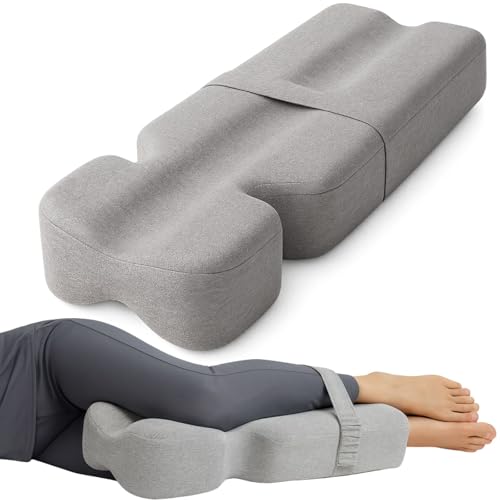
Xtra-Comfort Full-Length Leg Pillow stands out for its 29-inch length, which is designed to support the legs from hip to ankle rather than just separating the knees. The maker says its dual contours and angled cutouts allow leg movement, and its adjustable strap helps keep the pillow in place. Its 4-inch height may work for someone who wants a long, relatively low profile, though the right height depends on leg spacing and mattress softness. The longer shape takes up more bed space than a compact knee pillow, so measure available room before choosing it.
Bottom line: Choose this if you want support along more of the leg and have room for a long pillow.
Everlasting Comfort Memory Foam Knee Pillow

Everlasting Comfort Memory Foam Knee Pillow combines a compact, dual-concave memory foam shape with a removable strap, a practical distinction for sleepers who want the option to secure or remove it. It measures 10 × 8 × 6 inches and is described by the maker as cradling both knees and legs. This size focuses support near the knees rather than extending to the ankles. The maker says the design is intended to help maintain alignment while side sleeping; personal comfort depends on whether its 6-inch height fits the space between your legs. Choose a longer pillow if that concentrated support feels insufficient.
Bottom line: Pick this if you want a compact memory foam pillow with a removable strap.
How to Choose a Pillow for Hip Pain
Start with shape and placement: side sleepers commonly put a pillow between their knees to limit the top leg’s drop and keep the pelvis from rotating forward. A short knee pillow concentrates support around the knees, while a full-length pillow can extend support toward the ankles. Height matters as much as length; a pillow that pushes the top leg too high can feel as awkward as one that leaves the legs nearly touching. Try to keep your hips stacked and knees comfortably aligned rather than forcing them apart. If you have under 4 inches of space between your legs in your usual side-sleeping position, a 4-inch pillow may be a closer starting point than a taller cushion; adjust based on comfort and body position.
Short Knee Pillows Versus Full-Length Pillows
Short knee pillows are easier to position between the knees, while full-length designs offer more contact along the legs. A 9- to 10-inch pillow generally focuses on knee spacing; a 29-inch pillow can reach much farther down the leg. Side sleepers who shift positions may find a longer cushion harder to reposition, while a short cushion covers less area. The table shows the practical distinction by length, not a promise of pain relief. Consider bed space and how far down the leg you want support before choosing a style.
Use this size comparison to narrow the shape to your preferred coverage.
| Style | Typical length in these picks | Coverage focus |
|---|---|---|
| Compact knee pillow | About 10 in | Knees and nearby legs |
| Full-length leg pillow | 29 in | Legs from hip toward ankle |
Fit and Positioning for Side Sleep
Place a knee pillow between the legs where it keeps the knees from pressing together without forcing the hips into an exaggerated split. A strap can help hold a pillow in position, but it should not pull tightly or restrict comfortable movement. Mattress softness changes how deeply the hips sink and therefore how much space remains between the legs; reassess pillow height on the mattress you use most. Full-length pillows also need enough clear bed space to lie straight. If the pillow slides or makes your upper leg feel lifted, try repositioning it or a different height rather than tightening a strap.
When Hip Discomfort Needs More Than a Pillow
A pillow can change sleeping position, but it cannot identify the cause of hip pain. Persistent pain, pain after an injury, or pain that interferes with walking warrants medical advice rather than relying on a sleep accessory. Avoid forcing a painful position to match a pillow’s contours, and remove the pillow if numbness or worsening discomfort develops. A basic fit check is whether you can lie on your side with knees comfortably aligned and without pressure from the pillow’s edges. Pillow support is a comfort choice, not a substitute for diagnosis or treatment.
Frequently Asked Questions
Where should a pillow sit for hip comfort?
Place a knee pillow between the thighs or knees while side sleeping, with the hips stacked and legs comfortably aligned. A short cushion focuses near the knees; a longer one can support more of the leg.
How tall should a knee pillow be?
Choose a height that fills the gap between your legs without lifting the upper leg uncomfortably. Mattress softness and body proportions change that gap, so assess the fit while lying in your normal position.
Can a knee pillow help back sleepers?
A pillow placed beneath the knees is a different setup from a between-the-knees cushion. A modest bend at the knees can feel more comfortable for some people, but avoid a height that strains your back.
Should a knee pillow have a strap?
A strap can help keep a pillow from shifting, especially if you move during sleep, but it is optional. It should hold the pillow in place without restricting leg movement or feeling tight.
When should hip pain be checked by a clinician?
Seek medical advice for persistent hip pain, pain after an injury, or discomfort that affects walking. Stop using a pillow position that causes numbness or worsening pain.