
Stabilizers for Canon Cameras: 4 Gimbals Compared

For most Canon camera setups, DJI RS 3 Mini is the clearest fit because its 2 kg payload is paired with a 795 g body. Choose DJI RS 4 Mini instead if quick axis locks and a tracking module matter more; verify your specific Canon body, lens, and control features are compatible before ordering.
We earn a commission if you buy through links on this page. As an Amazon Associate I earn from qualifying purchases. Products are compared on manufacturer specifications, not hands-on testing.
- Best overall: DJI RS 3 Mini – Its 795 g weight and 2 kg payload balance portability with room for a camera-and-lens setup.
- Best for fast setup: DJI RS 4 Mini – Automated axis locks and an one-second setup target favor quick transitions.
- Best for subject tracking: FeiyuTech SCORP Mini 3 Pro – AI tracking is specified with an 18 m maximum distance.
| Product | Best for | Payload | Weight | Shop |
|---|---|---|---|---|
| DJI RS 3 Mini | Travel gimbal | 4.4 lb | 1.75 lb | Check Price on Amazon |
| DJI RS 3 Mini Renewed | Renewed option | 4.4 lb | 1.9 lb | Check Price on Amazon |
| DJI RS 4 Mini | Fast transitions | — | 2.27 lb | Check Price on Amazon |
| FeiyuTech SCORP Mini 3 Pro | AI tracking | 4.4 lb | 2.2 lb | Check Price on Amazon |
Stabilizers for Canon Cameras
Compare these options by payload, carrying weight, and the kind of stabilization they provide.
DJI RS 3 Mini
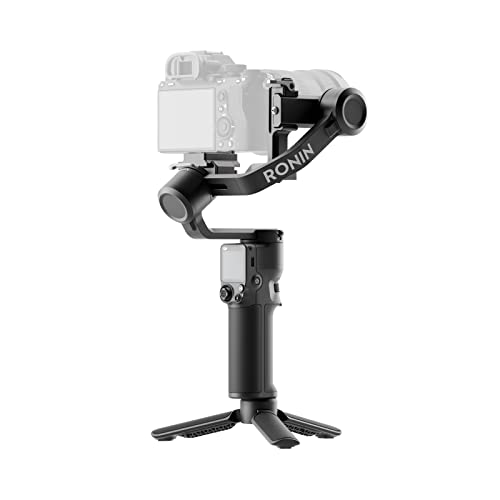
For a light camera gimbal, DJI RS 3 Mini pairs a 1.75 lb body with a 4.4 lb maximum payload, making it the most compact full-size camera option here. DJI says its third-generation stabilization algorithm supports low-angle and flashlight-style filming, and Bluetooth shutter control can trigger photo capture or video recording after pairing. The gimbal also supports native vertical shooting. It suits Canon users who want to travel with a mirrorless setup, provided the complete camera-and-lens rig balances within its payload. A 4.4 lb limit can rule out heavier lenses or added accessories; verify the combination before choosing it.
Bottom line: Choose this for a portable gimbal setup that stays under 4.4 lb.
DJI RS 3 Mini Renewed
DJI RS 3 Mini Renewed offers the same 4.4 lb payload and core camera controls as the standard RS 3 Mini, but this version is marked Renewed. Its feature set includes Bluetooth shutter control, native vertical shooting, and DJI’s third-generation stabilization algorithm. The 1.9 lb weight is heavier than the 1.75 lb figure given for the other RS 3 Mini, so compare the physical weight you are prepared to carry rather than assuming the two versions are identical in hand. This is a fit for buyers who specifically want the renewed version; confirm that the Canon body and lens pair can be balanced within the payload.
Bottom line: Pick this when you specifically want the renewed RS 3 Mini format.
DJI RS 4 Mini

Quick setup features distinguish DJI RS 4 Mini from the RS 3 Mini models: DJI says its automated axis locks are ready in one second, and horizontal-to-vertical switching takes 10 seconds. The gimbal also includes a subject-tracking module and Teflon-enhanced balancing. Those controls may suit solo creators or shoots with frequent framing changes. Its weight is about 2.27 lb, and no payload figure is provided in the specifications, so this choice needs more careful fit checking for a Canon camera with lens and accessories. Verify payload and balance compatibility before ordering, especially for a heavier rig.
Bottom line: Choose this for fast setup and framing changes, after confirming payload fit.
FeiyuTech SCORP Mini 3 Pro

FeiyuTech SCORP Mini 3 Pro stands out for AI tracking and a four-in-one design intended for mirrorless, compact, smartphone, and action cameras. The maker gives a maximum tracking distance of 18 m and a 4.4 lb payload, while the detachable remote handle adds a different control option from the other gimbals here. At about 2.2 lb, it is heavier than either RS 3 Mini. This may suit Canon users who prioritize tracking and multiple device types over carrying the lightest rig. The broad camera category does not confirm every Canon model, so check both camera compatibility and the total rig weight.
Bottom line: Pick this when tracking reach and multi-device support matter most.
How to choose a Canon camera stabilizer
Start with the complete rig weight, not the camera body alone: a gimbal’s payload must cover the camera, lens, plate, and any attached accessories. A 2 kg payload leaves no capacity beyond 2 kg total, so a heavier lens or microphone can push a setup past its limit. Payload capacity is only one check; the camera and lens also need room to sit on the mounting plate and move through the gimbal’s axes without hitting the frame. For a travel kit, compare carry weight as well: the two RS 3 Mini versions have different weights in the specifications. Choose the lightest option that can balance your actual rig.
Balancing and fit for Canon cameras
A camera gimbal needs to be balanced with the camera and lens attached before its motors can stabilize movement. Mount the rig, then adjust each axis until the camera can rest in several positions without immediately tipping; a badly balanced setup puts extra work on the motors and can produce poor results. Payload capacity does not guarantee physical clearance or camera-control compatibility. Canon bodies vary in size, lens combinations, and supported remote functions, so check the exact model and lens combination before buying. Leave room under the payload limit for accessories rather than treating the maximum as a target. If a kit exceeds a gimbal’s capacity, remove accessories or choose a higher-capacity model.
Gimbal versus handheld stabilizer
A powered three-axis gimbal uses motors to counter movement across three axes, while a handheld grip gives the operator a steady hold without motorized correction. Use the grip for low-angle movement or when a simple handle is enough, and choose a gimbal when you want motor-assisted stabilization. A gimbal still requires careful balancing and battery power; a grip avoids motor setup but does not actively correct camera movement. For walking shots, choose a gimbal only after confirming that its payload and physical fit suit the camera rig.
Using tracking and vertical shooting
Tracking features help keep a subject framed, but maximum tracking distance is not a guarantee of reliable tracking in every scene. The SCORP Mini 3 Pro gives an 18 m maximum distance, while the RS 4 Mini includes a tracking module without a distance figure in the specifications. Subject size, lighting, obstacles, and movement can affect tracking, so test framing in a safe setting before relying on it for a one-time shot. Native vertical shooting or a quick horizontal-to-vertical switch can simplify portrait-oriented video, but the camera still needs to remain balanced in that orientation. Recheck balance after changing the mounting position.
Frequently Asked Questions
Does a Canon camera need a special gimbal?
Not necessarily; the key checks are model compatibility, physical clearance, control support, and payload. Add the camera, lens, plate, and accessories together, then keep the total below the gimbal’s maximum capacity.
How much payload should a camera gimbal have?
The payload must exceed the weight of the entire mounted rig, not just the camera body. For example, a 2 kg maximum means the camera, lens, and attached accessories together must stay under 2 kg.
Can a camera gimbal hold a heavy zoom lens?
Only if the complete rig stays within payload and can physically balance on the gimbal. A longer or heavier lens can also affect clearance, so check the actual camera-and-lens combination before purchase.
What is the difference between a gimbal and a stabilizer grip?
A gimbal uses powered motors to counter movement across three axes; a grip provides a handle without motorized correction. A grip with a 1/4-20 mount can hold a compatible camera, but the operator must steady the shot.
Can I use a gimbal for vertical video?
Yes, if the gimbal supports vertical mounting or a vertical-shooting mode. Rebalance the camera after changing orientation, since a portrait setup shifts the rig’s balance point.