
Rechargeable AA 1.5 Volt Batteries: 3 Models Compared

HW 3600mWh USB-C AA Lithium is the clearest pick for most buyers seeking rechargeable AA 1.5 volt batteries because its 3600mWh cells charge four at once through USB-C. Choose imuto 3000mWh AA Lithium 8-Pack for an included 8-slot charger and more cells, or RayHom 3700mWh AA Lithium 12-Pack if you need a 12-cell set and charger.
These lithium AA batteries are designed to provide 1.5V output, unlike common rechargeable NiMH AA cells, which are 1.2V nominal.
We earn a commission if you buy through links on this page. As an Amazon Associate I earn from qualifying purchases. Products are compared on manufacturer specifications, not hands-on testing.
- Best overall: HW 3600mWh USB-C AA Lithium – The 4-pack has 3600mWh capacity per cell and charges four cells simultaneously by USB-C in 2 hours.
- Best for an 8-cell set: imuto 3000mWh AA Lithium 8-Pack – It includes eight 3000mWh cells and an 8-slot charger.
- Best for larger batches: RayHom 3700mWh AA Lithium 12-Pack – The set includes 12 3700mWh cells and a 12-slot charger.
| Product | Best for | Cell capacity | Pack size | Charging | Shop |
|---|---|---|---|---|---|
| HW 3600mWh USB-C AA Lithium | USB-C charging | 3600mWh | 4 cells | USB-C; 4 at once | Check Price on Amazon |
| imuto 3000mWh AA Lithium 8-Pack | Eight-cell kit | 3000mWh | 8 cells | Included 8-slot charger | Check Price on Amazon |
| RayHom 3700mWh AA Lithium 12-Pack | Large battery batches | 3700mWh | 12 cells | Included 12-slot charger | Check Price on Amazon |
Rechargeable AA 1.5 Volt Batteries Compared
Compare cell capacity, pack size and charging setup to match your devices and how many cells you rotate.
HW 3600mWh USB-C AA Lithium
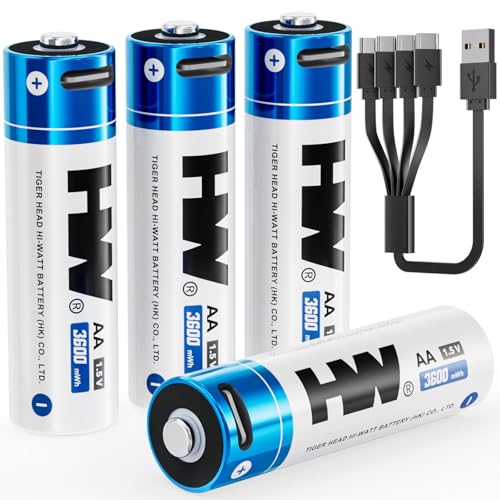
HW 3600mWh USB-C AA Lithium stands out for its USB-C charging and 3600mWh capacity per cell. The four lithium AA cells charge simultaneously in about 2 hours using a USB port, and the maker says they have a 1000+ recharge-cycle life and built-in protection against overcharge, over-discharge and over-voltage. This set suits someone who prefers charging through a common USB cable and rotates a small number of cells. Its four-cell count is the main limitation for buyers who want a larger reserve; imuto 3000mWh AA Lithium 8-Pack and RayHom 3700mWh AA Lithium 12-Pack include eight and 12 cells, respectively.
Bottom line: Choose this set if USB-C charging and a higher per-cell mWh rating matter more than a large pack.
imuto 3000mWh AA Lithium 8-Pack

imuto 3000mWh AA Lithium 8-Pack pairs eight 3000mWh lithium AA cells with an 8-slot charger, making it a practical fit when several devices use the same battery size. Its maker says the cells provide constant 1.5V output and can reach 2500+ charging cycles; the kit also includes an 8-slot storage case. The larger cell count than HW 3600mWh USB-C AA Lithium gives buyers more spares to rotate. The trade-off is a 3000mWh capacity per cell, lower than HW 3600mWh USB-C AA Lithium and RayHom 3700mWh AA Lithium 12-Pack, so capacity-conscious buyers may prefer one of those options.
Bottom line: Pick this kit if you want eight cells and an included charger with storage.
RayHom 3700mWh AA Lithium 12-Pack
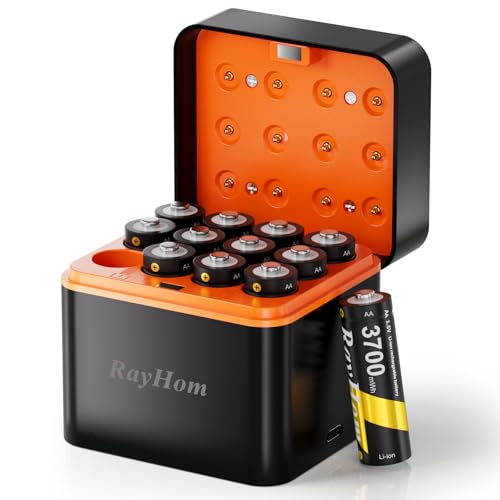
RayHom 3700mWh AA Lithium 12-Pack is the largest set here, with 12 lithium AA cells rated at 3700mWh each and a matching 12-slot charger. The maker says the cells maintain constant 1.5V output and can operate from -20°F to 131°F, a broad stated temperature range for devices used in cold or warm settings. This kit suits households or equipment setups that need many cells ready at once. Its 12-slot charger is more capacity than a small rotation needs, so buyers who only charge four cells at a time may prefer HW 3600mWh USB-C AA Lithium.
Bottom line: Choose this set when you need 12 cells and a charger that handles them together.
How to choose rechargeable AA 1.5 volt batteries
Start with the device’s battery requirement: an AA size does not guarantee compatibility with every rechargeable chemistry. Standard NiMH rechargeable AAs have a nominal 1.2V output, while these lithium models are designed for 1.5V output. Check the device manual for voltage and battery chemistry before switching, especially for devices with a low-battery indicator or precise voltage cutoff.
Compare capacity in milliwatt-hours (mWh) when weighing cells with different voltages; mAh alone does not express energy equivalently across voltage levels. A higher mWh figure indicates more stored energy under the maker’s rating, but actual runtime also depends on the device’s load and cutoff behavior. For frequent swaps, prioritize pack count and charger slots; for a few cells, a smaller set can be easier to manage.
What 1.5V output means for AA compatibility
A 1.5V rechargeable AA is intended for devices that expect the voltage of a standard alkaline AA, but voltage alone does not guarantee fit in every device. Some lithium rechargeable cells use internal electronics to regulate output, and the voltage behavior can differ by product; read the maker’s specifications for the specific cell and charger pairing. Never mix rechargeable lithium AAs with alkaline or NiMH cells in the same device, because different chemistries can discharge differently.
Battery type also affects charging: a charger designed for one chemistry should not be assumed compatible with another. Use the charger supplied or one explicitly identified for the exact battery chemistry. Stop using a cell if its casing is swollen, leaking, unusually hot, or damaged, and keep loose cells away from metal objects that could bridge the terminals.
Compare AA battery capacity and charging setups
Use pack size and charging method alongside the per-cell capacity when choosing among these rechargeable AA kits. Higher capacity and more cells are useful only if the device fits the batteries and the charger suits the chemistry.
| Need | Useful priority | Why it matters |
|---|---|---|
| Small batch | Four cells; USB-C charging | Fewer cells to rotate and a familiar charging connection |
| Several devices | Eight cells; 8-slot charger | More spares and slots in one kit |
| Many cells ready together | 12 cells; 12-slot charger | Accommodates a larger charging batch |
Confirm that the charger is intended for the battery chemistry, and charge cells in the configuration specified for that charger. A charger’s slot count describes how many cells it can accommodate, not a guarantee that every cell will finish charging at the same time.
Use and store rechargeable AA lithium cells safely
Keep rechargeable lithium AA cells in their case when they are not in a device, particularly during transport; loose cells can short if their terminals contact keys, coins, or other metal. Use cells only in equipment that accepts AA batteries and check polarity when inserting them. Do not attempt to recharge a disposable alkaline AA or a rechargeable cell with an incompatible charger.
Store cells in a cool, dry place away from direct heat, and avoid leaving them in a hot vehicle. Retire a cell with a damaged wrapper or casing rather than putting it back into rotation. For devices used intermittently, keeping cells grouped by set makes it easier to rotate cells together and avoid mixing cells at different charge levels.
Frequently Asked Questions
Are rechargeable AA lithium batteries always 1.5 volts?
Not necessarily: rechargeable AA lithium products differ in how their output is managed. Check the cell’s specified output and the device’s battery requirements before use.
Can I use 1.5V rechargeable AAs in any AA device?
No, AA size alone does not ensure compatibility. Confirm the device supports the battery chemistry, particularly for equipment with voltage-sensitive electronics or battery indicators.
Can I mix rechargeable and alkaline AA batteries?
No, do not mix chemistries or charge levels in one device. Different cells can discharge at different rates; use a matched set of the same type and charge state.
How should I charge rechargeable lithium AA batteries?
Use the charger specified for the exact lithium AA cells, rather than a NiMH-only charger. Charge on a stable, nonflammable surface and stop if a cell becomes unusually hot or damaged.
How do I store spare rechargeable AA batteries?
Store spare cells in a protective case in a cool, dry place, with terminals kept away from metal objects. Do not leave batteries in a hot vehicle or use cells with damaged wrappers.