
Single Person Hunting Blind: 4 Models Compared by Fit

For most hunters seeking a single person hunting blind, VEVOR Single-Person Ground Blind is the clearest fit because it is explicitly sized for one person and measures about 44 by 36 by 53 inches. Choose a taller shelter if you need more room to stand, or a two-person blind if you hunt with a partner.
We earn a commission if you buy through links on this page. As an Amazon Associate I earn from qualifying purchases. Products are compared on manufacturer specifications, not hands-on testing.
- Best overall: VEVOR Single-Person Ground Blind – A single-person shelter with dimensions and a carry bag.
- Best for compact concealment: Ameristep Tent Chair Blind – A one-person tent-chair blind with a 30-second setup claim.
- Best for standing room: 75-Inch Zipper-Window Hunting Blind – A 75-inch-tall tent with zipper windows on all sides.
| Product | Best for | Capacity | Height | Viewing access | Shop |
|---|---|---|---|---|---|
| VEVOR Single-Person Ground Blind | Compact solo setup | 1 person | 53.15 in | Front window with mesh | Check Price on Amazon |
| Ameristep Tent Chair Blind | Chair-based hunting | 1 person | — | Front window | Check Price on Amazon |
| 75-Inch Zipper-Window Hunting Blind | Standing visibility | 1 person | 75 in | Zipper windows on four sides | Check Price on Amazon |
| Ameristep Outhouse Spring Blind | Standing or kneeling | 1 hunter | 78 in | 4 zippered windows | Check Price on Amazon |
Single Person Hunting Blinds
Compare these shelters by occupancy, height and how their windows support your preferred hunting position.
VEVOR Single-Person Ground Blind

VEVOR Single-Person Ground Blind is the only option here with dimensions explicitly tailored to a single user: about 44 by 36 by 53 inches, with a carry bag. The maker describes an internal sewn steel-bar structure, a half-zipper entry and a front window with mesh; the blind also has detachable warning fabric intended to increase visibility when not hunting. Its compact footprint suits a solo hunter who prioritizes a contained ground-level shelter. The 53-inch height limits standing room, so hunters who plan to shoot from a standing position should compare it with a taller design.
Bottom line: Choose this if you want a compact, explicitly single-user shelter.
Ameristep Tent Chair Blind

Ameristep Tent Chair Blind is a one-person tent-chair blind rather than a roomy tent-style enclosure, making its seating-oriented format the key distinction. The maker says the coating helps reduce shadows and silhouettes while blocking scents. This is a fit for hunters who want a compact position for firearm or crossbow use. The dimensions do not establish interior clearance, so confirm the fit if your chair or equipment needs extra room.
Bottom line: Pick this for a seated, compact solo hunting position.
75-Inch Zipper-Window Hunting Blind

75-Inch Zipper-Window Hunting Blind stands out for its taller 75-inch profile and stated 47-by-47-inch floor, giving a solo hunter more vertical space than the compact shelters here. The maker describes two zipper viewing windows on one side and bottom-zip viewing windows on the other three sides, allowing different sightlines while seated or standing. Its 4.55-pound stated weight favors carrying it between locations. This design suits hunters who value broad directional visibility and room to change posture. The specifications do not establish setup time or structural details, so prioritize those only after confirming the dimensions meet your needs.
Bottom line: Choose it when added height and multi-side viewing matter.
Ameristep Outhouse Spring Blind
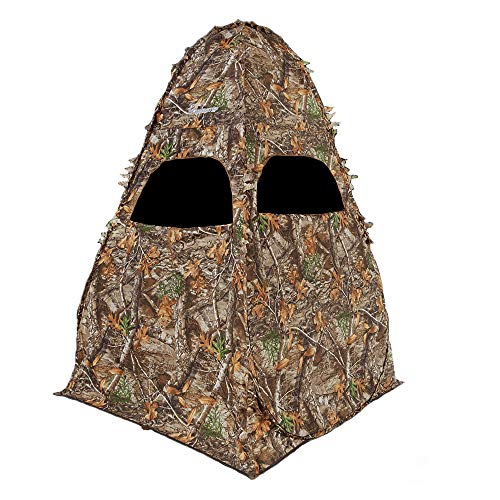
Ameristep Outhouse Spring Blind is a single-hunter spring-steel blind with a 78-inch height, the tallest height among the options. Ameristep says it supports standing, sitting or kneeling positions and sets up and takes down easily. Four zippered windows provide multiple openings. The measurements supplied for width and length are not usable dimensions, so confirm the actual footprint before choosing it for a tight site.
Bottom line: Pick this for a tall, flexible-position single-hunter shelter.
How to choose a single person hunting blind
Start with shooting posture and usable room: a seated hunter can use a lower shelter, while a standing position needs enough height for safe movement and an unobstructed shot. Ground blinds commonly use pop-up hub frames or spring-steel frames; hub designs fold around poles, while spring steel opens into shape and can require practice to collapse. Compare interior footprint, height, door placement and window positions rather than choosing by outside dimensions alone. For a chair, bow or firearm, allow clearance for elbows and equipment, and keep the muzzle or arrow pointed through a safe opening. If you expect to stand, choose a shelter at least as tall as your seated-to-standing movement requires, then verify usable interior height.
Blind height, footprint and hunting position
Height changes whether a blind works for seated observation or standing shots; the options here span 53.15 to 78 inches where height is given. A larger footprint can make turning and handling gear easier, but it also needs more level ground and can be harder to conceal among brush. Measure your chair width and the space needed to draw a bow or shoulder a firearm before selecting a footprint. A bow hunter should practice drawing inside the blind with every planned window position; fabric, frame poles and zipper edges can interfere with limbs or arrows. A height of 75 inches or more is a useful starting point for comparing standing-oriented designs, not a guarantee of comfortable clearance for every hunter.
Window placement and concealment
Window layout determines how much repositioning is needed to watch likely approach directions. Multi-side windows help cover more angles, while a front window can keep the opening plan simple; bottom-zip openings can preserve a lower sightline when seated. Open only the windows needed for the current view, since a large opening can expose movement and interior contrast. Matte, irregular camouflage fabric helps break up hard edges, but a blind still needs brushing-in with local vegetation and placement that avoids backlighting. A dark interior coating can reduce visible silhouettes, but it does not make movement invisible. Set the blind before game arrives when possible, and avoid blocking trails, neighboring hunters’ lines of fire or safe shooting lanes.
Setup, weather and safe use
Portable blinds are not substitutes for weather-rated shelters; wind can catch broad fabric panels, so stake or anchor the frame using its intended tie-downs and leave during storms or strong gusts. Practice opening and folding a pop-up or spring-steel blind at home, because forcing a frame can damage poles or cause it to snap back. Keep firearms unloaded while entering, exiting or changing windows, and never shoot through mesh unless the blind maker specifically allows that use. Bright warning fabric can improve visibility to other people when hunting is over or when moving, but local regulations determine required hunter-orange clothing. Check local rules for seasons, public-land placement and required visible apparel before setting up.
Frequently Asked Questions
Can one person hunt from a ground blind?
Yes, provided the blind has enough room for the hunter’s posture and equipment. A footprint around 47 by 47 inches can offer more movement than a narrow one, but test chair placement and shooting motion before the hunt.
How tall should a hunting blind be?
A seated hunter can use a shorter blind, while standing shots call for substantially more clearance; compare the interior height with your own height and shooting motion. A 75-inch height is a reasonable starting point for comparing standing-oriented options, not a universal fit guarantee.
Should I choose a pop-up or hub-style blind?
Spring-steel pop-up blinds open quickly but often take practice to fold back into their carry form. Hub-style frames rely on poles and joints, so inspect the frame and practice assembly before field use.
Can I shoot through a blind window screen?
Do not assume mesh is safe to shoot through; use an open window unless the blind maker expressly approves shooting through the screen. Keep the muzzle or arrow directed only through a clear, safe lane.
How do I keep a ground blind stable in wind?
Anchor the blind at its intended stake or tie-down points and avoid exposed ridges where gusts can catch the fabric. Leave the shelter during strong winds or storms rather than relying on camouflage fabric as weather protection.