
Omelette Cast Iron Pan: 4 Models Compared by Shape

For a dedicated omelette shape, choose Iwachu Medium Iron Omelette Pan: its 8.5-inch diameter and formed handle are designed for omelet cooking. Choose Lodge 8-Inch Skillet instead for a conventional skillet shape and broader stovetop, oven, grill, and campfire use; choose Japanese Tamagoyaki Pan, 9-by-7-Inch or YCylxlyh 7.2-by-6-Inch Omelet Pan for rectangular Japanese-style tamagoyaki.
We earn a commission if you buy through links on this page. As an Amazon Associate I earn from qualifying purchases. Products are compared on manufacturer specifications, not hands-on testing.
- Best overall: Iwachu Medium Iron Omelette Pan – Its dedicated omelette shape and 8.5-inch diameter suit omelet cooking.
- Best for general skillet use: Lodge 8-Inch Skillet – The round 8-inch skillet is compatible with stovetop, oven, grill, and campfire.
- Best for larger tamagoyaki: Japanese Tamagoyaki Pan, 9-by-7-Inch – The 9-by-7-inch rectangular cooking area is larger than the other Japanese-style pan.
- Best for compact tamagoyaki: YCylxlyh 7.2-by-6-Inch Omelet Pan – The 7.2-by-6-inch form is the smallest dedicated Japanese-style pan here.
| Product | Best for | Cooking size | Pan type | Handle | Shop |
|---|---|---|---|---|---|
| Iwachu Medium Iron Omelette Pan | Everyday omelets | 8.5 in diameter | Omelette pan | Formed handle | Check Price on Amazon |
| Lodge 8-Inch Skillet | General skillet cooking | 8 in diameter | Round skillet | Teardrop handle | Check Price on Amazon |
| Japanese Tamagoyaki Pan, 9-by-7-Inch | Larger tamagoyaki | 9 × 7 in | Rectangular pan | Detachable wood | Check Price on Amazon |
| YCylxlyh 7.2-by-6-Inch Omelet Pan | Compact tamagoyaki | 7.2 × 6 in | Rectangular pan | Detachable wood | Check Price on Amazon |
Omelette Cast Iron Pan Options
Compare the pan shape and usable cooking area first, then match the handle and heat-source features to your cooking routine.
Iwachu Medium Iron Omelette Pan

Iwachu Medium Iron Omelette Pan is the only pan here explicitly shaped for omelets rather than a general skillet or rectangular tamagoyaki. Its 8.5-inch diameter gives it a defined round cooking area, and the formed handle is intended to stay cooler during cooking. The maker says the pan heats evenly, a useful feature for eggs that can set quickly over hot spots. The pan weighs 2.4 pounds and measures 1.75 inches high. Its limitation is the specialized form: buyers seeking a general-purpose round skillet should consider a different shape.
Bottom line: Pick this for round omelets and a dedicated omelette-pan shape.
Lodge 8-Inch Skillet

Lodge 8-Inch Skillet differs from the dedicated omelet and rectangular pans with a conventional 8-inch round skillet shape. It arrives pre-seasoned, weighs 3.2 pounds, and has an easy-grip teardrop handle. The maker says the cast iron retains heat and that the cooking surface improves with use; the pan is compatible with stove, oven, grill, and campfire cooking. That versatility suits people who want one skillet for eggs and other foods. Its limitation for omelet work is the round skillet profile rather than a dedicated omelette or tamagoyaki shape.
Bottom line: Choose this if omelets are one use for a broader-purpose skillet.
Japanese Tamagoyaki Pan, 9-by-7-Inch
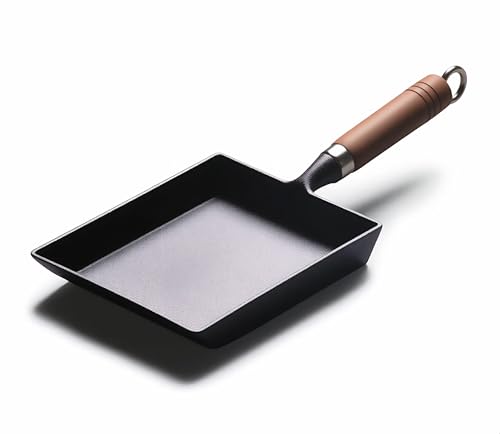
Japanese Tamagoyaki Pan, 9-by-7-Inch has the largest rectangular cooking dimensions among the dedicated Japanese-style pans here, at 9 by 7 inches. Its detachable wood handle lets the pan body go into an oven up to 500°F, according to the maker, and it arrives pre-seasoned with a liquid-nitrogen treatment described as rust-resistant. The maker also describes its surface as a natural nonstick finish. This shape suits layered tamagoyaki more directly than a round skillet. The trade-off is a rectangular form, which is less suited to cooks who specifically want a conventional round omelet pan.
Bottom line: Choose this for a larger rectangular cooking area for tamagoyaki.
YCylxlyh 7.2-by-6-Inch Omelet Pan

YCylxlyh 7.2-by-6-Inch Omelet Pan is the more compact of the two rectangular Japanese-style options, with dimensions of 7.2 by 6 inches. It arrives pre-seasoned, has a detachable wood handle, and is described by the maker as rust-resistant after liquid-nitrogen treatment. The maker says the handle removes for oven use up to 500°F and that the cooking surface is a natural nonstick finish. This smaller footprint can suit kitchens or meals where a large rectangular pan is unnecessary. Its limitation is cooking area: cooks making larger portions should compare its dimensions with Japanese Tamagoyaki Pan, 9-by-7-Inch.
Bottom line: Pick this when a smaller rectangular tamagoyaki pan fits your needs.
How to choose an omelette cast iron pan
Choose the pan by the omelet style first: round pans suit folded or rolled round omelets, while rectangular tamagoyaki pans suit repeated thin layers rolled from one end. Cooking area matters more than exterior length, so compare the cooking dimensions rather than handle-to-end measurements. A pan under 8 inches across is a compact choice; it leaves less room to spread a larger egg mixture. Cast iron holds heat well but responds slowly to burner changes, so preheat over low to medium heat and adjust gradually. For eggs, a thin layer of cooking fat and a well-maintained seasoned surface help reduce sticking; aggressive high heat can set eggs before they are ready to fold.
Round omelet pans and tamagoyaki pans
Round pans and rectangular tamagoyaki pans serve different folding motions, so shape is the clearest decision rule. A round pan around 8 to 9 inches gives room for a single-person omelet without the long narrow profile of a tamagoyaki pan. Rectangular pans around 6 to 9 inches across let cooks build layers and roll them lengthwise. This comparison includes a dedicated round omelet shape, a general round skillet, and two rectangular options. A removable handle can help with oven finishing, but confirm the handle is removed before placing a wood-handled pan in the oven.
The table summarizes which shape matches each method.
| Cooking need | Useful pan shape | Decision point |
|---|---|---|
| Folded round omelet | Round | Compare diameter and handle comfort |
| Layered tamagoyaki | Rectangular | Compare cooking width and length |
| Eggs plus general cooking | Round skillet | Favor multi-use shape |
Seasoning and low-stick cooking with cast iron
Cast iron egg pans work best with gradual preheating and an intact seasoning layer, not maximum burner heat. Seasoning is a thin baked-on oil film; routine cooking and careful cleaning help preserve it, while rust or bare gray patches signal that the surface may need maintenance. For delicate eggs, preheat on low to medium for several minutes, add fat, then test with a small dab of egg before pouring the full mixture. Avoid leaving an empty pan on high heat, which can overheat the cooking surface and make eggs seize. After cooking, dry the pan promptly to limit rust, especially around a removable-handle connection.
Handle and oven safety for omelette pans
Cast iron handles heat during stovetop cooking unless a maker specifically designs them to stay cooler; use a dry potholder when handling a hot pan. A detachable wood handle must be removed before oven use when the maker’s oven rating applies only to the pan body. Wood can scorch or burn at oven temperatures, so never infer that an attached handle shares a pan’s temperature rating. On a gas or electric burner, keep the flame or heating element within the pan base to reduce handle heating. For these options, only the detachable-handle models have an explicit oven limit in their maker claims.
Frequently Asked Questions
How large should an omelet pan be?
An 8- to 9-inch round pan is a practical size for a single folded omelet. Choose a smaller pan for a compact portion or a larger cooking area when you need more room to spread the egg.
Can cast iron be used for delicate eggs?
Yes, cast iron can cook eggs when it is preheated gradually and has a sound seasoning layer. Low-to-medium heat and a little cooking fat give the eggs more time to set without scorching.
How do you keep eggs from sticking to cast iron?
Preheat the pan over low to medium heat, add a thin film of cooking fat, and avoid pouring eggs into a cold surface. Sticking is more likely if the seasoning is damaged or the pan is overheated.
Can wood-handled cast iron pans go in the oven?
Remove a detachable wood handle before oven use unless the maker expressly rates the handle for that temperature. Wood can scorch in an oven, even when the pan body has a high heat rating.
How should cast iron be cleaned after cooking eggs?
Clean cast iron while it is warm, using hot water and a nonabrasive brush or scraper for residue. Dry it promptly and apply a very light oil coating if the cooking surface looks dry.