
Glue Used to Glue Rubber to Metal: 5 Options Compared

For gluing rubber to metal, choose Bondtech Rubber Glue, 30 g because its maker specifically says it bonds both materials.
We earn a commission if you buy through links on this page. As an Amazon Associate I earn from qualifying purchases. Products are compared on manufacturer specifications, not hands-on testing.
- Best overall: Bondtech Rubber Glue, 30 g – Its maker explicitly lists rubber-to-metal bonding and includes precision droppers.
- Best for controlled application: Gorilla Super Glue Brush and Nozzle, 12 g – A brush and precision nozzle provide two ways to dispense the adhesive.
- Best for thick application: Thick Liquid Super Glue for Metal, 30 g – The product is identified as a thick, 30 g CA glue for metal.
| Product | Best for | Stated material fit | Amount | Applicator | Shop |
|---|---|---|---|---|---|
| Bondtech Rubber Glue, 30 g | Rubber-to-metal repairs | Rubber to metal | 30 g | Three droppers | Check Price on Amazon |
| Gorilla Super Glue Brush and Nozzle, 12 g | Dual applicator control | Rubber and metal | 12 g | Brush and nozzle | Check Price on Amazon |
| Thick Liquid Super Glue for Metal, 30 g | Thicker metal repairs | Metal; rubber unconfirmed | 30 g | Precision tip | Check Price on Amazon |
| All-Purpose Super Glue Gel, 50 g | Gel consistency | Metal; rubber unconfirmed | 50 g | Precision tip | Check Price on Amazon |
| All-Purpose Super Glue with Brush, 130 ml | Large-volume application | Rubber and metal | 130 ml | Brush | Check Price on Amazon |
Glue Used to Glue Rubber to Metal
The clearest match is the adhesive whose material fit explicitly includes both rubber and metal.
Bondtech Rubber Glue, 30 g

Bondtech Rubber Glue, 30 g is the direct match because its maker names rubber-to-metal bonding, unlike the general-purpose glues here. The clear 30 g adhesive is also promoted for rubber-to-rubber and rubber-to-plastic repairs, and it comes with three precision droppers for small or hard-to-reach areas. That makes it a practical fit for narrow seams and localized repairs where controlled placement matters. Its maker calls it instant, waterproof, and heat-resistant, but gives no numeric cure time or temperature range, so buyers with a specific exposure requirement should verify suitability before use.
Bottom line: Choose it when rubber-to-metal compatibility and precise placement are the priorities.
Gorilla Super Glue Brush and Nozzle, 12 g

Gorilla Super Glue Brush and Nozzle, 12 g stands apart with a brush and precision tip in one 12 g bottle, making it the most versatile applicator choice among these alternatives. Its maker says it bonds rubber and metal among other materials, and describes the cured bond as impact-resistant. The drying window is 10 to 45 seconds, with no clamping required.
Bottom line: Pick it for small repairs where brush-or-tip dispensing is useful.
Thick Liquid Super Glue for Metal, 30 g

Thick Liquid Super Glue for Metal, 30 g is the metal-focused option, with a thick clear CA formula and a precision tip rather than a rubber-specific positioning. Its maker promotes fast setting and resistance to stress and daily vibration, making the claims relevant to metal repairs and assemblies. Consider it only when the metal surface is the main concern and the rubber compatibility has been confirmed for the intended repair.
Bottom line: Consider it for metal-centered work after confirming rubber compatibility.
All-Purpose Super Glue Gel, 50 g
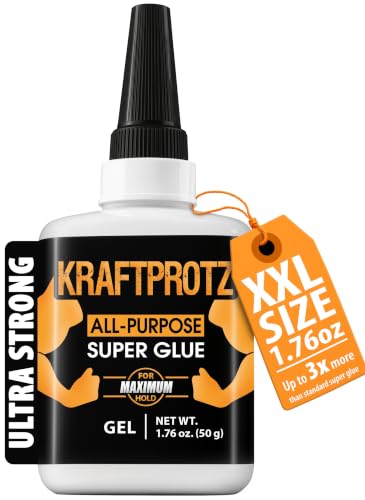
All-Purpose Super Glue Gel, 50 g is the gel-format alternative, offering 50 g and an anti-clog precision tip for household repairs. Its maker claims a clear finish and says it is waterproof and heat-resistant, while naming metal among the materials it can bond. Choose the gel format when a thicker adhesive is preferred for the repair, but verify its suitability for the specific rubber and metal surfaces before relying on the bond.
Bottom line: Choose it when gel consistency matters and surface compatibility is confirmed.
All-Purpose Super Glue with Brush, 130 ml

All-Purpose Super Glue with Brush, 130 ml differs from the smaller options by supplying 130 ml and a brush applicator. Its maker names both rubber and metal among the supported materials and claims a clear, water-resistant bond after full cure. The formula is ultra-thin and flows into fine seams, a trait suited to close-fitting surfaces rather than gaps that need filling.
Bottom line: Select it for larger jobs needing a thin-flowing adhesive and brush.
How to choose glue for rubber and metal
Choose an adhesive whose maker explicitly names rubber-to-metal bonding when that pairing is the priority. Adhesive families matter: cyanoacrylate super glues usually cure quickly on close-fitting, nonporous surfaces, while rubber formulations can vary in flexibility and solvent compatibility. A product that separately names rubber and metal does not necessarily confirm the combined pair. Surface fit also matters: remove oil, dust, and loose material, then dry both surfaces; a thin, even film typically performs better than a thick pool. If a repair must flex, face water, or see heat, confirm those specific conditions because labels such as waterproof or heat-resistant do not give a usable temperature or load limit.
Preparing rubber and metal surfaces
Clean, dry contact surfaces give adhesives a better chance to bond than oily or dusty ones. Degrease metal with an appropriate cleaner and let it dry fully; rubber should be clean without a treatment that softens or damages its surface. Lightly abrading smooth metal can increase surface area, but avoid cutting or thinning the rubber. Fit the parts together before applying adhesive so they can be aligned promptly, especially when using a fast-setting formula. Keep the bond line thin and prevent squeeze-out from reaching areas that must remain flexible. When the material is valuable or the joint is safety-critical, test the adhesive on a small inconspicuous area first and follow the adhesive maker’s handling and ventilation precautions.
Matching adhesive type to the repair
Use this guide to separate a directly stated material-pair match from products described more generally.
| Adhesive description | Useful distinction | Decision |
|---|---|---|
| Rubber adhesive naming rubber to metal | Explicit pairing | Start here for this repair |
| General-purpose CA naming rubber and metal separately | Fast-setting claims or applicator options | Confirm the combined pairing |
| Metal-focused CA | Thick format and metal use | Confirm rubber compatibility |
| Gel or thin-flowing adhesive | Consistency changes placement | Match flow to the joint |
Material names alone are not a substitute for a specified joint. Rubber composition ranges from soft elastomers to firmer compounds, and the surface may also carry coatings or release agents. Metal type, finish, and preparation can change adhesion. For a tight, flat contact area, a thin-flowing adhesive may spread easily; for a small uneven joint, a gel may be easier to place without running. Neither consistency guarantees gap filling or flexibility, so do not infer those properties unless the maker states them.
Safe application and curing
Super glue can bond skin and eyes quickly, so keep fingers away from the joint and use eye protection when placing adhesive overhead or near the face. Work with ventilation and avoid touching wet adhesive; cyanoacrylate can generate heat when it contacts cotton or wool. Drying or handling time is not necessarily the same as full cure, and the products here give different or incomplete timing claims. Hold parts steady for the maker’s set period, then avoid stressing the bond until fully cured as directed. Keep adhesive away from children and pets, close the container after use, and store it securely. Waterproof or heat-resistant wording does not establish suitability for continuous immersion, high temperatures, or a load-bearing joint.
Frequently Asked Questions
Does super glue bond rubber to metal?
Some super glues may bond both materials, but a maker naming the exact rubber-to-metal pairing is the clearer choice. Surface cleanliness, rubber type, and joint fit affect the result.
How long should rubber and metal glue cure?
A fast set is not always a full cure. One product here gives a 10-to-45-second drying claim, but cure time can differ by formula, bond thickness, and conditions.
Should rubber be sanded before gluing to metal?
Do not sand rubber by default; cleaning and drying are safer first steps. Lightly abrading smooth metal may help, but avoid removing rubber or damaging coatings.
Can I use rubber-to-metal glue outdoors?
Only rely on outdoor suitability when the adhesive maker confirms the relevant exposure. Waterproof wording alone does not establish resistance to prolonged sunlight, immersion, or temperature cycling.