
Wire Wheels for Bench Grinders: 4 Options Compared

For wire wheels for bench grinders, DEWALT DW4906 8-Inch Crimped Wheel is the named 8-inch choice, while its crimped construction and internal holding plate distinguish it from the 6-inch alternatives. Choose a different option if you need a 6-inch wheel, multiple wire grades or an arbor size.
A bench-grinder wire wheel uses rotating wire bristles to clean metal surfaces; match the wheel’s arbor to the grinder spindle and its rated speed to the grinder before use.
We earn a commission if you buy through links on this page. As an Amazon Associate I earn from qualifying purchases. Products are compared on manufacturer specifications, not hands-on testing.
- Best overall: DEWALT DW4906 8-Inch Crimped Wheel – The only 8-inch option, with crimped wire and an internal holding plate.
- Best for two wire grades: Eco Walker 6-Inch Coarse and Fine Set – The set includes coarse and fine wire wheels in two wire diameters.
- Best for arbor flexibility: OSFTBVT 6-Inch Coarse Crimped Wheel – Includes a bushing for fitting either a 1/2-inch or 5/8-inch arbor.
- Best for fine brushing: Forney 72747 6-Inch Fine Wheel – The 0.008-inch wire is intended for light-to-medium brushing.
| Product | Best for | Diameter | Wire thickness | Arbor | Shop |
|---|---|---|---|---|---|
| DEWALT DW4906 8-Inch Crimped Wheel | 8-inch grinders | 8 in | — | — | Check Price on Amazon |
| OSFTBVT 6-Inch Coarse Crimped Wheel | Arbor flexibility | 6 in | 0.012 in | 1/2 or 5/8 in | Check Price on Amazon |
| Eco Walker 6-Inch Coarse and Fine Set | Two wire grades | 6 in | 0.008 and 0.012 in | 1/2 or 5/8 in | Check Price on Amazon |
| Forney 72747 6-Inch Fine Wheel | Light brushing | 6 in | 0.008 in | 1/2 or 5/8 in | Check Price on Amazon |
Wire Wheels for Bench Grinders
Compare wheel diameter, wire thickness and arbor compatibility before choosing a bench-grinder brush.
DEWALT DW4906 8-Inch Crimped Wheel
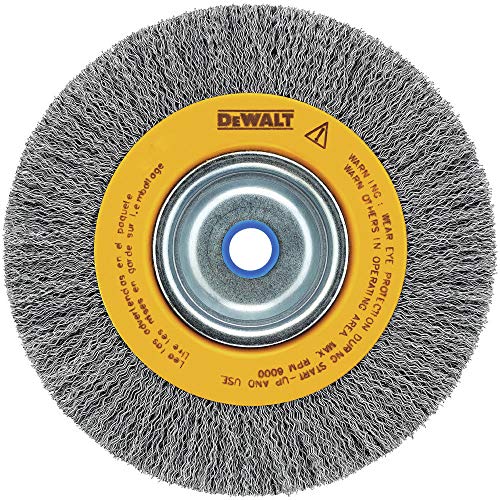
DEWALT DW4906 8-Inch Crimped Wheel is the only 8-inch wheel among these choices, making diameter the deciding difference for a grinder set up for that size. Its crimped wire construction uses an internal holding plate, and the maker says the wheel is built for even balance and smooth operation. That combination suits buyers seeking a single larger wheel rather than a multi-wheel set. The product facts do not identify its wire thickness or arbor size, so verify that both match your grinder before buying; a mismatch means the wheel will not fit or run as intended.
Bottom line: Choose this if your grinder takes an 8-inch wheel and its arbor matches.
OSFTBVT 6-Inch Coarse Crimped Wheel

OSFTBVT 6-Inch Coarse Crimped Wheel stands out for its included arbor bushing, which converts a 5/8-inch arbor fit to 1/2 inch. The 6-inch wheel uses 0.012-inch carbon-steel wire in a coarse crimped brush, suited to buyers focused on rust, paint, burr or corrosion removal from metal tools and tubes. The maker says its design is precision balanced to reduce vibration. It is a single coarse wheel, so buyers wanting a finer brushing action or multiple grades should choose a set instead. Confirm the grinder’s maximum wheel diameter and operating speed before fitting it.
Bottom line: Pick this for a 6-inch coarse wheel when the bushing helps match your spindle.
Eco Walker 6-Inch Coarse and Fine Set

Eco Walker 6-Inch Coarse and Fine Set is the only set here with both coarse and fine wire: its 0.012-inch and 0.008-inch carbon-steel brushes provide two brushing grades for varied metal cleanup. The maker specifies 6-inch wheels and compatibility with 1/2-inch and 5/8-inch arbor sizes; the setup uses a washer for the 1/2-inch arbor. This makes the set a fit for buyers who want to switch between wire thicknesses rather than choose one brush. The set includes four wheels, but the facts do not explain how the four are divided by grade, so check the package configuration before relying on a specific count of each.
Bottom line: Choose this set if you need both coarse and fine wire for a 6-inch grinder.
Forney 72747 6-Inch Fine Wheel

Forney 72747 6-Inch Fine Wheel is the fine-wire single-wheel option, with 0.008-inch crimped steel wire and a 6-inch diameter. The maker identifies it for cleaning and blending surfaces, removing light burrs, paint and corrosion, and light-to-medium brushing. Its arbor fits 1/2-inch or 5/8-inch sizes, and its maximum is 6,000 RPM. That speed limit makes this a clear choice when a fine brush is the goal, but it is not the coarse 0.012-inch option for more assertive brushing. Check that the grinder’s rated speed does not exceed the wheel’s limit.
Bottom line: Pick this for fine, light-to-medium brushing on a compatible 6-inch grinder.
How to choose a bench-grinder wire wheel
Choose first by diameter, then by arbor and rated speed; a wheel must fit the grinder mechanically and stay within its speed limit. These options include 6-inch wheels and one 8-inch wheel, while only one specifies a maximum speed: 6,000 RPM. A 0.008-inch wire is the finer choice among the gauges, while 0.012-inch wire is coarser. For removing light corrosion or blending surfaces, favor the fine brush; for heavier rust or paint cleanup, consider the coarse brush. Grinder guards and tool rests must remain in place and positioned as the grinder manufacturer requires. Wire bristles can break free, so wear eye protection and keep hands clear of the rotating wheel.
Match wheel diameter and arbor to the grinder
Wheel diameter and arbor bore are separate fit checks: a 6-inch wheel with the wrong spindle opening is still incompatible. Measure or confirm both dimensions from the grinder manual or spindle before purchase. A 1/2-inch arbor wheel may use a washer or bushing to fit a 5/8-inch spindle, but only use the adapter arrangement supplied for that wheel. Never force a wheel onto a spindle or improvise a spacer. Also compare the wheel’s maximum RPM with the grinder’s no-load speed; the wheel rating must be at least as high as the grinder speed. When the grinder exceeds the 6,000-RPM limit, do not use the Forney wheel on it.
Coarse and fine wire wheel uses
Coarser wire generally removes material more aggressively, while finer wire is better suited to lighter cleaning and surface blending. In this group, 0.012-inch wire is the coarse option and 0.008-inch wire is the fine option. Select by the workpiece and finish: heavy rust or paint favors the coarse brush, while light burrs and delicate cleanup favor fine wire. Wire wheels clean and abrade; they are not substitutes for grinding wheels designed to shape metal. Secure small workpieces so they cannot catch, and present the material against the lower portion of the wheel rather than the top, where the rotation can lift or throw it.
Safe setup and wire-wheel care
Inspect a wire wheel before each use for loose wires, cracks, bent flanges or damage, and reject a wheel that is compromised. A wheel should run without unusual vibration; stop the grinder immediately if vibration develops. Keep the workpiece supported and avoid pressing hard, since excessive force can bend bristles and overheat the work. Use eye protection and a face shield, plus clothing that cannot catch in rotating machinery; gloves can snag and should not be worn near exposed rotating spindles. Keep the grinder guard installed, unplug the grinder before changing wheels, and use only the flange and mounting hardware intended for that wheel.
Frequently Asked Questions
What size wire wheel fits a bench grinder?
The wheel diameter must match the grinder’s specified capacity; the options here are 6 and 8 inches. Confirm the spindle arbor size as well, since diameter alone does not establish fit.
Is 0.008-inch or 0.012-inch wire coarser?
The 0.012-inch wire is coarser than 0.008-inch wire. Choose the thicker wire for more assertive cleanup and the thinner wire for lighter brushing or blending.
Can a bench grinder run a wheel rated for 6,000 RPM?
Only if the grinder’s no-load speed is 6,000 RPM or lower. The wheel’s maximum rated RPM must meet or exceed the grinder’s speed.
What should I wear when using a wire wheel?
Wear eye protection and a face shield because wire bristles can break free during use. Keep hands, loose clothing and other snag hazards away from the rotating wheel.
When should I replace a bench-grinder wire wheel?
Replace a wheel if wires are loose or the wheel is cracked, bent or visibly damaged. Stop using it if it begins to vibrate unusually, and inspect it before each session.