
Best Waterpik for Travel: 3 Portable Flossers Compared

Waterpik Cordless Advanced WP-580 is the best Waterpik for travel if global voltage compatibility and up to four weeks of use per charge matter most. Choose COSLUS T40 Travel Water Flosser instead if lower weight is your priority, or Waterpik Cordless Pulse 3100 WF-20 if you want a flosser with two included tips and shower use.
A portable water flosser sends a stream of water between teeth and along the gumline, making compact size, charging needs and tank handling useful factors to compare for travel.
We earn a commission if you buy through links on this page. As an Amazon Associate I earn from qualifying purchases. Products are compared on manufacturer specifications, not hands-on testing.
- Best overall: Waterpik Cordless Advanced WP-580 – Global voltage compatibility, a travel bag and tip case, and up to four weeks per charge support trips.
- Best for light packing: COSLUS T40 Travel Water Flosser – At 0.46 pounds, it is the lightest of these three options.
- Best for shower use: Waterpik Cordless Pulse 3100 WF-20 – It is designed for shower use and includes two tips.
| Product | Best for | Weight | Settings | Included tips | Shop |
|---|---|---|---|---|---|
| Waterpik Cordless Advanced WP-580 | Frequent travelers | 0.8 lb | 3 | 4 | Check Price on Amazon |
| COSLUS T40 Travel Water Flosser | Lightweight packing | 0.46 lb | 4 | — | Check Price on Amazon |
| Waterpik Cordless Pulse 3100 WF-20 | Shower routines | 0.65 lb | 2 | 2 | Check Price on Amazon |
Best Waterpik Travel Water Flossers
Compare weight, settings and included tips to find a cordless flosser that fits your travel routine.
Waterpik Cordless Advanced WP-580

Global voltage compatibility and up to four weeks of use per charge distinguish this travel-ready option. The rechargeable cordless flosser includes a 360-degree rotating tip, three settings, four tips, a microfiber travel bag, a tip storage case and a water plug. Waterpik says the battery can last up to four weeks per charge; actual battery life depends on use. The flosser suits travelers who want included storage and charging flexibility. At 0.8 pounds, it is heavier than the other two choices, so weight-conscious packers may prefer a lighter model.
Bottom line: Choose this if global voltage compatibility and included travel storage are priorities.
COSLUS T40 Travel Water Flosser

At 0.46 pounds, this is the lightest option here, making it a fit for travelers who put pack weight first. The cordless design has four modes and built-in tip storage, while its removable, wide-mouth tank is designed for refills and cleaning. COSLUS positions the compact unit for trips, camping and daily commuting. The features do not give a tip count or battery runtime, so travelers who need to plan charging or carry replacement tips should confirm those before ordering. Its standout is weight, not the included travel accessories of Waterpik Cordless Advanced WP-580.
Bottom line: Pick this for the lowest weight and built-in tip storage.
Waterpik Cordless Pulse 3100 WF-20
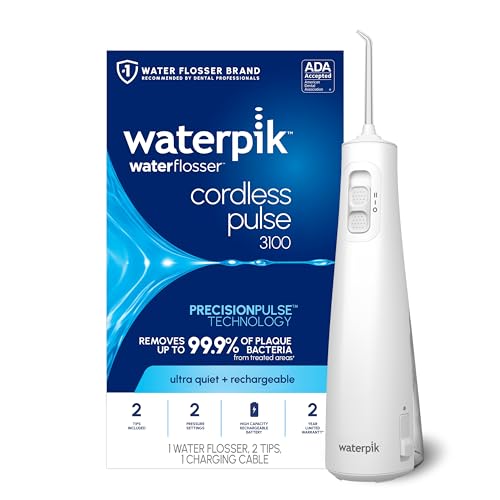
Shower use and a removable reservoir set this model apart for travelers who prefer to floss while bathing. The rechargeable unit has two settings, a non-slip grip and two included tips: a precision tip and a tongue cleaner tip. Its 6-ounce reservoir is removable and top-rack dishwasher safe, and Waterpik says it uses quiet water-flossing technology. The unit weighs 0.65 pounds, between the other two choices. Two settings give less adjustment than Waterpik Cordless Advanced WP-580 or COSLUS T40 Travel Water Flosser, so travelers seeking more water-flow options may want another pick.
Bottom line: Choose this if shower use and a tongue-cleaner tip fit your routine.
How to choose a travel water flosser
Choose by the trip constraint that matters most: pack weight, charging compatibility or how you plan to use the flosser. In this group, weights run from 0.46 to 0.8 pounds, while the setting counts range from two to four. For trips with international outlets, a global-voltage model can reduce the need for a voltage converter; check the charger’s voltage range and plug shape before packing. A model’s tip count also matters if more than one person will use it, but use separate tips rather than sharing one. Consider tank cleaning and refilling as well as the body size, since a compact device still needs water and a hygienic place to dry.
Use this decision guide to match a travel priority to a feature:
| Travel priority | What to compare |
|---|---|
| Reduce pack weight | Weight in pounds |
| Travel internationally | Charger voltage compatibility |
| Floss in the shower | Suitability for shower use |
| Carry spare tips | Tip count and storage |
Pack and charge a cordless water flosser
Pack the flosser dry and protect its tip from contact with toiletries or other items. Emptying the reservoir before storage helps avoid leaks, and letting the tank and tip air-dry helps limit moisture buildup. For air travel, battery rules can depend on the battery type and airline, so check the airline’s current requirements rather than assuming all rechargeable devices follow the same rule. International travelers should match the charger’s voltage range to the destination’s supply and bring the correct plug adapter when needed; an adapter changes plug fit, not voltage. A model described as global-voltage compatible addresses voltage range, but does not make every outlet physically compatible.
Use a water flosser safely
Start a new water flosser on its lowest setting and increase pressure only if comfortable. Lean over a sink, place the tip in your mouth before turning the unit on, and direct the stream along the gumline with your lips partly closed to limit splashing. Move slowly between teeth rather than aiming at one spot for an extended time. A water flosser complements brushing; it does not replace it. Keep the stream away from eyes and avoid sharing a tip, since oral-care accessories should not be passed between users. If dental treatment or a condition affects what pressure is appropriate, ask a dental professional before use.
Clean the reservoir and tips between trips
Rinse the tank after use and leave removable parts open to dry fully before packing. A wide-mouth or removable tank can make access easier, while a dishwasher-safe reservoir should be cleaned only as its maker permits; dishwasher safety for a tank does not imply that the whole device is dishwasher safe. Remove and rinse tips regularly, and replace them according to the manufacturer’s schedule rather than waiting for visible buildup. Keep the travel case dry before closing it, since storing a damp tip in a sealed case traps moisture. These habits help prevent residue and keep the flosser ready for the next trip.
Frequently Asked Questions
Can I take a rechargeable water flosser on a plane?
Airline rules depend on the rechargeable battery and how it is packed. Check the airline’s current battery guidance before flying, and keep any removable battery instructions with the device.
Do I need a voltage converter for international travel?
A voltage-compatible charger can work across supported electrical systems, but plug shapes still differ by country. Check the charger’s voltage range and carry a plug adapter when the outlet shape requires one.
How often should I replace a water flosser tip?
A common replacement interval is every 3 to 6 months, though wear and the tip maker’s guidance can change the timing. Replace a tip sooner if it becomes damaged or clogged.
Should I use a water flosser before or after brushing?
Either order can fit an oral-care routine, but use the water flosser consistently and brush with fluoride toothpaste. Angle the stream along the gumline and move between teeth rather than holding it in one place.
Can two people share one water flosser?
The main device can be shared if each person uses a separate tip and follows the maker’s cleaning guidance. Label tips or store them separately to avoid mixing them up.