
Dresses for Short, Curvy Women: 3 Styles Compared

For a short, curvy frame, WIHOLL Plus Size V-Neck Babydoll Dress is the most flexible starting point because its plus-size babydoll cut is described as mid-thigh and has a V-neck. Choose Dokotoo Smocked Empire-Waist Mini Dress or OFEEFAN Plus Size V-Neck Sweater Dress instead if you prefer long sleeves and an empire-waist; Dokotoo Smocked Empire-Waist Mini Dress includes a US 20–22 size.
These are not identified as petite-cut dresses, so compare your measurements with the brand’s size chart and check the garment length before ordering.
We earn a commission if you buy through links on this page. As an Amazon Associate I earn from qualifying purchases. Products are compared on manufacturer specifications, not hands-on testing.
- Best overall: WIHOLL Plus Size V-Neck Babydoll Dress – Its V-neck, mid-thigh babydoll cut and deep side pockets suit casual and dressier styling.
- Best for a mini dress: Dokotoo Smocked Empire-Waist Mini Dress – The long-sleeve A-line style includes a 2XL size listed for US 20–22.
- Best for cooler weather: OFEEFAN Plus Size V-Neck Sweater Dress – Its long sleeves, V-neck and sweater-knit blend are intended for fall and winter wear.
| Product | Best for | Length | Sleeves | Available size shown | Shop |
|---|---|---|---|---|---|
| WIHOLL Plus Size V-Neck Babydoll Dress | Everyday versatility | Mid-thigh | — | 2XL | Check Price on Amazon |
| OFEEFAN Plus Size V-Neck Sweater Dress | Cool-weather coverage | Above knee | Long | XL | Check Price on Amazon |
| Dokotoo Smocked Empire-Waist Mini Dress | Extended size range | Mini | Long | S–2XL (US 4–22) | Check Price on Amazon |
Dresses for Short, Curvy Women
Compare silhouette, coverage and the size before choosing a dress for your proportions and plans.
WIHOLL Plus Size V-Neck Babydoll Dress

The V-neck and mid-thigh cut distinguish this plus-size babydoll dress from the longer-sleeve options. It has a loose shape, two deep side pockets and a floral Boho Mandala pattern in the available color. The fabric is described by the maker as lightweight, stretchy and soft. This is a practical pick if you want pockets and a cut that skims rather than closely follows the midsection. The trade-off is its shorter hem: shoppers who want knee coverage should consider a longer style instead.
Bottom line: Choose this if you want a mid-thigh babydoll shape with pockets.
OFEEFAN Plus Size V-Neck Sweater Dress
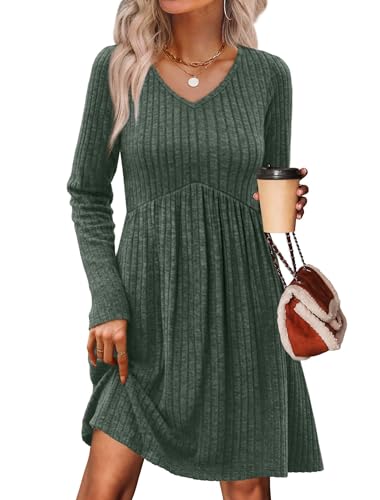
The sweater-knit fabric sets this option apart from the lighter babydoll dresses. The dress has a V-neck, long sleeves, an empire-waist and an above-knee hem; its blend is 70% polyester, 25% rayon and 5% spandex. The maker describes the fabric as soft, stretchy and warm, and suggests pairing it with leggings or boots. It suits shoppers seeking more arm coverage for cooler seasons. The hem remains above the knee, so it may not work for anyone who wants a longer dress or a petite-specific length.
Bottom line: Pick this for a long-sleeve sweater style with an above-knee hem.
Dokotoo Smocked Empire-Waist Mini Dress

The size range is the standout distinction here: the sizing maps 2XL to US 20–22. This mini dress combines a crewneck, smocked detail, decorative buttons and an empire-waist with a flowy A-line hem. The maker describes its fabric as soft, airy and breathable. It may suit someone looking for a long-sleeve mini with a defined high waist, but its short hem can feel too brief if you prefer more leg coverage. The buttons are decorative and do not open.
Bottom line: Choose this if the US 20–22 range and mini length fit your needs.
How to choose a dress for a short, curvy frame
Start with measurements and garment length rather than relying on a size label alone. Petite apparel is generally cut for people 5 feet 4 inches and under, but petite sizing also adjusts proportions such as torso, sleeve and rise—not just the hem. Measure bust, waist and fullest hip, then compare each number with the brand’s size chart. For a simpler length check, measure a dress you already like from the shoulder to the hem and compare that measurement with the garment’s length. A higher waist seam can visually lengthen the legs, while a loose babydoll shape gives more room through the middle; neither feature guarantees the same fit on every body.
Dress lengths and proportion checks
Dress labels such as mini, above-knee and midi are useful starting points, but they do not tell you the finished hem position on your body. Shoulder-to-hem length and your torso-to-leg proportions affect where a dress lands. Use this quick guide to decide what to verify before choosing:
| What you want | Useful detail to compare | Fit check |
|---|---|---|
| More leg coverage | Above-knee or longer hem | Compare shoulder-to-hem length with a dress you own |
| Room through the middle | Babydoll or empire-waist | Check bust measurement and where the waist seam falls |
| More arm coverage | Long sleeves | Compare sleeve length and shoulder fit |
When a hem lands within a few inches of the knee on your existing dress, use that garment as your reference rather than trusting the label alone.
Babydoll and empire-waist dresses compared
Babydoll and empire-waist dresses both place fullness below a raised seam, but the terms do not guarantee the same silhouette. Babydoll cuts usually fall loosely from the upper chest, while an empire-waist has a seam just below the bust and may have a more defined upper section. A V-neck creates a different neckline line than a crewneck; choose based on the coverage and shape you prefer. Fabric also changes drape: a sweater-knit blend can feel more substantial than a lightweight woven fabric. If you want a close fit at the bust, check that measurement carefully before choosing a loose-cut dress, since the skirt’s extra room does not necessarily mean extra room in the bodice.
Fit checks before ordering
Compare bust, waist and hip measurements against each brand’s size chart, especially when choosing between adjacent sizes. If you are between sizes, the amount of stretch and the fit you want matter: stretchy fabric may accommodate more movement, while a woven or less-stretchy bodice can feel less forgiving. Check the garment length and sleeve length against a dress that fits you well. Petite sizing is not simply a smaller standard size; a shorter torso can change where an empire seam sits. For a mini or above-knee dress, confirm the hem position you want using shoulder-to-hem measurements before ordering.
Frequently Asked Questions
What height counts as petite for clothing?
Petite clothing is generally designed for people 5 feet 4 inches and under. Brands can vary in their petite fit, so compare torso, sleeve and garment-length measurements rather than assuming every petite cut is identical.
How do I choose a dress length for a shorter body?
Measure from the shoulder to the hem on a dress whose length you like, then compare that measurement with the new dress. Labels such as mini or above-knee are broad categories and can land differently depending on torso and leg proportions.
Does an empire-waist work for a curvy figure?
An empire-waist places its seam just below the bust and allows the skirt to fall from that point. Check the bust measurement and seam position, since a raised waist does not ensure the bodice will fit every shape.
Should I size up in a babydoll dress?
Use the brand’s bust measurement and size chart first; a loose skirt does not mean the bodice is equally roomy. If you are between sizes, fabric stretch and your preferred fit are useful deciding factors.
What does petite sizing change in a dress?
Petite sizing typically adjusts proportions such as torso length, sleeve length and waist placement for a shorter frame. It is not only a shorter hem, so compare the specific garment measurements with a dress that fits you well.