
Brands of Cajun Seasoning: 5 Blends Compared

Bolner’s Fiesta Cajun All Purpose Seasoning suits cooks who want a blend for soups, meats and fried foods, with a no-MSG formula. Choose a different blend if you want a three-jar supply, a seasoning salt, or a grill-oriented option.
Cajun seasoning is a spice blend used to add peppery, savory flavor to dishes such as gumbo, rice and seafood.
We earn a commission if you buy through links on this page. As an Amazon Associate I earn from qualifying purchases. Products are compared on manufacturer specifications, not hands-on testing.
- Best overall: Bolner’s Fiesta Cajun All Purpose – The specifications describe uses across soups, sauces, meats and fried foods, and identify it as a no-MSG blend.
- Best for a pantry set: Cajun Two Step Original, 3-Pack – It comes as three 8-ounce jars and is positioned as an all purpose blend.
- Best for grilling: Weber N’Orleans Cajun Seasoning – Its pepper, onion and garlic profile is presented for shrimp, catfish and chicken on the grill.
| Product | Best for | Container size | Pack count | Standout distinction | Shop |
|---|---|---|---|---|---|
| Bolner’s Fiesta Cajun All Purpose | Everyday cooking | 7 oz | 1 | No-MSG blend | Check Price on Amazon |
| Cajun Two Step Original, 3-Pack | Multiple kitchens | 8 oz each | 3 | Three-jar set | Check Price on Amazon |
| Weber N’Orleans Cajun Seasoning | Grill cooking | 5 oz | 1 | Gluten-free | Check Price on Amazon |
| Amazon Saver Cajun Seasoning Salt | Seasoning salt | 4.35 oz | 1 | Salt-based blend | Check Price on Amazon |
| Cuso’s Cajun Seasoning | Recipe exploration | 5 oz | 1 | Recipe eBook bundle | Check Price on Amazon |
Brands of Cajun seasoning to compare
Compare each blend’s flavor cues, cooking uses and package size to find a fit for your kitchen.
Bolner’s Fiesta Cajun All Purpose

Bolner’s Fiesta Cajun All Purpose is the broad-use choice here, with suggested applications spanning soups, sauces, stews, gravies, barbecue rubs and fried-food batter. The maker describes a tangy blend with red peppers, herbs and garlic, and identifies it as a no-MSG blend. Its 7-ounce shaker fits cooks who want one Cajun seasoning for several cooking methods. The main limitation is that the specifications give no salt level, so cooks managing sodium should verify the nutrition facts before relying on it as a frequent table seasoning.
Bottom line: Choose this for one blend to use across soups, meats and fried foods.
Cajun Two Step Original, 3-Pack

Cajun Two Step Original stands apart by supplying three 8-ounce jars rather than a single shaker, making it a practical format for keeping a jar in more than one cooking area. The maker positions the all purpose blend for meat, seafood, vegetables and everyday use, with family-friendly heat. The set suits households that use Cajun seasoning often or want a jar for the grill. Its limitation is the multi-jar commitment; a cook trying a new seasoning for one recipe may prefer a single container instead.
Bottom line: Pick this if you want three jars for regular cooking in multiple spots.
Weber N’Orleans Cajun Seasoning
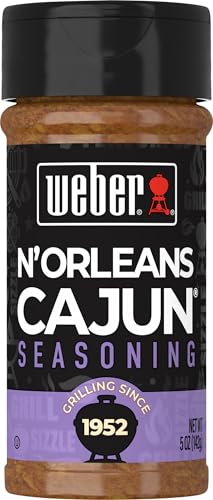
Weber N’Orleans is the grilling-focused option, with suggested rub use for shrimp, catfish and chicken. The maker highlights pepper, onion and garlic, and suggests adding it to rice or gumbo for a New Orleans-style touch. The 5-ounce container is a single-jar format, and the product is identified as gluten-free. This choice fits cooks looking for a seasoning associated with grilling as well as rice dishes. Its use cues are narrower than a general-purpose blend’s, so consider another option if you want explicit directions for sauces or fried-food batter.
Bottom line: Choose this for a peppery blend with grilling and rice use cues.
Amazon Saver Cajun Seasoning Salt

Amazon Saver Cajun Seasoning Salt is the one explicitly identified as a seasoning salt, with a 4.35-ounce container. Its ingredient blend includes salt, sweet paprika, rice fibre, coriander seed, red chili powder, dried garlic, celery seed and cumin seed. That combination makes it a distinct choice for cooks who want a salty, spice-forward shaker rather than a product presented mainly as a grill rub or bulk set. The limitation is the salt-first identity: check the nutrition facts and reduce added salt in a dish when seasoning with it.
Bottom line: Pick this when you want Cajun spices in a seasoning-salt format.
Cuso’s Cajun Seasoning

Cuso’s Cajun Seasoning pairs a 5-ounce bottle with a recipe eBook bundle, setting it apart for cooks looking for meal ideas along with a spice blend. The maker describes smoky undertones and suggests uses including chicken, shrimp, vegetables, wings, fish, seafood boils, gumbo, stews and jambalaya. It is presented as all-natural and non-GMO, with no filler. This suits someone exploring several Louisiana-inspired dishes.
Bottom line: Choose this if recipe ideas and varied dish suggestions are useful.
How to choose a Cajun seasoning blend
Start with the salt level and the dishes you cook most often. Cajun seasoning has no single standardized recipe; common blends draw on paprika, chile pepper, garlic and herbs, while proportions vary by maker. Some blends are explicitly seasoning salts, so check the nutrition panel before adding extra salt to a pot or rub. For a versatile kitchen shaker, favor a product with uses spanning several methods; for grilling, look for a blend with suggested seafood or chicken rub use. Heat is also personal: begin with a small amount, taste, then add more, since you can increase seasoning more easily than remove it.
Match the package size to how often you cook
Choose container size based on use rather than assuming every Cajun blend is interchangeable. A single jar around 4 to 7 ounces is a manageable starting point for occasional cooking, while a three-pack of 8-ounce jars makes more sense if you season dishes regularly or want jars in separate cooking areas. Keep dry seasonings sealed in a cool, dry cupboard; moisture and repeated exposure to steam can cause clumping and dull aroma. Use a dry spoon rather than shaking directly over a steaming pot. If a blend has been open for months and smells faint, replace it for better flavor rather than compensating by adding a large amount.
Use Cajun seasoning without oversalting
For a pot of soup, stew or rice, add a modest amount early enough for the spices to disperse, then taste near the end before adding more salt. Seasoning salts need a different approach from salt-free blends: reduce or omit other salt until the dish is balanced. For a rub, coat food evenly and cook it using the method appropriate for that food; seasoning does not replace safe cooking temperatures. Spices can scorch over very high direct heat, so for delicate seafood or long grilling, apply the blend shortly before cooking or use indirect heat. Follow a recipe’s salt guidance when replacing one blend with another.
Cajun seasoning and Creole seasoning are not fixed formulas
Cajun and Creole seasonings overlap in familiar ingredients such as paprika, pepper and garlic, but there is no universal ingredient ratio that defines every store blend. Cajun cooking is often associated with rustic one-pot dishes, while Creole cooking is associated with New Orleans traditions and a wider mix of culinary influences; the labels alone do not guarantee a particular heat level. Compare the ingredient panel and stated uses instead of choosing by the name alone. For gumbo, jambalaya or blackened seafood, start with less than the recipe’s full salt amount if your blend contains salt, then adjust after tasting.
| Need | What to compare | Practical choice |
|---|---|---|
| Daily cooking | Versatile use cues | One all purpose shaker |
| Low salt control | Nutrition panel and ingredients | Blend without salt, if available |
| Multiple cooking areas | Pack count and jar size | Multi-jar set |
Frequently Asked Questions
Does Cajun seasoning always contain salt?
No; recipes and packaged blends differ, and some products are explicitly seasoning salts. Check the ingredient list and nutrition panel, then hold back added salt until you taste the dish.
How much Cajun seasoning should I add to gumbo?
Start with about 1 teaspoon per quart of gumbo, then taste and adjust because salt and heat vary by blend. If the seasoning contains salt, reduce the recipe’s added salt at the start.
When should I add Cajun seasoning to shrimp?
For sautéed shrimp, toss the seasoning with the shrimp just before cooking so the spices coat evenly without drawing out moisture for long. Use a modest amount first, especially with a salty blend.
Can Cajun seasoning replace blackened seasoning?
Often it can provide a similar peppery, paprika-forward direction, but blackened blends and Cajun blends do not have a fixed formula. Check salt and heat, and use moderate heat so spices do not scorch.
How should I store an opened seasoning jar?
Keep the jar tightly closed in a cool, dry cupboard away from the stove. Avoid steam and wet utensils, which can introduce moisture and encourage clumping.