
Best Satin Black Spray Paint: 5 Picks Compared

Rust-Oleum Stops Rust Satin Black suits the widest range of projects because its maker lists use on wood, metal, concrete and masonry, plus coverage up to 15 square feet. Choose a specialty coating instead when the job involves automotive chemical exposure or stove temperatures up to 1,200°F.
We earn a commission if you buy through links on this page. As an Amazon Associate I earn from qualifying purchases. Products are compared on manufacturer specifications, not hands-on testing.
- Best overall: Rust-Oleum Stops Rust Satin Black – The maker lists multiple interior and exterior surfaces, with coverage up to 15 square feet per can.
- Best for automotive repairs: SprayMax 2K Hot Rod Satin Black – Its two-component topcoat is made for small repairs and offers chemical and weather resistance, according to the maker.
- Best for high heat: Stove Bright Fireplace Satin Black – Its maker says the paint withstands temperatures up to 1,200°F.
| Product | Best for | Can size | Suitable surfaces or use | Shop |
|---|---|---|---|---|
| Rust-Oleum Stops Rust Satin Black | General projects | 12 oz | Wood, metal, concrete, masonry | Check Price on Amazon |
| Krylon Fusion All-In-One Satin Black | Simple touch-ups | 12 oz | — | Check Price on Amazon |
| SprayMax 2K Hot Rod Satin Black | Automotive repair | 12 oz each; 2 cans | Automotive repair | Check Price on Amazon |
| Hycote Satin Black Acrylic | DIY and auto | 13.5 oz | Metal, primed plastic, prepared surfaces | Check Price on Amazon |
| Stove Bright Fireplace Satin Black | Stoves and grills | 12 oz | Stoves, fireplaces, grills | Check Price on Amazon |
Satin Black Spray Paint Picks
Match the coating to the surface and its exposure to weather, chemicals or heat.
Rust-Oleum Stops Rust Satin Black
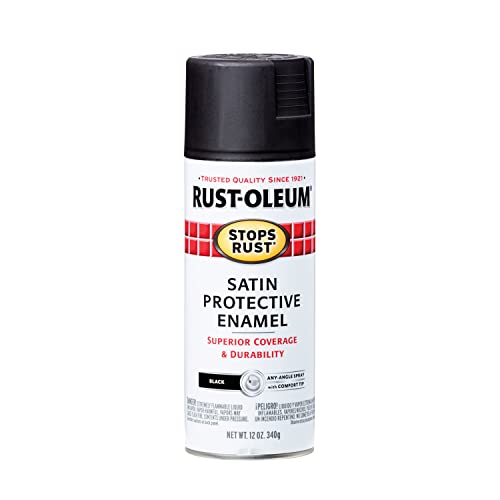
For broad interior and exterior use, this oil-based coating covers more listed surface types than the specialty options here. Rust-Oleum says it resists weather, corrosion, abrasion, fading and chipping, and covers up to 15 square feet per can. It dries to the touch in 2–4 hours, according to the maker. The satin sheen gives a low-gloss appearance. This is the practical pick for varied household surfaces, but it is not the targeted choice for high-temperature stoves or automotive touch-ups needing a two-component topcoat.
Bottom line: Choose this for ordinary projects across several listed surface types.
Krylon Fusion All-In-One Satin Black

Krylon Fusion All-In-One is the satin black option among these picks that explicitly includes primer in its name. The can holds 12 ounces, and its maker identifies the product as made in the United States. That simple paint-and-primer positioning may suit a small project where a separate primer step is not wanted. The product facts do not identify supported surfaces, coverage, or drying time, so this is a weaker match when those specifics determine the job; verify that the can is intended for your material before starting.
Bottom line: Pick it when an all-in-one paint-and-primer format is your priority.
SprayMax 2K Hot Rod Satin Black
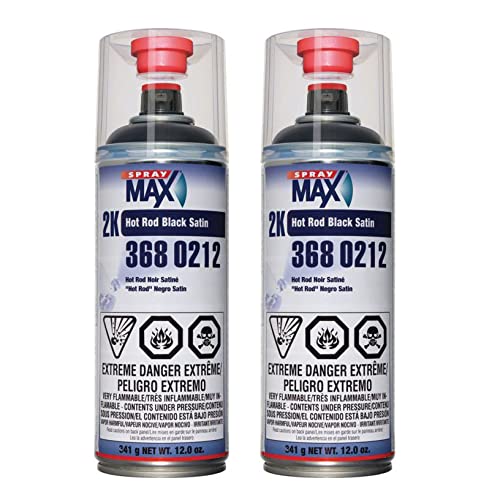
For small automotive repairs, SprayMax differs from general-purpose paints with a two-component topcoat sold as a two-can pack. Its maker calls the finish durable and says it resists chemicals and weather, making it the most explicitly automotive-focused choice here. The product is intended for repair jobs on existing semi-gloss Hot Rod Black parts or surfaces. That specific match matters: it is not the broadest choice for wood, masonry or unrelated household jobs. The maker also advises using appropriate safety equipment when applying it.
Bottom line: Choose this for small automotive repairs that need a two-component topcoat.
Hycote Satin Black Acrylic

Hycote offers the largest single can in this group at 13.5 ounces and names both automotive and DIY work as intended uses. The maker says the acrylic formula is designed for metal, primed plastic and other prepared surfaces, and describes its finish as resistant to chipping, fading and everyday wear. It is a useful middle ground when the project includes prepared plastic as well as metal.
Bottom line: Pick it for prepared metal or primed-plastic DIY and automotive work.
Stove Bright Fireplace Satin Black

Stove Bright is the specialist choice for surfaces exposed to high heat: its maker says the coating withstands up to 1,200°F and retains color under extreme heat. The intended examples include wood, pellet and gas stoves, fireplaces and grills. That temperature rating makes it a better fit than general-purpose satin paint for these applications. It is a narrow-purpose option, however; select a regular coating for projects without high heat rather than relying on this product’s specialty rating to make it suitable for every surface.
Bottom line: Choose this for stove, fireplace or grill surfaces subject to high heat.
How to Choose Satin Black Spray Paint
Choose by the surface and its exposure first, then compare sheen and can size. General-purpose coatings can name several substrates, while automotive topcoats and stove paints target narrower jobs; the label’s intended use matters more than the shared satin black color. Satin reflects less light than gloss but more than flat, so it can show surface texture while avoiding a high-gloss look. For a household project across wood, metal or masonry, favor a can that names those materials. For a stove, use a product with a specific high-heat rating; for car repairs, use an automotive coating suited to the existing finish. If the surface is not named, confirm compatibility before painting.
Prepare Surfaces Before Spraying
Clean, dry and sound surfaces help spray paint adhere; grease, dust, loose rust and peeling paint can undermine the finish. Remove loose material, then lightly scuff a glossy surface so the new coating has a keyed surface, and remove sanding dust before spraying. Bare metal often needs rust removal and a compatible primer unless the paint is specifically formulated for that use. Plastics are especially compatibility-sensitive: use paint labeled for the plastic or a suitable plastic primer, and test an inconspicuous area. Apply thin, overlapping passes rather than one heavy coat, since wet layers can run. Follow the can’s temperature and recoat directions because formulas differ.
Spray Distance, Coats and Coverage
Most aerosol paint is applied in light passes from roughly 8 to 12 inches away, but use the distance printed on the specific can when available. Keep the can moving and overlap each pass slightly to reduce striping; a slow stationary spray creates drips. Many spray paints need multiple thin coats, with the recoat window varying by formula, temperature and humidity. Coverage claims describe ideal conditions, and rough, porous or deeply textured surfaces use more paint than smooth ones. For example, plan around the maker’s maximum of 15 square feet per can for Rust-Oleum Stops Rust Satin Black, then allow extra for overspray and surface texture. Spray outdoors or with strong ventilation, away from flames and sparks.
| Project condition | Coating type to seek | Decision check |
|---|---|---|
| Several ordinary materials | General-purpose | Surface named on label |
| Vehicle repair | Automotive topcoat | Compatible existing finish |
| Stove or fireplace | High-temperature paint | Rating meets actual heat |
| Plastic component | Plastic-compatible coating | Material and primer compatibility |
Spray Paint Safety and High-Heat Use
Aerosol paint creates flammable vapor and airborne mist, so work outdoors or in a well-ventilated area and keep the spray away from flames, pilot lights and sparks. Wear eye protection and suitable respiratory protection; a dust mask does not filter solvent vapor. Avoid spraying toward people, pets or food, and keep the can away from heat. High-temperature paint needs more than a temperature number: the coating may require a staged curing process, and a newly painted stove can release fumes during its first heating. Follow the product’s cure directions and ventilate the area. Never use ordinary paint on a hot surface merely because its color and sheen match.
Frequently Asked Questions
How long does satin black spray paint take to dry?
Drying time depends on the formula, film thickness, temperature and humidity. Rust-Oleum Stops Rust Satin Black is stated by its maker to dry to the touch in 2–4 hours, but touch-dry does not necessarily mean fully cured.
How many coats of spray paint should I apply?
Several light coats generally give more even coverage than one heavy coat. Let each coat reach the label’s recoat point; applying too much at once can cause runs and slow drying.
Can satin spray paint be used on plastic?
Some paints work on plastic, but compatibility depends on the specific plastic and coating. Use a product labeled for that material, and test a small area before covering the whole part.
Can regular spray paint go on a hot stove?
No; use a coating rated for the surface’s actual operating temperature. Stove Bright Fireplace Satin Black is maker-rated to withstand up to 1,200°F, but the required curing process still matters.
How far away should I hold a spray paint can?
A common starting distance is about 8–12 inches, with the can moving steadily across the surface. Check the specific can’s directions because spray patterns and recommended distances vary.