
VP 2-Cycle Oil: 3 Synthetic Options Compared

For most buyers, VP Racing 2907 Full-Synthetic 2-Cycle Oil is the best fit because it pairs a full-synthetic formula with a 16-ounce bottle for motorcycles and ATVs. Choose VP Racing Fuels Full Synthetic 2-Cycle Oil for a similar 16-ounce VP formula, or VP Racing 2 Stroke Oil 1 Quart if you prefer a 32-ounce bottle; before mixing any oil, confirm your engine’s required ratio in its manual.
We earn a commission if you buy through links on this page. As an Amazon Associate I earn from qualifying purchases. Products are compared on manufacturer specifications, not hands-on testing.
- Best overall: VP Racing 2907 Full-Synthetic 2-Cycle Oil – A full-synthetic 16-ounce option intended for motorcycles and ATVs.
- Best for storage claims: VP Racing Fuels Full Synthetic 2-Cycle Oil – Its maker says the formula’s antioxidants keep fuel fresh for up to 12 months.
- Best for larger batches: VP Racing 2 Stroke Oil 1 Quart – The 32-ounce bottle holds twice the volume of the 16-ounce options.
| Product | Best for | Bottle size | Oil type | Shop |
|---|---|---|---|---|
| VP Racing 2907 Full-Synthetic 2-Cycle Oil | ATV and motorcycle | 16 fl oz | Full synthetic | Check Price on Amazon |
| VP Racing Fuels Full Synthetic 2-Cycle Oil | Seasonal storage | 16 fl oz | Full synthetic | Check Price on Amazon |
| VP Racing 2 Stroke Oil 1 Quart | Larger mixing batches | 32 fl oz | Synthetic | Check Price on Amazon |
VP 2-Cycle Oil Options
Compare the VP choices by container size and the formula each product identifies.
VP Racing 2907 Full-Synthetic 2-Cycle Oil
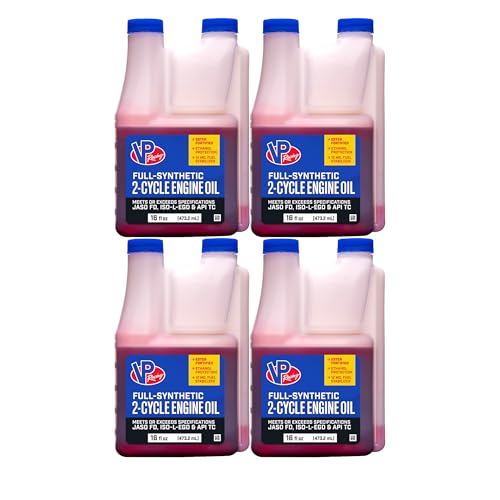
For a 16-ounce full-synthetic oil aimed at ATV and motorcycle owners, VP Racing 2907 Full-Synthetic 2-Cycle Oil is the clearest match in this group. Its ester-fortified formula is designed to lubricate two-stroke engine components, and the maker says it supports easy starts, low smoke operation, and cleaner piston rings. The container size suits a smaller mixing batch, but the correct amount of oil depends on your engine’s required fuel-to-oil ratio. Confirm that ratio in the owner’s manual before measuring; this product’s use does not establish that it fits every two-stroke engine.
Bottom line: Choose this if you want a full-synthetic VP oil in a 16-ounce bottle for an ATV or motorcycle.
VP Racing Fuels Full Synthetic 2-Cycle Oil

For buyers prioritizing the maker’s fuel-stability claim, VP Racing Fuels Full Synthetic 2-Cycle Oil is the VP option that explicitly mentions antioxidants and fuel freshness for up to 12 months. It comes in a 16-ounce container and uses a full-synthetic, ester-fortified formula. The maker also says it is designed for quick ignition, smooth operation, and reduced smoke. Those claims do not replace the engine maker’s mixing instructions: use the specified ratio and mix only the amount appropriate for your equipment and storage plan.
Bottom line: Choose this if the maker’s fuel-stability benefit matters for seasonal storage.
VP Racing 2 Stroke Oil 1 Quart
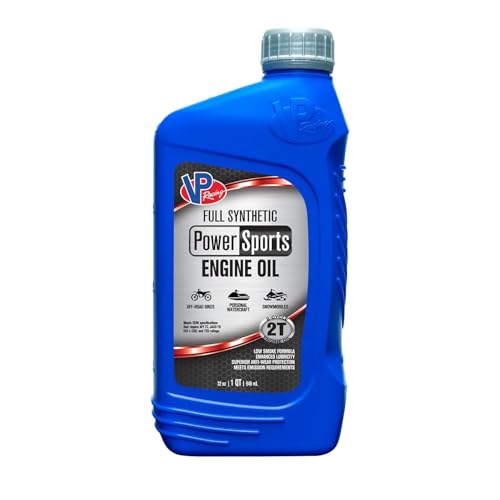
For a larger container, VP Racing 2 Stroke Oil 1 Quart holds 32 fluid ounces, twice the volume of the two 16-ounce VP options. Its specifications identify it as synthetic power-sports two-stroke oil and say it enhances engine wear protection and cleanliness. The larger bottle may suit buyers who prepare more fuel over time, but bottle volume alone does not tell you how much oil a particular engine needs. Check the manual for the required fuel-to-oil ratio and use a graduated measuring vessel for accuracy. Its maker does not identify a specific engine fit, so confirm compatibility before use.
Bottom line: Choose this if you need a 32-ounce synthetic VP oil bottle and have confirmed engine compatibility.
How to choose VP 2-cycle oil
Choose a two-stroke oil by matching its intended engine use and formula to your manual, then select the bottle size that fits your mixing needs. Two-stroke engines may use premix, where oil is blended into gasoline, or a separate oil-injection system; never pour premix oil into an injection reservoir unless the engine maker calls for that oil there. A 16-ounce bottle is half the volume of a 32-ounce quart, so it takes less storage space but requires more frequent replacement when mixing larger amounts. For the VP products, the formula labels distinguish full-synthetic from synthetic, while engine fit and ratio still need to come from the equipment maker.
Mixing ratios and measuring oil
Use the fuel-to-oil ratio specified by the engine maker, because common ratios such as 50:1 and 40:1 require different oil amounts. At 50:1, one US gallon of gasoline takes 2.6 fluid ounces of oil; at 40:1, it takes 3.2 fluid ounces. A measuring scale on the bottle or a separate graduated container helps avoid estimating by eye, especially with small batches. Add measured oil and gasoline to an approved fuel container, close it, and mix thoroughly before filling equipment. Do not assume a product name or a claimed gallon yield matches your machine’s ratio; verify the manual’s number first.
Premix safety and fuel handling
Mix gasoline and two-stroke oil outdoors or in a well-ventilated area away from flames, sparks, pilot lights, and smoking materials. Gasoline vapors ignite easily, and fuel should be kept in an approved, clearly identified container rather than a drink bottle. Avoid overfilling, wipe spills promptly, and keep fuel away from children and pets. Use fresh fuel in the period recommended by the equipment maker; fuel stabilizer and antioxidant claims do not mean every stored mixture will remain suitable for every engine. When preparing a small batch, measure both gasoline and oil rather than topping off by eye.
Common two-stroke oil mixing mistakes
The most common error is using a familiar ratio instead of the one specified for the exact engine. Another is measuring oil for a different gasoline volume: at 50:1, 2 gallons need 5.1 fluid ounces of oil, not 2.6. Mixing in an unmarked container also makes later ratio checks difficult, so use volume markings or a dedicated measure. Never substitute an oil-injection instruction for a premix ratio, or vice versa; the lubrication systems work differently. Before starting equipment after a fuel change, check the manual’s requirements for oil type, fuel grade, and mixing procedure, and do not operate an engine with an uncertain blend.
Frequently Asked Questions
How much oil goes into a gallon at 50:1?
A 50:1 mix takes 2.6 fluid ounces of oil per US gallon of gasoline. Measure both liquids accurately and confirm the engine’s manual calls for 50:1.
How much oil does a 40:1 mix need?
A 40:1 mix uses 3.2 fluid ounces of oil per US gallon of gasoline. The higher oil proportion than 50:1 makes it important not to interchange the ratios.
Can two-cycle oil go in an oil-injection system?
Only use oil in an injection system if the engine maker specifies that type of oil for the reservoir. Premix ratios are for fuel blended in a container and do not automatically apply to injection systems.
How should I store mixed two-stroke fuel?
Keep mixed fuel in an approved, labeled gasoline container, tightly closed and away from heat or ignition sources. Use the storage period recommended by your equipment maker; a stabilizer claim does not guarantee suitability for every engine.