
Monk Fruit Sweetener No Erythritol: 5 Types Compared

For a concentrated, single-ingredient monk fruit sweetener with no erythritol, choose Morning Pep Pure Monk Fruit Powder; its 5-ounce powder is pure monk fruit extract. Choose a different format if you want drop-by-drop dosing or a bulk blend that measures more like sugar.
Pure monk fruit extract is an intense sweetener, not a cup-for-cup sugar substitute, while allulose blends provide more volume for recipes.
We earn a commission if you buy through links on this page. As an Amazon Associate I earn from qualifying purchases. Products are compared on manufacturer specifications, not hands-on testing.
- Best overall: Morning Pep Pure Monk Fruit Powder – A 5-ounce powder made from pure monk fruit extract, with no erythritol or other sugar alcohols.
- Best for drinks: Monk Fruit Drops, 1.7 oz – Liquid drops allow small-amount dosing; the maker says six drops equal the sweetness of 1 teaspoon of sugar.
- Best for baking: Lakanto Monk Fruit with Allulose, 3 lb – The monk fruit and allulose blend is intended as a white sugar substitute and comes in a 3-pound bag.
| Product | Best for | Form | Ingredients | Pack size | Shop |
|---|---|---|---|---|---|
| Morning Pep Pure Monk Fruit Powder | Pure extract powder | Powder | Monk fruit extract | 5 oz | Check Price on Amazon |
| DureLife Organic Pure Monk Fruit | Organic powder | Powder | Monk fruit extract | 5 oz | Check Price on Amazon |
| Lakanto Monk Fruit with Allulose, 3 lb | Bulk baking blend | Granulated blend | Monk fruit, allulose | 48 oz | Check Price on Amazon |
| Monk Fruit Drops, 1.7 oz | Liquid dosing | Liquid drops | Monk fruit extract | 1.7 fl oz | Check Price on Amazon |
| Micro Ingredients Monk Fruit with Allulose | Measured blend | Powdered blend | Monk fruit, allulose | 32 oz | Check Price on Amazon |
Monk Fruit Sweetener No Erythritol
Match the sweetener’s format and ingredients to how you plan to measure and use it.
Morning Pep Pure Monk Fruit Powder
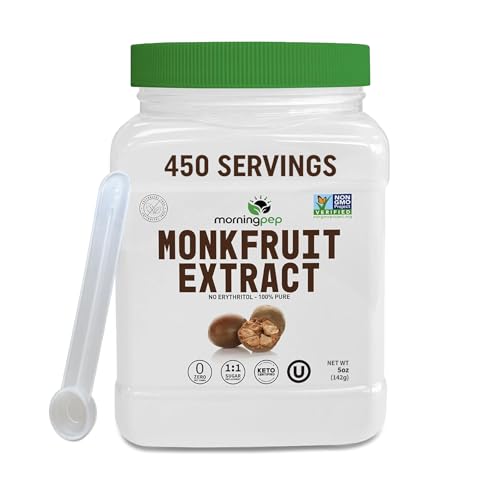
Morning Pep Pure Monk Fruit Powder is a pure-extract powder, unlike the liquid drops and allulose blends here. Its 5-ounce package is described as providing more than 450 servings, and the maker says it contains no erythritol or other sugar alcohols. The product name also identifies Non-GMO Project verification, Keto Certification and OU kosher status. This format suits shoppers who want monk fruit alone rather than a bulking ingredient. Concentrated extract is not a direct cup-for-cup sugar replacement, so it may be less convenient when a recipe depends on sugar’s volume.
Bottom line: Pick this if you want a pure monk fruit powder without sugar alcohols.
DureLife Organic Pure Monk Fruit

DureLife Organic Pure Monk Fruit stands apart for its USDA Organic designation in addition to its single-ingredient monk fruit extract. The maker says the powder contains no erythritol, sugar alcohols or fillers, and that a small measure can flavor many recipes. Its 5-ounce size matches Morning Pep Pure Monk Fruit Powder, but it is the organic-focused choice. The product name also identifies Non-GMO Project verification, Keto Certification and OU kosher status. Like other concentrated extracts, this powder does not supply the bulk of sugar in a cake or cookie; choose a blend with allulose when recipe volume and texture matter.
Bottom line: Choose this if USDA Organic certification is a priority.
Lakanto Monk Fruit with Allulose, 3 lb
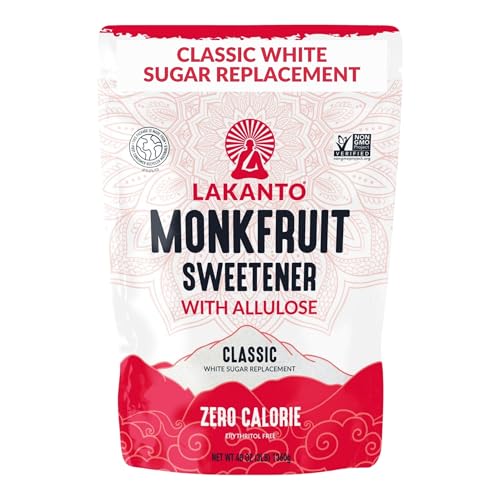
Lakanto Monk Fruit with Allulose, 3 lb is a granulated monk fruit-and-allulose blend, rather than a pure extract, and its 3-pound bag is the largest package here. The maker says it is erythritol-free, dissolves quickly in liquids and keeps baked goods moist; the product name positions it as a white sugar substitute. That bulk format can suit recipes where a concentrated powder would leave too little volume. The trade-off is ingredient simplicity: this is not monk fruit alone. Check the recipe’s sweetness and texture expectations before substituting, since a blend and pure extract measure differently.
Bottom line: Pick this for a larger allulose blend suited to baking and everyday use.
Monk Fruit Drops, 1.7 oz

Monk Fruit Drops, 1.7 oz is the only liquid format here, making it a distinct option for adding sweetness to coffee or tea without measuring powder. The maker says the drops are 15 to 20 times sweeter than sugar and that six drops match the sweetness of 1 teaspoon; the 1.7-fluid-ounce bottle is said to provide 167 servings. The product also claims no erythritol, alcohol or added water. Drops are convenient for beverages, but liquid dosing is less suited to recipes that need a dry ingredient or sugar-like bulk.
Bottom line: Choose this for sweetening drinks with small liquid measures.
Micro Ingredients Monk Fruit with Allulose

Micro Ingredients Monk Fruit with Allulose pairs monk fruit with allulose in a 2-pound powdered blend, distinguishing it from the pure extracts and the 3-pound bag of Lakanto Monk Fruit with Allulose, 3 lb. The maker says the blend contains 226 servings, includes a scoop and mixes into beverages and baking. It is presented as free of erythritol and as a vegan-friendly sugar alternative. This option suits shoppers who want a blend with a measuring scoop and a 32-ounce bag. The scoop helps portion the product, but concentrated monk fruit extract alone does not behave like a bulk sweetener in recipes.
Bottom line: Pick this if you want a 2-pound allulose blend with a scoop.
How to Choose Monk Fruit Sweetener Without Erythritol
Choose by ingredient format first: pure monk fruit extract is concentrated, while an allulose blend supplies more bulk. High-intensity sweeteners such as monk fruit extract can sweeten food in very small quantities, so they generally are not substituted cup-for-cup for granulated sugar. Allulose provides volume and can brown during baking, but recipe results still depend on the blend and the other ingredients. Read the ingredient panel to distinguish extract-only products from blends, and confirm that the package specifically excludes erythritol if that is essential to your choice. For drinks, drops or a small pinch of extract can be easier to adjust; for baked goods, a bulk blend is usually the more practical starting format.
Pure Extract, Drops and Allulose Blends
Powder, liquid and bulk blend formats solve different measuring problems. The table summarizes the practical distinction: concentrated extract adds sweetness with little volume, drops suit liquid dosing, and allulose blends bring more bulk. Allulose can brown in baked goods, unlike a small dose of pure extract, so a recipe’s color and texture may change when the sweetener changes. Pure extract can also be difficult to portion precisely because a small amount may sweeten a whole serving. Start with a small quantity in beverages and adjust to taste; for baking, use a recipe designed for the type of sweetener rather than assuming every monk fruit product measures like sugar.
| Format | Good starting use | Practical difference |
|---|---|---|
| Pure extract powder | Drinks and small-batch sweetening | Concentrated; adds little bulk |
| Liquid drops | Coffee and tea | Measured by drops |
| Monk fruit with allulose | Baking and recipes needing volume | Blend provides bulk and can brown |
Using Monk Fruit in Drinks and Baking
For drinks, add concentrated monk fruit gradually because small amounts can make a noticeable change in sweetness. Powder and liquid do not measure the same way, so use the product’s own measure rather than converting a spoonful of one format directly to another. Baking requires more care: granulated sugar contributes bulk, moisture and browning as well as sweetness, while pure extract contributes mainly sweetness. An allulose blend is a closer functional starting point where a recipe needs volume, and allulose can brown in the oven. If replacing sugar in a tested recipe, use a purpose-made substitution recipe or adjust one ingredient at a time; changing sweetener and liquid together makes results harder to judge.
How to Store Monk Fruit Sweeteners
Keep powdered sweeteners dry and tightly closed; moisture can cause powders to clump and make small portions harder to measure. Use a clean, dry spoon rather than one that has touched wet ingredients, and close the container after each use. Liquid drops avoid powder measuring but still need their cap secured to prevent spills and contamination around the opening. Store each product according to its package directions, especially after opening, because storage needs can differ by formulation. If a powder cakes from dampness or a liquid changes in appearance or smell, do not assume it is still suitable to use.
Frequently Asked Questions
Can pure monk fruit extract replace sugar cup for cup?
No, pure monk fruit extract is concentrated and does not provide sugar’s bulk. Use a recipe conversion specifically intended for that extract, or choose a bulk blend when volume matters.
Does an allulose blend bake like regular sugar?
Not exactly: allulose provides bulk and can brown, but recipes may still differ in sweetness, moisture and texture. A recipe made for an allulose blend is a more reliable starting point than a direct swap.
How should I sweeten coffee with monk fruit?
Start with a very small amount of extract or a few drops, then adjust after stirring. Concentrated products can sweeten strongly, so a sugar-sized spoonful may overshoot.
Why choose drops instead of monk fruit powder?
Drops make small liquid additions convenient, especially in coffee and tea, while powder can be easier to incorporate into dry mixtures. Neither format supplies the bulk of sugar in baking.
Can I use monk fruit sweetener in every baking recipe?
Pure extract alone is not a direct substitute where a recipe needs sugar’s volume or browning. For those recipes, use a bulk blend or a recipe developed for the sweetener you have.