
Hoof Conditioner for Horses: 5 Formulas Compared

For a 32-ounce conditioner with avocado oil, glycerine and mineral oils, start with Farnam Horseshoer’s Secret, 32 oz; its formula is the deciding difference among these options. Choose another formula if you prefer a built-in brush, a smaller container or a dressing without a greasy residue.
We earn a commission if you buy through links on this page. As an Amazon Associate I earn from qualifying purchases. Products are compared on manufacturer specifications, not hands-on testing.
- Best overall: Farnam Horseshoer’s Secret, 32 oz – Its 32-ounce formula combines avocado oil, glycerine and mineral oils.
- Best for built-in brush: Farnam Rain Maker, 32 fl oz – The container has a built-in brush for application.
- Best for no greasy residue: Absorbine Hooflex All Natural, 15 fl oz – It has a no-greasy-residue finish.
| Product | Best for | Formula ingredients | Application | Finish | Shop |
|---|---|---|---|---|---|
| Farnam Horseshoer’s Secret, 32 oz | Moisture-focused care | Avocado oil, glycerine, mineral oils | — | Sheen-enhancing | Check Price on Amazon |
| Farnam Rain Maker, 32 fl oz | Brush-on routine | Neatsfoot oil, petrolatum, glycerine | Built-in brush | Glossy | Check Price on Amazon |
| Absorbine Hooflex All Natural, 15 fl oz | No greasy residue | All-natural; no artificial chemicals or dyes | Applicator brush included | No greasy residue | Check Price on Amazon |
| SOUND Hoof Conditioner | Wax-free formula | Essential vitamins and nutrients | — | — | Check Price on Amazon |
| Fiebing’s Hoof Oil, 32 oz | Mineral-oil dressing | Mineral oil | Applicator brush | Semi-gloss | Check Price on Amazon |
Hoof Conditioner for Horses
Compare the formulas, application features and finishes to choose a conditioner that suits your hoof-care routine.
Farnam Horseshoer’s Secret, 32 oz

Avocado oil sets this formula apart from the other conditioners here. The 32-ounce container combines avocado oil with glycerine and mineral oils, and the maker says the fast-absorbing formula conditions dry hooves and helps prevent cracks and splits. The formula is intended for use across seasons and to enhance hoof sheen. This suits buyers who want those three ingredients in one product. For a persistent crack, consult a farrier or veterinarian rather than relying on conditioner.
Bottom line: Choose this if avocado oil alongside glycerine and mineral oils is your priority.
Farnam Rain Maker, 32 fl oz
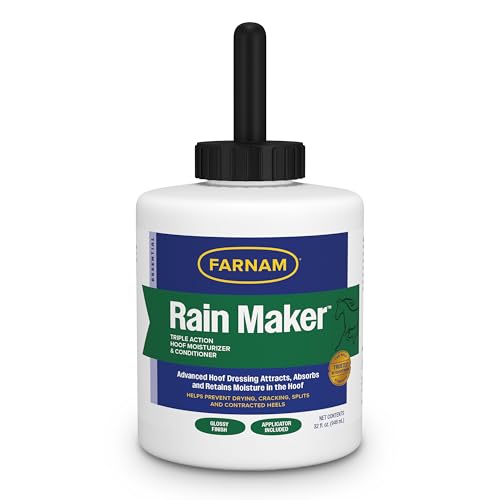
A built-in brush distinguishes this 32-ounce moisturizer from the other options. The formula contains neatsfoot oil, petrolatum and glycerine; the maker says it attracts, absorbs and retains moisture and supports suppleness in dry weather or dusty stables. The glossy finish is another stated aim. This is a practical fit for a brush-on routine. Buyers avoiding petrolatum may prefer a different formula; the ingredient combination is the key difference to weigh.
Bottom line: Pick this for a brush-on formula with neatsfoot oil, petrolatum and glycerine.
Absorbine Hooflex All Natural, 15 fl oz

A no-greasy-residue finish and smaller 15-ounce size distinguish this dressing. The maker says it supports the hoof’s natural moisture balance, penetrates quickly and enhances natural hoof color without artificial chemicals or dyes. An applicator brush is included, making it a distinct choice for buyers who prefer a ready-to-use dressing rather than a larger container. Buyers choosing by a particular oil should compare the named formula ingredients in other options.
Bottom line: Choose this if a 15-ounce dressing and no greasy residue matter most.
SOUND Hoof Conditioner

The absence of wax and petroleum sets SOUND apart from the other formulas. The conditioner contains essential vitamins and nutrients and is intended to provide moisture and suppleness and protect against wet and dry conditions. It suits buyers who specifically want to avoid wax- or petroleum-based ingredients. Confirm the amount before ordering because the package-size figures conflict. Conditioner does not correct a crack or replace farrier care.
Bottom line: Pick this if avoiding wax and petroleum is the deciding factor.
Fiebing’s Hoof Oil, 32 oz

Mineral oil and a semi-gloss finish distinguish this 32-ounce hoof oil. The maker recommends applying it two to three times a week and says the formula moisturizes and protects against dryness, splits and contracted feet. An applicator brush is included, which suits buyers who want that format and a regular-use recommendation. This option may not suit someone seeking glycerine or avocado oil; those ingredients are named in other formulas here. The suggested schedule is the maker’s guidance, not a cure for hoof damage.
Bottom line: Choose this if you want mineral oil, a brush and the maker’s twice- to thrice-weekly schedule.
How to choose hoof conditioner for horses
Choose by formula, application and the condition you are addressing, not by finish alone. Moisture-retaining ingredients such as glycerine appear in some products, while others emphasize oils or avoiding wax and petroleum. A brush included with or built into a container can simplify application, but it does not determine whether a formula suits a particular hoof. For routine dryness, compare the named ingredients and select a product you can apply consistently. If a crack is deep, painful, spreading or accompanied by lameness, seek a farrier or veterinarian rather than relying on conditioner; topical products do not replace evaluation of a hoof problem.
Hoof moisture and conditioner use
Hoof horn responds to its environment: repeated wetting and drying can contribute to changes in moisture and texture. Conditioner is a topical care step, not a way to rebuild damaged horn or fix a hoof balance issue. Apply products only to clean hooves and avoid getting oil or dressing on the sole if the product directions do not call for it. A simple decision rule is to choose a brush-equipped option if controlled, targeted application is important; choose by ingredients if avoiding a specific component matters more. Keep the hoof clean and dry enough to inspect it, and ask a farrier about persistent cracks or changes in shape.
Hoof conditioner compared by routine
Match the formula to the task you value most, since the products differ in ingredients, container size and application features. Conditioner can make a hoof look darker or shinier, but cosmetic finish is not proof of hoof health. A brush is useful for distributing product over the hoof wall while limiting mess; it does not replace regular trimming or shoeing decisions made for an individual horse. Use this comparison to narrow the formula, then read the product directions before application, especially if your horse has a specific hoof condition or sensitivity.
| Need | Product feature to prioritize |
|---|---|
| Prefer brush-on application | Built-in or included applicator brush |
| Avoid wax or petroleum | Formula explicitly says neither is present |
| Prefer a less greasy finish | Formula explicitly says no greasy residue |
| Choose by named oils | Compare the ingredient combination |
When a hoof needs more than conditioner
Conditioner is appropriate for a routine topical-care choice, but it is not a treatment plan for lameness, a deep crack or a hoof that changes suddenly. Hooves grow continuously, and farriers commonly schedule trimming or shoeing about every 4 to 8 weeks, adjusting the interval for growth, workload and footing. Have a farrier assess balance and routine care; contact a veterinarian for pain, heat, swelling or lameness. Avoid covering a problem with a glossy dressing before inspection, since the hoof wall, sole and frog all need to remain visible for a useful check. Follow the container directions and stop use if irritation appears.
Frequently Asked Questions
How often should I apply horse hoof conditioner?
Use the schedule on the container, because formulas differ. Fiebing’s maker recommends two to three applications weekly; that schedule should not be assumed for other products.
Can hoof conditioner fix a cracked hoof?
Conditioner may be marketed to help with dryness and cracking, but it cannot repair a deep or structural crack. Have a farrier assess persistent cracks, and seek veterinary care if the horse is lame or in pain.
Should I apply hoof conditioner to the sole?
Apply it only where the product directions specify; many dressings are intended for the hoof wall. Keep the sole and frog available for inspection, especially when checking for injury or debris.
How often should a horse see a farrier?
A common trimming or shoeing interval is about 4 to 8 weeks, adjusted for hoof growth, workload and footing. Ask a farrier to set an interval based on the horse’s individual hoof balance and wear.
Does a glossy hoof mean the hoof is healthy?
No; shine is a cosmetic finish, not a measure of hoof soundness. Check for cracks, changes in shape or signs of discomfort and consult a farrier or veterinarian when concerns persist.