
Monk Fruit Sweetener Without Additives: 5 Options Compared

For a powdered, pure-extract option with no added ingredients, choose Morning Pep Pure Monk Fruit Extract; its maker identifies it as 100% monk fruit extract, while Monk Fruit Drops is a liquid alternative. These products are concentrated extracts, not cup-for-cup sugar replacements, so compare format and sweetness claims before choosing.
We earn a commission if you buy through links on this page. As an Amazon Associate I earn from qualifying purchases. Products are compared on manufacturer specifications, not hands-on testing.
- Best overall: Morning Pep Pure Monk Fruit Extract – It is identified as pure monk fruit extract with no added ingredients and comes as a 5-ounce powder.
- Best for drops: Monk Fruit Drops – Liquid drops offer a different format, and the maker says six drops sweeten about as much as 1 teaspoon of sugar.
- Best for mogroside detail: Pure Organic Monk Fruit Powder, 4 oz – Its maker specifies 10% mogroside V, a concentration figure not supplied for the other options.
| Product | Best for | Form | Package size (oz) | Serving count | Shop |
|---|---|---|---|---|---|
| Morning Pep Pure Monk Fruit Extract | Pure powder | Powder | 5 oz | 450+ servings | Check Price on Amazon |
| Monk Fruit Drops | Liquid drops | Liquid drops | 1.7 fl oz | 167 servings | Check Price on Amazon |
| WHYZ Organic Monk Fruit Powder | Organic powder | Powder | 5 oz | 458 servings | Check Price on Amazon |
| OPTML Organic Monk Fruit Extract Powder | Everyday powder | Powder | 5.0 oz | 458 servings | Check Price on Amazon |
| Pure Organic Monk Fruit Powder, 4 oz | Mogroside detail | Powder | 4 oz | — | Check Price on Amazon |
Monk Fruit Sweetener Without Additives
Compare the format, package size, and serving claims to find a concentrated extract that suits your recipes.
Morning Pep Pure Monk Fruit Extract
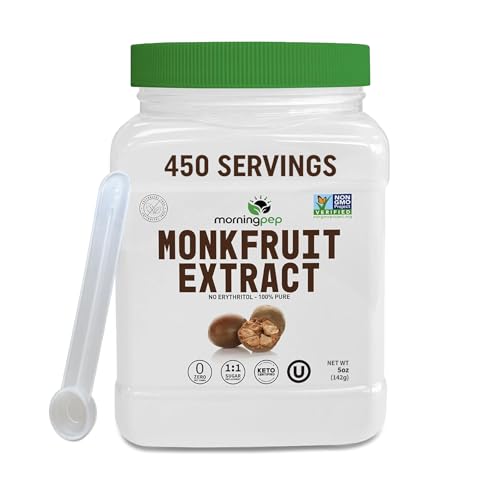
Unlike the liquid option, this product is a 5-ounce powder identified as 100% monk fruit extract with no added ingredients. The maker says it has zero calories, contains no erythritol or other sugar alcohols, and has more than 450 servings; it also cites Non-GMO Project verification and Keto certification. That makes the powder a fit for shoppers focused on a single-ingredient sweetener. The limitation is its concentrated format: the specifications give no sugar-equivalent measure, so it is not a direct cup-for-cup substitute for sugar in recipes.
Bottom line: Pick this if a powder identified as pure monk fruit extract is your priority.
Monk Fruit Drops

Unlike the powders, this option is a 1.7-fluid-ounce bottle of liquid drops. Its maker says the extract is 15–20 times sweeter than sugar and that six drops provide sweetness comparable to 1 teaspoon of sugar; the maker also claims 167 servings and no fillers or erythritol. The drop format suits coffee or tea when a liquid is easier to portion than powder. The limitation is that the sweetness measure is for drops, not a general baking conversion, so recipe makers should not assume it replaces sugar by volume.
Bottom line: Choose this when you want liquid drops and a teaspoon-equivalent measure.
WHYZ Organic Monk Fruit Powder

Unlike the other options with no supplied organic claim, this 5-ounce powder is identified as organic. Its maker says it is 200 times sweeter than sugar and claims 458 servings, with no erythritol, added sugar, or fillers. That extreme sweetness makes it a candidate for buyers who want a small-amount powder and are comfortable measuring carefully. The limitation is that the fields give no conversion amount per serving, so the 200-times claim alone does not tell you how much to add to a particular recipe.
Bottom line: Choose this if organic powder and the serving count matter to you.
OPTML Organic Monk Fruit Extract Powder

Unlike the products with a sweetness ratio, this organic powder is presented for general use in beverages, cooking, and baking without a sugar-equivalent measure. The maker describes it as pure monk fruit extract with no fillers or artificial ingredients and claims 458 servings in a 142-gram package. Its powder format suits people who prefer a dry extract for hot or cold foods and drinks. The limitation is the missing serving-to-sugar conversion, which matters when adapting a recipe that depends on sugar for bulk or browning.
Bottom line: Pick this if you want organic powder for varied uses and can dose by taste.
Pure Organic Monk Fruit Powder, 4 oz
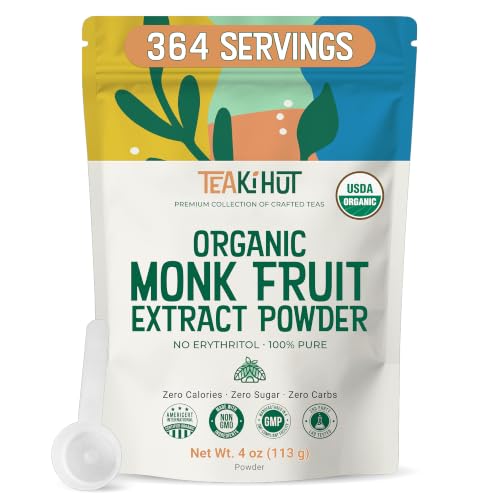
Unlike the other products, this 4-ounce powder gives a mogroside V concentration: its maker says the extract contains 10%. Mogroside V is a naturally occurring compound associated with monk fruit’s sweetness, so that figure can help shoppers compare extract concentration when similar labels provide it. The maker also claims no erythritol, zero calories, and zero carbs.
Bottom line: Choose this if a mogroside V percentage is useful to your comparison.
How to choose a monk fruit extract
Choose by format first, then by a usable sweetness measure. Pure monk fruit extract is far sweeter than table sugar, so tiny quantities can make a large difference; a product claiming 200 times sugar’s sweetness should not be dosed like a granulated sweetener. Liquid drops can be counted, while powders may require a very small spoon or a precision scale. Extract does not supply sugar’s bulk, moisture, or browning, so replacing all the sugar in a cake can change its structure. For drinks, start with a small portion and increase gradually; for baking, use a recipe designed around concentrated extract or pair the sweetener with an appropriate bulk ingredient.
Powder versus liquid monk fruit
Powder and drops differ mainly in dosing and how they fit a recipe. Drops are easy to add to coffee or tea in counted portions, but liquid can alter a delicate mixture if a recipe uses much of it. Powder avoids adding liquid, although pure extract’s concentration makes casual spoon-for-spoon substitution unreliable. Table sugar also contributes volume and texture: in many baked goods it helps retain moisture, spread, and brown, jobs that a concentrated sweetener does not automatically perform. Use a conversion only when the product gives one, and test a small batch when adapting a recipe. A sweetener’s claimed sugar-equivalent measure is more useful for beverages than as a complete baking formula.
Understanding monk fruit sweetness claims
Monk fruit’s sweetness comes from mogrosides, a group of compounds in the fruit; extract strength depends on how concentrated the extract is. A mogroside V percentage is one comparison point, but it does not by itself give a spoon-for-spoon conversion because product dosage and serving definitions also matter. Labels may express strength as a multiple of sugar or as a serving equivalent, and those measures should not be treated as interchangeable without a matching dose. Use the package’s own measure for that product, start below the target sweetness, and adjust gradually. Keep concentrated powder away from accidental spills into a dish, where even a small excess can make the result overwhelmingly sweet.
Using concentrated monk fruit in recipes
Use concentrated extract differently from granulated sugar: begin with a tiny quantity and increase in small steps. Sugar contributes more than sweetness in baking, including bulk and browning, so a direct replacement can leave cookies pale or cakes with a different texture. For uncooked drinks and sauces, adjusting sweetness is simpler because sugar’s structural role is smaller. When adapting a recipe, change one variable at a time and keep notes on the dose and result. A kitchen scale that reads tenths of a gram can help with small powder portions; for drops, count them consistently. Do not assume a claim about a beverage serving translates to the full quantity of sugar in a baked recipe.
Frequently Asked Questions
Can monk fruit extract replace sugar cup for cup?
No, concentrated monk fruit extract is not a cup-for-cup replacement for granulated sugar. Sugar adds bulk and browning as well as sweetness, so use a recipe or conversion intended for the specific extract.
How much monk fruit should I add to coffee?
Start with a small amount and adjust to taste because extract strength varies. One product here claims six drops provide sweetness comparable to 1 teaspoon of sugar, but that measure applies to its drops.
Does pure monk fruit powder work in baking?
It can sweeten baked goods, but pure extract does not replace sugar’s bulk or browning. Use a recipe built for concentrated extract or account for the missing bulk with a suitable ingredient.
What does mogroside V mean on monk fruit?
Mogroside V is one of the naturally occurring compounds associated with monk fruit sweetness. A percentage indicates extract concentration, but it is not by itself a serving or sugar-conversion instruction.
Are monk fruit drops easier to measure than powder?
Drops can be counted, which can simplify dosing in drinks. Powders need careful portioning because concentrated extract can be much sweeter than sugar by volume.