
Best Waterproof Winter Hat: 3 Styles Compared

ACUSHLA Fleece-Lined Waterproof Beanie suits most people seeking a waterproof winter hat because its fleece lining, waterproof layer, and stretchy one-size fit combine warmth and rain or snow coverage.
Choose a trapper hat instead if you want a brim, adjustable fit, or face mask; those designs cover more than a standard beanie.
We earn a commission if you buy through links on this page. As an Amazon Associate I earn from qualifying purchases. Products are compared on manufacturer specifications, not hands-on testing.
- Best overall: ACUSHLA Fleece-Lined Waterproof Beanie – A waterproof layer beneath a fleece-lined knit shell pairs with a stretchy one-size fit.
- Best for adjustable fit: Trapper Waterproof Baseball Cap with Ear Flaps – Two size ranges and a rear hook-and-loop adjustment help fine-tune the fit.
| Product | Best for | Style | Material or lining | Fit | Shop |
|---|---|---|---|---|---|
| ACUSHLA Fleece-Lined Waterproof Beanie | Everyday coverage | Beanie | Knit, waterproof layer, fleece | One size; 15.4 in wide | Check Price on Amazon |
| Trapper Waterproof Baseball Cap with Ear Flaps | Adjustable fit | Baseball/trapper cap | Waterproof fabric | M: 21.5–22.5 in; L: 22.6–24 in | Check Price on Amazon |
| TOP-EX DryKnit Merino Wool Beanie | Merino lining | Beanie with ear flaps | 80% merino wool, Polartec lining | M/L: 22.8–23.6 in | Check Price on Amazon |
Waterproof Winter Hats
Compare the coverage, construction, and sizing that set these winter hats apart.
ACUSHLA Fleece-Lined Waterproof Beanie

For a simpler beanie shape, ACUSHLA Fleece-Lined Waterproof Beanie uses a waterproof layer between a soft-spun knit exterior and thick fleece lining. The maker says the construction blocks wind and keeps rain or snow from wetting the head; the outer knit itself is not waterproof. The stretch fit and 9.45-inch depth are intended to cover the ears, making this a practical choice for everyday cold-weather wear and outdoor activity. The membrane may make some noise, so buyers who prefer a quiet, unlined knit cap may find that tradeoff noticeable.
Bottom line: Pick this if you want a stretchy, fleece-lined beanie with a waterproof layer.
Trapper Waterproof Baseball Cap with Ear Flaps
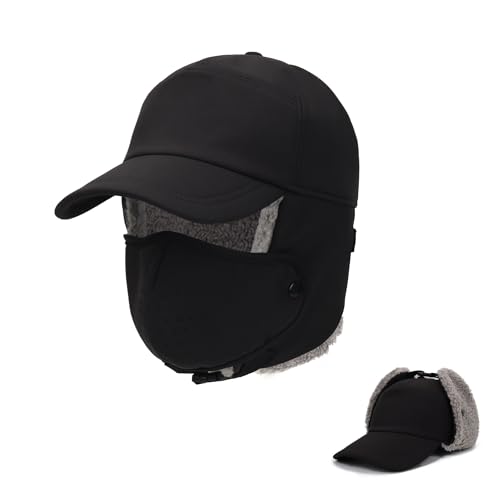
Unlike a cuffed beanie, Trapper Waterproof Baseball Cap with Ear Flaps combines a baseball cap brim, ear flaps, and a detachable face mask. Its 3.15-inch brim adds forward coverage, while the rear hook-and-loop adjustment allows fit tuning within the chosen size. The maker describes the fabric as waterproof, windproof, and breathable, and the mask has laser-cut perforations for airflow. Choose between medium, for 21.5–22.5-inch head circumferences, and large, for 22.6–24 inches. This more built-up design may be less appealing if you want a low-profile hat without face coverage.
Bottom line: Choose this if you want a brim, adjustable fit, and removable mask.
TOP-EX DryKnit Merino Wool Beanie

For buyers who prefer wool, TOP-EX DryKnit Merino Wool Beanie pairs an 80% merino wool beanie shell with a Polartec lining and ear-flap coverage. The maker says its DryKnit membrane system is waterproof, windproof, and breathable, and describes the wool as moisture-wicking and insulating. The M/L size fits 22.8–23.6-inch head circumferences, a narrower stated range than the adjustable cap’s two sizes. It is a focused option for a wool-based construction, but shoppers outside that circumference range should consider another fit.
Bottom line: Choose this if merino wool and ear flaps matter most.
How to choose a waterproof winter hat
Start with fit and coverage, then choose the construction that matches your conditions. A waterproof layer under a knit shell, as in ACUSHLA Fleece-Lined Waterproof Beanie, differs from a waterproof fabric shell, as in the trapper styles; a membrane can add warmth and weather protection but may also change how the hat feels or sounds. For a close fit, measure head circumference with a flexible tape just above the eyebrows and ears, keeping it level. Choose a size range that contains your measurement; if you are between sizes, prioritize an adjustable design rather than assuming stretch will compensate. For prolonged activity, consider breathable construction, but remember that a maker’s breathability claim does not establish a waterproof rating.
Beanies and trapper hats compared
Beanies have a compact profile, while trapper hats add coverage around the ears and may include a brim, chin strap, or mask. Use this comparison to match construction to the coverage you want.
| Need | Hat style | Tradeoff |
|---|---|---|
| Stretchy, low-profile warmth | Fleece-lined beanie | Less face coverage |
| Forward brim and removable mask | Baseball/trapper cap | More components to manage |
| Ear and face coverage in wind | Trooper trapper hat | Bulkier profile |
| Wool shell with ear flaps | Merino beanie | Check the specific size range |
How to get the right hat fit
Measure head circumference before selecting a size: wrap a tape above the eyebrows and ears, then compare the result with the maker’s range. The range for Trapper Waterproof Baseball Cap with Ear Flaps is 21.5–22.5 inches in medium and 22.6–24 inches in large, while TOP-EX DryKnit Merino Wool Beanie gives 22.8–23.6 inches for M/L. These ranges overlap only partly, so do not treat the styles as interchangeable fits. ACUSHLA Fleece-Lined Waterproof Beanie gives a maximum width of 15.4 inches and a depth of 9.45 inches rather than a circumference range. If your measurement falls outside a range, verify the fit before ordering; a snug but comfortable fit helps keep ear coverage in place without relying on a loose hat.
Waterproof construction and winter care
Waterproof knit hats commonly rely on a membrane or waterproof layer beneath an outer textile, while a shell fabric may combine weather protection with insulation. ACUSHLA Fleece-Lined Waterproof Beanie specifically has a non-waterproof outer layer over its waterproof layer, so the distinction matters when judging what part contacts the weather. Wet insulation can lose warmth, and wind can draw heat from exposed skin; wear ear flaps or a face covering when conditions call for more coverage. Follow the care label for washing and drying, since heat and detergents can damage some membranes or wool fibers. Avoid assuming that a waterproof claim means a hat is submersible or has a particular standardized rating unless that rating is given.
Frequently Asked Questions
How should a waterproof winter hat fit?
A winter hat should sit securely above the eyebrows and cover the ears without pinching. Measure head circumference with a flexible tape and choose a size range that includes the measurement; adjustable designs can help fine-tune fit.
Is a knit beanie fully waterproof?
Not necessarily; waterproof protection may come from a layer beneath a knit exterior rather than from the knit itself. For example, ACUSHLA Fleece-Lined Waterproof Beanie has a non-waterproof outer layer over a waterproof layer.
What hat is better for windy winter weather?
A trapper style with ear coverage and a mask protects more of the face than a standard beanie. For especially windy conditions, close gaps around the ears and chin, and use the chin strap or mask when available.
How do I measure my head for a winter hat?
Wrap a flexible tape around the widest part of the head, just above the eyebrows and ears, keeping it level. Compare that circumference in inches with the hat’s range before choosing a size.
Can a waterproof hat go in the washing machine?
Check the sewn-in care label before washing, because membrane fabrics and wool may need different treatment. Avoid high heat unless the care instructions allow it, since heat can affect waterproof layers and wool fibers.